How Loud Are Everyday Sounds?
Browse and filter 30+ common sounds by category — with real-world context for each noise level
Have you ever wondered how a vacuum cleaner compares to a motorcycle, or whether your morning alarm clock is louder than city traffic? Most people underestimate how much noise they encounter every day — and which of those sounds can actually damage hearing over time.
This page puts everyday sounds side by side so you can quickly see which noises are harmless and which ones deserve caution. Each entry includes real-world context to help you relate the numbers to your own experience. You can filter by category to focus on the sounds most relevant to you.
For the technical details behind decibel measurements — including the logarithmic scale, WHO guidelines, and NIOSH exposure limits — see the decibel level chart. For an in-depth explainer, read the complete guide to noise levels.
What Is a Decibel Sound Comparison?
A sound comparison chart shows how loud common sounds are on the decibel scale. For example, a whisper is around 30 dB, a normal conversation is about 60 dB, and a rock concert can exceed 110 dB. Comparing these levels helps you understand which everyday noises are safe and which can damage your hearing over time.
Example Sound Level Comparisons
- Whisper — about 30 dB
- Normal conversation — about 60 dB
- Vacuum cleaner — about 70 dB
- Busy traffic — about 85 dB
- Rock concert — about 110 dB
- Gunshot — about 140 dB
What Is a Decibel?
A decibel (dB) is a unit used to measure sound intensity. The scale is logarithmic, meaning each increase of 10 dB represents a tenfold increase in sound energy. In practical terms, a 10 dB increase sounds roughly twice as loud to the human ear. The scale ranges from 0 dB (the threshold of human hearing) to over 140 dB (a gunshot, which causes instant hearing damage).
How Loud Are Common Sounds?
How Loud Is Normal Conversation?
A normal conversation between two people at a comfortable distance is typically around 60 dB. This is comparable to background music in a restaurant or light traffic heard from indoors. It is well within the safe hearing range.
How Loud Is a Vacuum Cleaner?
A typical upright vacuum cleaner produces around 70 dB at close range — about as loud as a running shower. While not immediately dangerous, prolonged daily use without breaks can contribute to noise fatigue. Read more →
What Noise Level Is Dangerous?
Sounds above 85 dB can cause permanent hearing damage with prolonged exposure. At 100 dB (a jackhammer), safe exposure drops to just 15 minutes. At 110 dB (a rock concert), damage can occur in under 2 minutes. See the decibel level chart for complete OSHA/NIOSH exposure limits.
Compare Sounds Side by Side
| Sound | Decibels (dBA) | Risk | Typical context |
|---|---|---|---|
| Threshold of hearing | 0 dB | Safe | The faintest sound a healthy human ear can detect |
| Breathing | 10 dB | Safe | Calm breathing in a silent room |
| Rustling leaves | 20 dB | Safe | Gentle breeze through trees in a park |
| Whisper | 30 dB | Safe | Speaking softly at arm's length |
| Quiet library | 35 dB | Safe | Background hum of a reading room |
| Quiet office | 40 dB | Safe | Air conditioning and keyboard clicks |
| Moderate rainfall | 50 dB | Safe | Steady rain heard through a closed window |
| Dishwasher | 55 dB | Safe | Modern dishwasher running in the next room |
| Normal conversation | 60 dB | Moderate | Two people talking at a comfortable distance |
| Washing machine | 65 dB | Moderate | Spin cycle heard from the laundry room |
| School classroom | 65 dB | Moderate | Active classroom with students talking |
| Vacuum cleaner | 70 dB | Moderate | Upright vacuum on carpet at close range |
| Hair dryer | 75 dB | Moderate | Held at typical distance from head |
| Busy street traffic | 75 dB | Moderate | Standing on a sidewalk during rush hour |
| Alarm clock | 80 dB | Loud | Buzzer alarm on a nightstand |
| Dog bark | 85 dB | Loud | Medium-sized dog barking from a few feet away |
| Heavy traffic | 85 dB | Loud | Highway noise at the roadside |
| Subway train | 88 dB | Loud | Train arriving at an underground platform |
| Lawn mower | 90 dB | Loud | Gas-powered mower in a suburban yard |
| Motorcycle | 92 dB | Loud | Cruiser passing at 25 feet on an open road |
| Power drill | 95 dB | Hazardous | Drilling into concrete at close range |
| Leaf blower | 95 dB | Hazardous | Gas-powered blower clearing a driveway |
| Jackhammer | 100 dB | Hazardous | Road construction at 15 feet |
| Helicopter | 105 dB | Hazardous | Flying overhead at low altitude |
| Rock concert | 110 dB | Hazardous | Standing near the speakers at a live show |
| Baby crying (close) | 110 dB | Hazardous | Infant crying directly next to your ear |
| Thunder clap | 120 dB | Hazardous | Close lightning strike during a storm |
| Ambulance siren | 120 dB | Hazardous | Emergency vehicle passing within 10 feet |
| Jet takeoff (100 m) | 130 dB | Hazardous | Commercial aircraft departing at close range |
| Fireworks | 135 dB | Hazardous | Professional display viewed from launch area |
| Gunshot | 140 dB | Hazardous | Rifle fired without suppression — instant damage risk |

Explore by Category
Household
Transportation
When Does Noise Become Dangerous?
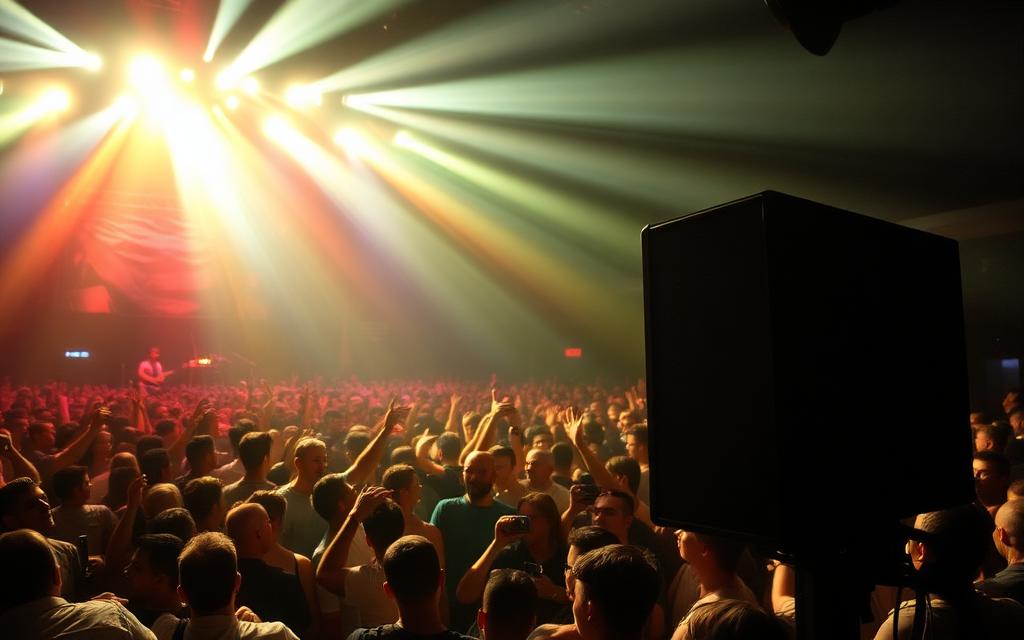
Any sound above 85 dB can cause permanent hearing damage with prolonged exposure. The louder the sound, the faster the damage occurs — a rock concert at 110 dB can harm your hearing in less than 2 minutes, while busy traffic at 85 dB is safe for up to 8 hours.
A practical test: if you need to raise your voice to be heard by someone at arm's length, the ambient noise is likely above 80 dB and you should consider limiting your exposure or wearing hearing protection.
For detailed OSHA/NIOSH exposure time limits and WHO recommended noise levels, see the decibel level chart. You can also measure your environment right now to check your current exposure.
Curious How Loud Your Environment Is?
Use Snap Decibel Meter to estimate sound levels instantly using your phone microphone — free, private, and no download required.
Start MeasuringFrequently Asked Questions
What is considered a loud noise level?
Noise above 85 dB is generally considered potentially harmful with prolonged exposure. At this level, NIOSH recommends limiting occupational exposure to about 8 hours per day. Risk increases with level, duration and repeated exposure.
How loud is a normal conversation?
A normal conversation between two people at a comfortable distance is typically around 60 dB — roughly the same as background music in a restaurant.
What noise level causes hearing damage?
Prolonged exposure above 85 dB can cause permanent hearing damage. At 110 dB (a rock concert), damage can occur in less than 2 minutes without hearing protection.
How loud is a vacuum cleaner?
A typical upright vacuum cleaner produces around 70 dB at close range — comparable to a running shower or busy street traffic heard from a sidewalk.
Is 50 dB loud?
No, 50 dB is considered a moderate, comfortable level — similar to light rainfall or a quiet conversation at home. It poses no hearing risk.