Home Noise

    How Loud Is a Hair Dryer? Decibel Levels Explained

    Hair dryers produce 70–95 dB — louder than you might think. Here's what that means for your hearing and daily noise exposure.

    5 min read Updated 2026-03-16
    By Snap Decibel Meter Team·Updated 2026-03-16·Sourced from OSHA, NIOSH, WHO, CDC

    Reviewed by our team against authoritative public-health sources. See our editorial standards.
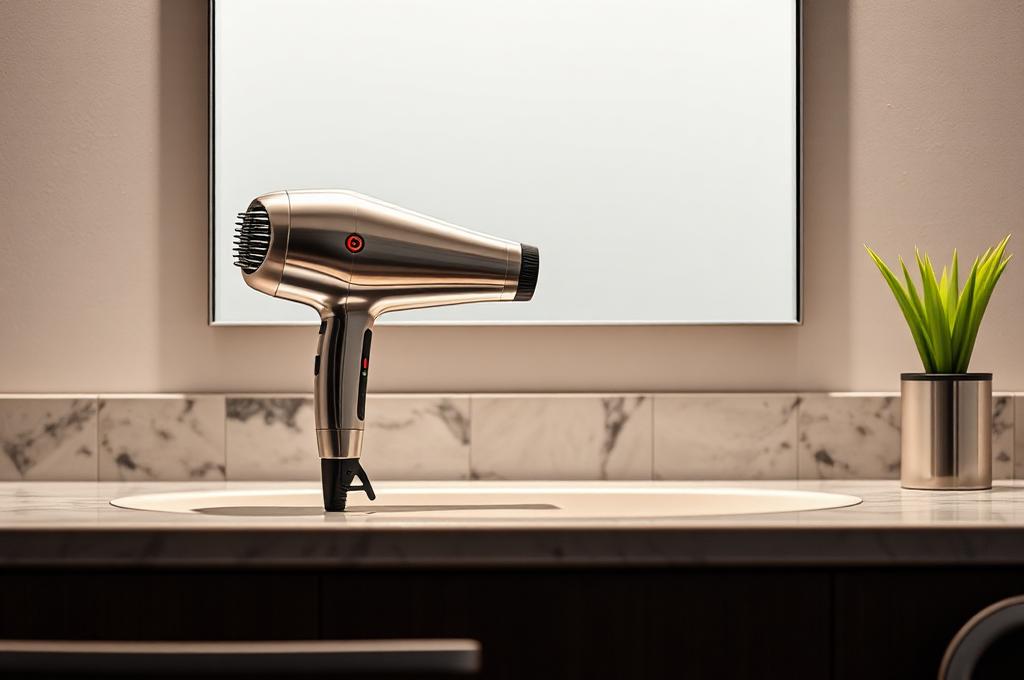
    hair dryer appliance on bathroom counter
    Hair dryers produce 70–95 dB — a surprisingly loud daily exposure for many people.

    Hair Dryer

    70–95 dB

    Hearing protection recommended

    Safe exposure

    30 minutes

    Per NIOSH 85 dBA / 8 h reference (3 dB exchange rate)

    Measure yours now

    Above 85 dB can damage hearing with prolonged exposure. Use ear protection.

    Personalized verdict

    Is this dangerous for you?

    Hair Dryer

    83 dB

    Typical

    Your room

    — dB

    Tap Compare

    Difference

    Waiting

    Audio is processed locally in your browser — nothing is recorded or sent. Prefer the full meter? Open Snap dB

    Compare Hair Dryer to:

    Quick Answer

    A typical hair dryer produces 70–95 dB at the user's head. Professional salon dryers tend to be louder. While individual sessions are brief, daily use contributes to overall noise exposure.

    70–95 dBLoud

    📊 Similar in loudness to a blender or a garbage disposal.

    Most household sounds: 30–90 dB+10 dB = 10× sound energy

    At a glance

    Typical range
    70–95 dB
    Safety tier
    Loud
    Safe exposure
    1 hour
    Audible at
    ~20–30 ft

    Quieter than a nightclub (100 dB), louder than a busy restaurant (65 dB).

    How Many Decibels Is a Hair Dryer?

    Most consumer hair dryers produce 70–90 dB, with professional salon models reaching 85–95 dB. The noise comes from the motor and the high-velocity airflow, which creates turbulent air noise near the user's ear.

    What makes hair dryer noise particularly notable is its proximity to the ear. Because users hold the dryer near their head, the effective exposure is at the high end of its range. A dryer that measures 80 dB at arm's length may produce 85–90 dB at the ear during styling.

    home environment with various appliances
    Hair dryers are among several common bathroom appliances that produce moderate to loud noise levels.

    Most people are surprised by how loud this actually is…

    Noise Level: Hair Dryer

    83 dB
    20 dB — Whisper85 dB — Risk140 dB — Pain

    Classification

    Moderate

    Safe Exposure

    No time limit

    Adjust This Level to Your Environment

    What Affects Hair Dryer Noise?

    Motor type, speed setting, and nozzle attachments all affect noise output.

    • Speed setting: high speed increases noise by 5–10 dB over low
    • Motor type: DC motors are louder than AC; newer brushless motors are quietest
    • Nozzle: concentrator nozzles may slightly increase noise at the opening
    • Brand/quality: premium models often feature noise-reduction engineering
    • Age: older dryers get louder as bearings wear

    Typical Sound Levels

    70–75 dBTravel / compact dryer on low
    75–85 dBConsumer dryer on medium/high
    85–95 dBProfessional salon dryer

    Beyond this level, your hearing cells don't recover…

    Did You Know?

    The threshold of pain for human hearing is around 120-130 dB, equivalent to standing near a jet engine.

    Measure Your Environment

    Use Snap Decibel Meter to estimate the sound level around you right now.

    Open Noise Meter

    Is Hair Dryer Noise Safe?

    A typical hair drying session lasts 5–15 minutes. At 80–90 dB, this is well within safe exposure limits for a single use. However, hairstylists who use dryers for 4–6 hours daily face cumulative noise exposure that can exceed the NIOSH recommended limit, particularly when combined with salon music and other ambient noise.

    At home, daily hair drying is not a significant hearing risk by itself, but it contributes to your overall daily noise dose alongside other sources like commuting, music, and household appliances.

    Measure Your Hair Dryer's Noise

    Use Snap Decibel Meter to check your hair dryer's noise level at different speed settings. Try measuring at the distance you normally hold it from your head. If it exceeds 85 dB, consider using a lower speed setting or investing in a quieter model.

    The difference between 'fine' and 'damaging' is smaller than you think.

    Hair Dryer Noise: The Complete Breakdown

    The noise produced by hair dryer at 70–95 dB reflects specific physical processes — mechanical vibration, fluid turbulence, electrical oscillation, or impact forces — each with a characteristic frequency spectrum. Understanding the source mechanism helps predict how the sound will behave in different environments and which noise-reduction strategies will be most effective.

    At 70–95 dB, you would need to speak loudly to be understood at arm's length. This volume triggers the acoustic reflex — your stapedius muscle contracts to dampen sound transmission through the middle ear — but this protective mechanism fatigues with sustained exposure and provides only 10–15 dB of attenuation.

    Room acoustics have a major impact on how loud hair dryer actually sounds. Hard, reflective surfaces (tile, glass, concrete) create reverberation that can increase the effective level by 5–10 dB. Soft materials like curtains, carpet, and upholstered furniture absorb sound waves and make the same source noticeably quieter.

    Sound Comparison: Hair Dryer on the Decibel Scale

    Hair dryer noise at 70–95 dB matches a food blender running (85 dB) on the decibel scale. While the measured levels are equivalent, your brain perceives these sounds very differently based on their spectral content, temporal pattern, and your learned associations with each source.

    On the quieter end, a busy restaurant registers about 65 dB — that's 18 dB below hair dryer, representing roughly 3× less perceived loudness. Moving louder, a nightclub dance floor reaches 100 dB — 17 dB above hair dryer, approximately 3× louder to your ears.

    The decibel scale is logarithmic — each 10 dB increase represents a tenfold jump in sound energy and roughly a doubling of perceived loudness. At 70–95 dB, hair dryer carries 199,526,231× more acoustic energy than the threshold of hearing (0 dB), placing it in a well-characterized region of the audible spectrum.

    Safe Exposure Duration for Hair Dryer

    According to NIOSH guidelines, the maximum safe exposure time at 95 dB is 1 hour. Earplugs or earmuffs are strongly recommended.

    NIOSH Exposure Limits Reference

    85 dB8 hours
    88 dB4 hours
    91 dB2 hours
    94 dB1 hour
    97 dB30 minutes
    100 dB15 minutes
    103 dB7.5 minutes
    106 dB3.75 minutes
    109 dB< 2 minutes

    Protecting Your Hearing from Hair Dryer Noise

    Sustained exposure to hair dryer at 95 dB requires a deliberate hearing protection strategy. The National Institute for Deafness recommends the "3-E" approach: Engineering controls (reduce the source noise), Environmental modifications (increase distance, add barriers), and Equipment (wear proper hearing protection). Apply these in order — prevent the noise first, protect against the remainder.

    The most effective noise reduction combines source treatment, path interruption, and receiver protection — the "source-path-receiver" model used by acoustic engineers. For hair dryer at 95 dB, start at the source (can you reduce the noise output?), then address the path (can you add distance, barriers, or absorption?), and finally protect yourself (hearing protection, time limits).

    • Close doors and seal gaps between rooms to reduce transmitted noise by 15–25 dB
    • Wear NRR 20+ hearing protection if hair dryer exposure exceeds 85 dB
    • Monitor cumulative daily exposure — multiple moderate sources compound over time
    • Increase distance from hair dryer when possible — every doubling cuts the level by 6 dB
    • Measure hair dryer noise with a smartphone app to establish your actual exposure level

    Measuring Hair Dryer Noise: Methods and Tools

    To measure hair dryer noise accurately, use a calibrated smartphone app (NIOSH SLM, Decibel X, or our own Snap Decibel Meter) or a dedicated Type 2 sound level meter. Position the device at 1 meter from the source, at the height where you'd normally hear it. Take readings over 30–60 seconds and note both average (Leq) and peak (Lmax) values.

    For sounds at 83 dB like hair dryer, most smartphone decibel meter apps provide reasonably accurate readings (typically within ±3–5 dB of professional equipment). For more precision, calibrate your app against a known reference sound or use a dedicated Type 2 sound level meter. The key to accuracy is consistent positioning and adequate sampling time.

    The Medical Impact of Hair Dryer Sound

    The progression of hearing damage from hair dryer exposure follows a predictable pattern: first, temporary threshold shift (sounds seem muffled after exposure), then persistent tinnitus (ringing or buzzing that doesn't resolve), then permanent threshold shift (measurable hearing loss on audiometric testing). Early-stage damage is often unnoticed because the brain compensates by "filling in" missing signals from context.

    Warning signs of overexposure to hair dryer noise include: ringing, buzzing, or hissing in the ears after exposure; speech sounding muffled or distant; difficulty following conversations in restaurants or social settings; and needing to gradually increase TV or headphone volume. If you experience any of these after exposure to hair dryer, reduce future exposure immediately and consult an audiologist.

    Warning Signs of Overexposure

    • Ringing, buzzing, or hissing in your ears after exposure to hair dryer
    • Sounds seem muffled or distant after leaving the noisy environment
    • Difficulty understanding speech in crowded or noisy settings
    • Gradually increasing your TV or headphone volume over weeks

    Measure Hair Dryer Noise Yourself

    Want to know exactly how loud hair dryer is in your environment? Use our free decibel meter to take a real-time reading, or check the complete decibel chart to see where 70–95 dB sits on the full scale. You can also compare sounds side by side or use the noise distance calculator to estimate levels at different distances.

    🎯 Guess the Decibel Level

    How loud do you think Hair Dryer is? Drag the slider and find out!

    🤫 Whisper70 dB🔊 Jet Engine

    Frequently Asked Questions

    Can daily hair drying damage hearing?

    For home use (5–15 minutes per day), the risk is minimal. Professional hairstylists exposed to 85–95 dB for hours daily should consider hearing protection or quieter dryer models.

    What is the quietest hair dryer?

    Modern brushless motor dryers from brands like Dyson produce 75–82 dB — about half the perceived loudness of older models. Low-speed settings further reduce noise.

    Test Your Environment

    Use Snap Decibel Meter to measure sound levels around you — free, private, and instant.

    Start Noise Measurement