How Loud Is a Gunshot? — Decibel Levels by Firearm Type
Gunfire is the clearest case on this site of a sound that consumer measurement cannot touch — and the research literature explains precisely why, with numbers.
Reviewed by our team against authoritative public-health sources. See our editorial standards.
Gunshot
140 dB
Safe exposure
Instant risk
Per NIOSH 85 dBA / 8 h reference (3 dB exchange rate)
Above 85 dB can damage hearing with prolonged exposure. Use ear protection.
Quick Answer
A decibel (dB) is a logarithmic unit used to measure sound intensity: an increase of 10 dB means ten times more sound energy.
Peak sound pressure levels at a shooter's ear run from about 140 dB for a .22 rifle to well above 175 dB for a large-calibre rifle with a muzzle brake, with most common firearms between 150 and 165 dB peak. A NIOSH study of 54 small-calibre firearms measured 145–173 dB at the shooter's left ear, most above 159 dB. These are unweighted peak levels, a completely different quantity from the A-weighted averages used for continuous noise — and NIOSH has documented that ordinary dosimeters clip these impulses, reporting a false 146 dB ceiling where the true peak was 163 dB.
Calibre, barrel length, muzzle device, ammunition and microphone position all move the figure. Peak level is also not comparable with the A-weighted averages quoted for machinery — it is an instantaneous pressure maximum, not an average.
Prolonged exposure above 85 dB can damage hearing.
At a glance
| Typical range | 140 dB |
|---|---|
| Safety tier | Dangerous |
How these figures were determined: All figures come from NIOSH measurement studies and peer-reviewed reviews that state the microphone positions used: ear-level microphones about 0.35 m from the firearm centreline, with defined muzzle and instructor positions. We measured nothing, and where a study's numeric table was paywalled we report it qualitatively rather than guessing.
First, the metric: peak, not average
Every figure on this page is a peak sound pressure level — the highest instantaneous pressure the microphone sees, unweighted. That is deliberately different from the A-weighted averages used for chainsaws or traffic, which describe energy accumulated over time.
The difference is not cosmetic. A gunshot's pressure wave rises to its maximum in the order of microseconds and is over in milliseconds. An averaging measurement smooths that away almost entirely; a peak measurement is the only thing that captures it. Mixing the two in a single chart, which many decibel charts do, produces nonsense.
Measured peak levels by firearm
The most systematic dataset we found is a NIOSH study that fired 54 small-calibre firearms — pistols, rifles and shotguns — outdoors with an 18-microphone radial array extending to 6 metres. At the shooter's left ear, peak levels were 145–173 dB, with the majority above 159 dB.
A NIOSH-affiliated suppressor study gives the extremes of the range with the tools named: about 140 dB peak for a .22 calibre rifle and well above 175 dB peak for a .30 calibre rifle. A peer-reviewed review of recreational firearms puts the overall span at 140–175 dB, with most firearms between 150 and 165 dB.
| Firearm or dataset | Peak level | Position |
|---|---|---|
| .22 calibre rifle | about 140 dB peak | Near the shooter (position not specified) |
| Most recreational firearms | 150–165 dB peak | Shooter-ear range implied |
| 54 small-calibre firearms (NIOSH) | 145–173 dB peak, majority above 159 dB | Shooter's left ear, outdoor range |
| .30 calibre rifle with muzzle brake | well above 175 dB peak | Near the shooter |
| Air rifles | above 120 dB peak, none above 140 dB peak | Youth and adult limit comparison |
Unweighted peak levels, not A-weighted averages. Calibre, barrel length, muzzle device and ammunition all contribute, and published studies rarely vary only one of them at a time.
What a suppressor actually changes
The NIOSH suppressor study is useful because it measured the same firearms with and without a suppressor at defined positions: ear-level microphones about 0.35 m from the firearm centreline, a muzzle microphone 0.6 m to the left, and an instructor microphone 1.0 m behind the shooter's head, all 1.63 m above ground.
Reductions at the ear were 17–24 dB peak, and 20–28 dB at the instructor position. In sound power terms, one configuration went from 150 dB unsuppressed to 135 dB suppressed with high-velocity ammunition. Another configuration showed almost no benefit at the right ear: 141 dB unsuppressed against 139 dB suppressed.
So a suppressor is a real and substantial attenuator, and it does not make a firearm quiet. A 20 dB reduction from 165 dB still leaves a level far above any peak criterion for unprotected exposure.
Why your meter cannot measure this
This is the part worth reading even if you never handle a firearm, because it is the clearest documented example of measurement equipment failing silently.
A NIOSH study at an indoor law-enforcement range compared personal dosimeters against a quarter-inch microphone recording system. True peak levels reached 163 dB, above the dosimeters' input limit — and the dosimeters clipped, reporting a maximum of 146 dB as though that were the real level. Worse, in other cases where the true peak was only 108 dB, well within range, the dosimeters still reported 146 dB. The instrument produced a plausible-looking, wrong number in both directions.
NIOSH's own guidance on impulse noise explains the requirement: capturing a gunshot needs a rise-time response on the order of microseconds, a wide dynamic range and dedicated peak-hold circuitry. Ordinary sound level meters, dosimeters and consumer applications have none of those things.
What our own meter will and will not tell you
We will not pretend otherwise: our browser meter cannot measure gunfire. It runs on a phone or laptop microphone through a browser audio pipeline, which limits, compresses and clips exactly the transients that define this sound.
Uncalibrated, the meter reports A-weighted digital signal level in dBFS — a relative figure, not sound pressure. Even after a one-time local calibration, its estimated dBA output describes a time-averaged level, not an impulse peak. Pointing any consumer device at a firearm produces a number, and that number is not the peak level.
What the literature does not settle
No public dataset we found isolates barrel length while holding calibre and ammunition constant, so the common claim that a shorter barrel is louder by a specific number of decibels cannot be supported from the sources here.
The full numeric tables from the 2012 journal study and from Flamme and colleagues' outdoor impulse dataset are behind paywalls, so we report those studies' findings only in the terms their abstracts state. And we found no study benchmarking named consumer phone applications against a reference system for gunfire peaks — the honest answer there remains the physics, not a comparison table.
Hearing Safety
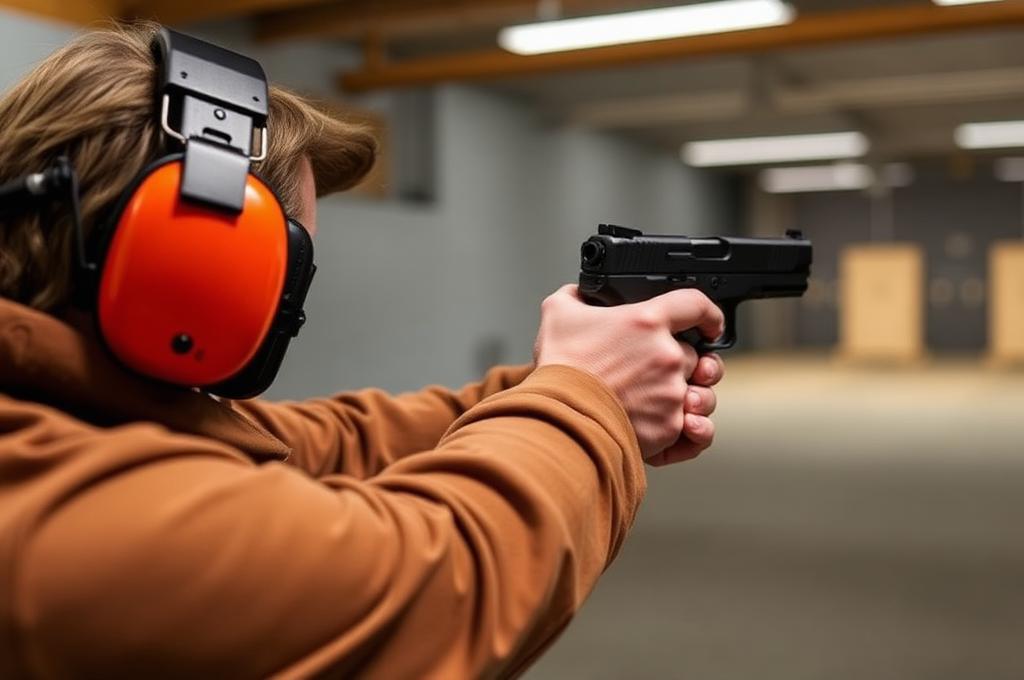
Gunshots exceed the 140 dB impulse noise limit where a single exposure can cause permanent hearing damage. Always wear hearing protection — ideally both earplugs and earmuffs — when shooting or near firearms.
Frequently Asked Questions
How many decibels is a gunshot?
Peak levels run about 140 dB for a .22 rifle to above 175 dB for a large-calibre rifle with a muzzle brake, with most firearms between 150 and 165 dB peak. A NIOSH study of 54 firearms measured 145–173 dB at the shooter's left ear.
Why is a peak level not comparable with other decibel figures?
Because it is a different quantity. Peak level is the highest instantaneous unweighted pressure; the figures quoted for machinery or traffic are A-weighted averages over time. A gunshot's pressure wave lasts milliseconds, so averaging nearly erases it.
How much does a suppressor reduce a gunshot?
NIOSH measurements found 17–24 dB peak reduction at the shooter's ear and 20–28 dB at an instructor position one metre behind. One configuration showed almost no benefit at the right ear, 141 dB against 139 dB. Even a 20 dB reduction leaves the level far above safe unprotected exposure.
Can a phone app measure a gunshot?
No. NIOSH documented professional dosimeters clipping gunfire and reporting a false 146 dB where the true peak was 163 dB — and reporting the same 146 dB where the true peak was 108 dB. Capturing impulses requires microsecond rise-time response and peak-hold circuitry that consumer hardware does not have.
Is a shorter barrel louder?
We could not support a specific figure. Published studies vary calibre, ammunition and microphone position at the same time as barrel length, so barrel-length-specific effects cannot be isolated from the sources we found.
Explore More
Related Noise Guides
How Accurate Are Phone Decibel Meters?
Two research groups have tested phone sound meters properly — one at NIOSH, one across 100 handsets in a reverberation room. Their findings are more specific, and more useful, than "phones are inaccurate".
8 min readEntertainment NoiseHow Loud Are Fireworks? (Decibel Levels + Safety)
Firework loudness depends almost entirely on where the microphone is and which metric is used. A regulatory test at 15 metres and an injury measurement at 2 metres differ by 40 decibels or more.
6 min readEvidence behind the levels on this page
Every sound level quoted above comes from one of the publications below. For each one we record what was actually measured, the microphone position or distance where that is stated, the metric used, and what the figure can and cannot tell you. Where a source did not state a condition, we say so rather than filling the gap.
Murphy, W. J. and colleagues, NIOSH / CDC · 2012–2013 · Peer-reviewed measurement study with agency-affiliated summary
- What was measured
- 54 small-calibre firearms fired outdoors with an 18-microphone radial array extending to 6 m
- Reported level
- Peak levels at the shooter's left ear 145–173 dB, with the majority above 159 dB
- Distance / position
- Shooter's left ear plus an array out to 6 m
- Frequency weighting
- Peak, unweighted
- Conditions
- Outdoor flat grassy range, single shooter
- Supports on this page
- The main peak-level range and the shooter's-ear row of the table
- Limitations
- Small and medium calibre civilian firearms at a single outdoor site. The full numeric table is paywalled, so per-firearm values are not quoted.
Measurement of suppressor performance on four firearms, International Journal of Audiology
Murphy, W. J., Flamme, G. A. and colleagues, NIOSH / CDC · 2018 · Peer-reviewed measurement study
- What was measured
- Peak levels with and without suppressors at defined ear, muzzle and instructor microphone positions
- Reported level
- About 140 dB peak for a .22 calibre rifle to well above 175 dB peak for a .30 calibre rifle; suppressor reduction 17–24 dB at the ear and 20–28 dB at the instructor position; sound power 150 dB unsuppressed against 135 dB suppressed with high-velocity ammunition; 141 dB against 139 dB at the right ear in one configuration
- Distance / position
- Ear microphones 0.35 m from the firearm centreline; muzzle microphone 0.6 m to the left; instructor microphone 1.0 m behind the shooter's head; all 1.63 m above ground
- Frequency weighting
- Peak, unweighted, with A-weighted equivalent levels also reported
- Conditions
- Outdoor range and hunting camp in Michigan, standing right-handed shooters
- Supports on this page
- The calibre extremes of the table and the whole suppressor section
- Limitations
- A small number of firearms and suppressor models; the suppressor effect is specific to the combinations tested.
Kardous, C. A. and Willson, R. D., NIOSH · 2004 · Peer-reviewed occupational measurement study
- What was measured
- Dosimeters and sound level meters compared against a quarter-inch microphone and recording system at an indoor law-enforcement range
- Reported level
- True peak levels reached 163 dB while dosimeters clipped and reported 146 dB; in other cases true peaks of 108 dB were also reported by the dosimeters as 146 dB
- Distance / position
- Personal dosimeters on eight shooters plus an observer and the range master
- Frequency weighting
- Peak
- Conditions
- Indoor firing range during live-fire law enforcement training
- Supports on this page
- The entire section on why meters cannot measure this, including both failure directions
- Limitations
- One indoor range and specific dosimeter models; not a survey of all instrument types.
Auditory risk estimates for firearm users, Seminars in Hearing
Meinke, D. K., Finan, D. S., Flamme, G. A., Murphy, W. J., Lankford, J. E. · 2017 · Peer-reviewed review
- What was measured
- Review of firearm impulse noise measurements across recreational firearms
- Reported level
- Peak levels range about 140–175 dB, with the majority between 150 and 165 dB; air rifles exceed 120 dB peak but none exceeded 140 dB peak
- Distance / position
- Varies by the studies reviewed
- Frequency weighting
- Peak, unweighted
- Conditions
- Recreational firearms of various calibres
- Supports on this page
- The overall range and the air rifle row of the table
- Limitations
- A review aggregating primary studies rather than a new measurement campaign.
Science bulletin on impulse noise measurement
Kardous, C. A. and Murphy, W. J., NIOSH / CDC · 2018 · US federal agency guidance
- What was measured
- The instrument requirements for capturing impulse noise: microsecond rise-time response, wide dynamic range and peak-hold circuitry
- Reported level
- No level; explains why standard meters and dosimeters cannot register true impulse peaks
- Distance / position
- Not applicable
- Frequency weighting
- Peak
- Conditions
- General impulse-noise measurement guidance
- Supports on this page
- The technical explanation of consumer measurement failure
- Limitations
- Guidance rather than primary data.
Levels on this page are published measurements, quoted with the position and conditions their source states. See our editorial standards for how we source and review noise data.
Test Your Environment
Use Snap Decibel Meter to measure sound levels around you — free, private, and instant.
Start Noise Measurement