How Loud Is a Helicopter? dB Levels at Various Distances
Helicopter noise depends on altitude, hover versus flyover, and whether you are outside or inside. Here is the level at each altitude, plus why the rotor beat penetrates buildings so well.
Reviewed by our team against authoritative public-health sources. See our editorial standards.
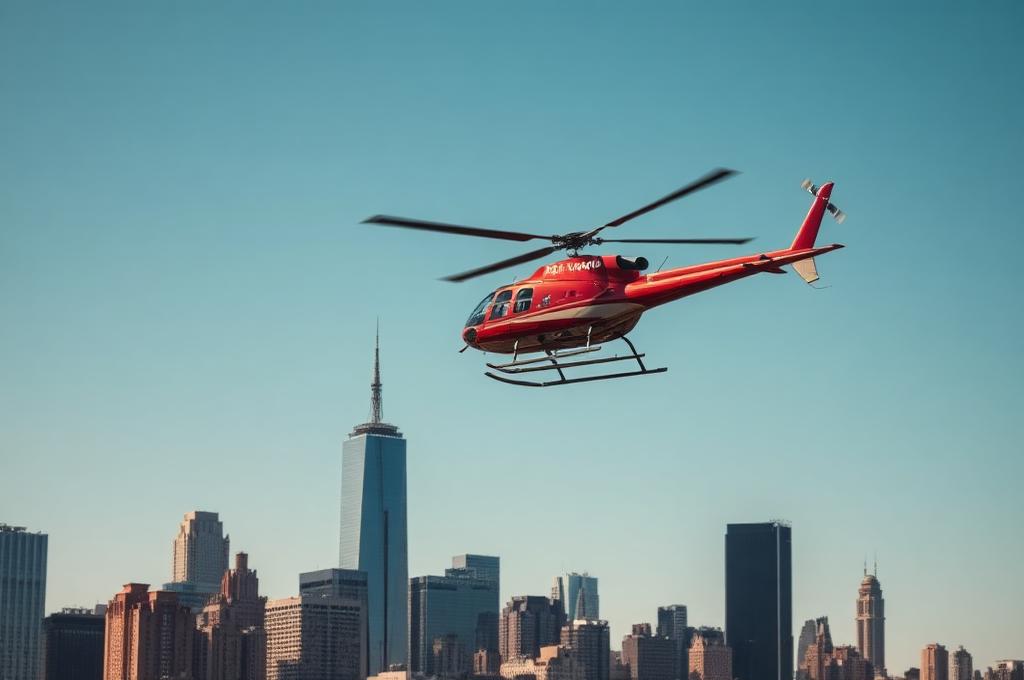
Helicopter
85–95 dB
Safe exposure
30 minutes
Per NIOSH 85 dBA / 8 h reference (3 dB exchange rate)
Above 85 dB can damage hearing with prolonged exposure. Use ear protection.
Personalized verdict
Is this dangerous for you?
Helicopter
90 dB
Typical
Your room
— dB
Tap Compare
Difference
—
Waiting
Audio is processed locally in your browser — nothing is recorded or sent. Prefer the full meter? Open Snap dB
Compare Helicopter to:
Quick Answer
A decibel (dB) is a logarithmic unit used to measure sound intensity: an increase of 10 dB means ten times more sound energy.
A civilian helicopter at 500 ft (150 m) overhead produces about 85–95 dBA outdoors and 60–72 dB inside a typical house. At 1,000 ft it is 75–85 dBA outdoors; at 100 ft it reaches 100–110 dBA. A hover is 5–10 dB louder than a flyover at the same altitude because the exposure is sustained instead of a 20–40 second pass, and cabin levels for crew are 90–100 dBA continuous.
📊 Similar in loudness to a gas-powered lawn mower (about 90 dB).
At a glance
| Typical range | 85–95 dB |
|---|---|
| Safety tier | Loud |
| Safe exposure (NIOSH REL) | 1 hour |
| Audible at | ~50+ ft |
Louder than a garbage disposal (80 dB), quieter than a nightclub dance floor (100 dB).
How these figures were determined: Values are based on published reference levels from NIOSH, OSHA, the WHO and the CDC, together with manufacturer specifications where available. Actual sound levels vary with distance, room acoustics, equipment condition and measurement method, and readings taken with a phone microphone are estimates rather than calibrated measurements.
Helicopter Decibels by Altitude — Outdoors and Indoors
Helicopter noise is three sources stacked together: main rotor blade slap (strongest below about 100 Hz), tail rotor whine (mid frequencies), and turbine or piston engine noise. The mix matters more than the total, because the low-frequency rotor component behaves very differently from the rest once a building is in the way.
Outdoors, a light civilian helicopter at 500 ft overhead is 85–95 dBA at ground level. Indoors, a typical house with closed windows removes 20–30 dB of overall level — but only about 10–15 dB below 125 Hz. That is why the number on your meter falls a lot when you step inside while the characteristic thump barely seems to fade.
Aircraft type shifts the whole curve. Light two-seat trainers sit at the bottom of each range, medium twins such as air-ambulance and news helicopters in the middle, and military or heavy-lift twin-rotor types 8–15 dB above the civilian figures at the same altitude.
| Altitude overhead | Outdoors (dBA) | Indoors, windows closed | Notes |
|---|---|---|---|
| On the ground, 30 m away | 105–115 | 80–90 | Rotor wash and engine both dominant |
| 100 ft (30 m) | 100–110 | 75–85 | Windows and light fittings vibrate |
| 300 ft (90 m) | 92–100 | 68–78 | Conversation outdoors impossible |
| 500 ft (150 m) | 85–95 | 60–72 | Typical urban transit or news altitude |
| 1,000 ft (300 m) | 75–85 | 52–64 | Clearly audible indoors as rotor beat |
| 2,000 ft (600 m) | 65–75 | 45–55 | Recognisable but not intrusive |
| Heavy-lift / military, 500 ft | 95–108 | 70–85 | Twin-rotor types add 8–15 dB |
Flyover values are LAmax during the closest approach. A sustained hover at the same altitude typically reads 5–10 dB higher in LAeq terms because the peak level persists.
This might be louder than you think…
Noise Level: Helicopter
Classification
Loud – Hearing Risk
Safe Exposure
4 hours
Hover vs Flyover: Why Duration Changes Everything
A flyover is a transient. The level rises for 10–20 seconds, peaks as the aircraft passes overhead, and falls away — total event maybe 30–60 seconds. A hover is the peak, held. That distinction explains most helicopter noise complaints, because a news or police helicopter orbiting a scene for twenty minutes delivers roughly the same peak as a flyover but hundreds of times the acoustic energy.
There is a second effect. In descent and low-speed flight, the blades interact with their own shed vortices — blade-vortex interaction — which produces the sharp, impulsive slap that is far more attention-grabbing than a smooth cruise. This is why approach and landing sound harsher than a straight overflight even when the meter shows a similar level, and why complaint volume around helipads correlates with approach paths rather than raw distance.
For hearing, none of this matters at ground level: even 110 dBA for 40 seconds is a tiny dose. For quality of life, it matters enormously — annoyance research consistently finds that impulsive, sustained and repeated events are judged far more disturbing than their LAeq alone would predict.
- Flyover: 30–60 second event, LAmax is the meaningful number
- Hover or orbit: sustained peak, LAeq over 10–20 minutes is the meaningful number
- Approach and descent add impulsive blade slap (blade-vortex interaction)
- Modern blade designs run 5–10 dB quieter than 1980s equivalents
- Cabin interior: 90–100 dBA continuous — the only real hearing-risk position
Typical Sound Levels
Here's where it becomes dangerous…
Noise-induced hearing loss is the second most common form of sensorineural hearing deficit, after age-related loss.
Measure Your Environment
Use Snap Decibel Meter to estimate the sound level around you right now.
Open Noise MeterWho Is Actually at Risk — Ground, Cabin, and Ramp
Ground observers are not at hearing risk from overflights. Under the NIOSH recommended exposure limit (85 dBA for 8 hours, 3 dB exchange rate), a 95 dBA flyover lasting 40 seconds uses well under 1% of a day's allowable dose. Even dozens of passes leave a large margin. The documented ground-level health concerns are annoyance, sleep disturbance and stress from chronic repeated events near helipads, hospitals and training circuits — not noise-induced hearing loss.
Occupants are a different case. A cabin at 90–100 dBA continuous exhausts the NIOSH allowance in roughly 15 minutes to 2 hours, so pilots, crew and frequent passengers need active or passive aviation headsets on every flight, not just long ones. Ramp and ground crew working near a running aircraft face 105–115 dBA, where allowable unprotected time drops to a few minutes and double protection (plugs plus muffs) is standard practice.
If you live under a route and want to document impact, the useful measurements are the number of events per hour, the LAmax of each, and the night-time count — not a single peak reading, which tells a council very little on its own.
How to Document Helicopter Noise Credibly
Complaints backed by a logged pattern carry far more weight than a screenshot of one high number. What decides cases is repetition: how many events, at what level, at what hours, over how many days.
A method that works with a phone: measure outdoors with the microphone shielded from wind, hold the device at arm's length and note the highest reading during each pass (your LAmax proxy) plus the time and the approximate altitude and direction. Log every event for a week, including quiet days. Add an indoor measurement during a pass from your bedroom to establish your building's attenuation, and record the background level between events so the contrast is documented. Night-time events (23:00–07:00) should be flagged separately — most noise frameworks weight them far more heavily.
Snap Decibel Meter provides an unweighted, uncalibrated sound-level estimate with no stated tolerance, and cannot report true impulse peaks or one-third-octave low-frequency content. That is fine for establishing a pattern and a rough magnitude; formal enforcement requires a calibrated Type 1 or Type 2 instrument.
The difference between 'fine' and 'damaging' is smaller than you think.
Understanding Helicopter Noise Levels
Measurement of helicopter at 85–95 dB is well within the capability of both professional instruments (Type 1 and Type 2 sound level meters) and calibrated smartphone apps. At this level, the signal-to-noise ratio is favorable, meaning background noise is unlikely to corrupt your measurement if you follow basic methodology.
Noise at 85–95 dB from helicopter exceeds the maximum level that any regulatory body considers safe for unlimited exposure. At this intensity, sound energy is sufficient to physically damage the stereocilia (hair-like structures) on inner ear sensory cells. These structures do not regenerate in mammals — every exposure above safe limits contributes to permanent, cumulative hearing loss.
Room acoustics have a major impact on how loud helicopter actually sounds. Hard, reflective surfaces (tile, glass, concrete) create reverberation that can increase the effective level by 5–10 dB. Soft materials like curtains, carpet, and upholstered furniture absorb sound waves and make the same source noticeably quieter.
Helicopter vs. Common Noise Sources
At 85–95 dB, helicopter produces roughly the same sound pressure level as a gas-powered lawn mower (90 dB). Both sit in the "outdoor power equipment" range. If you've experienced one, you have a reliable reference for the other — though the frequency content and temporal pattern make each sound subjectively different.
On the quieter end, a vacuum cleaner at 10 feet registers about 75 dB — that's 15 dB below helicopter, representing roughly 3× less perceived loudness. Moving louder, a rock concert front row reaches 110 dB — 20 dB above helicopter, approximately 4× louder to your ears.
The decibel scale is logarithmic — each 10 dB increase represents a tenfold jump in sound energy and roughly a doubling of perceived loudness. At 85–95 dB, helicopter carries 1,000,000,000× more acoustic energy than the threshold of hearing (0 dB), placing it in a well-characterized region of the audible spectrum.
Safe Exposure Duration for Helicopter
According to NIOSH guidelines, the maximum safe exposure time at 95 dB is 1 hour. Earplugs or earmuffs are strongly recommended.
NIOSH Exposure Limits Reference
Hearing Protection Strategies for Helicopter
At 95 dB, helicopter exceeds the hearing damage threshold of 85 dB. Your approach to protection should match your exposure: brief, infrequent contact (minutes per week) poses minimal risk even unprotected, but regular exposure (daily or weekly for 30+ minutes) demands consistent use of NRR 20+ hearing protection to prevent cumulative damage.
The most effective noise reduction combines source treatment, path interruption, and receiver protection — the "source-path-receiver" model used by acoustic engineers. For helicopter at 95 dB, start at the source (can you reduce the noise output?), then address the path (can you add distance, barriers, or absorption?), and finally protect yourself (hearing protection, time limits).
- Monitor cumulative daily exposure — multiple moderate sources compound over time
- Increase distance from helicopter when possible — every doubling cuts the level by 6 dB
- Measure helicopter noise with a smartphone app to establish your actual exposure level
- Add soft furnishings (rugs, curtains, upholstered furniture) to absorb reflected helicopter sound
- Close doors and seal gaps between rooms to reduce transmitted noise by 15–25 dB
Test It Yourself: Measuring Helicopter Noise
To measure helicopter noise as accurately as possible, use a dedicated Type 2 sound level meter or a calibrated smartphone app such as NIOSH SLM. Snap Decibel Meter gives you a fast relative estimate — useful for comparing environments, but uncalibrated and unweighted. Position the device at 1 meter from the source, at the height where you'd normally hear it. Take readings over 30–60 seconds and note both average (Leq) and peak (Lmax) values.
Measuring loud sounds like helicopter at 90 dB requires caution — the measurement process itself exposes you to potentially damaging noise. Wear hearing protection during measurement sessions, use a remote microphone or tripod placement when possible, and limit measurement duration to the minimum needed for representative data.
How Helicopter Noise Affects Your Health
The progression of hearing damage from helicopter exposure follows a predictable pattern: first, temporary threshold shift (sounds seem muffled after exposure), then persistent tinnitus (ringing or buzzing that doesn't resolve), then permanent threshold shift (measurable hearing loss on audiometric testing). Early-stage damage is often unnoticed because the brain compensates by "filling in" missing signals from context.
Warning signs of overexposure to helicopter noise include: ringing, buzzing, or hissing in the ears after exposure; speech sounding muffled or distant; difficulty following conversations in restaurants or social settings; and needing to gradually increase TV or headphone volume. If you experience any of these after exposure to helicopter, reduce future exposure immediately and consult an audiologist.
Warning Signs of Overexposure
- Ringing, buzzing, or hissing in your ears after exposure to helicopter
- Sounds seem muffled or distant after leaving the noisy environment
- Difficulty understanding speech in crowded or noisy settings
- Gradually increasing your TV or headphone volume over weeks
Measure Helicopter Noise Yourself
Want to know how loud helicopter is in your own environment? Use our free decibel meter to take a real-time reading, or check the complete decibel chart to see where 85–95 dB sits on the full scale. You can also compare sounds side by side or use the noise distance calculator to estimate levels at different distances.
🎯 Guess the Decibel Level
How loud do you think Helicopter is? Drag the slider and find out!
Frequently Asked Questions
Why can I hear helicopters so clearly inside my house?
Helicopter rotor noise has a strong low-frequency component that penetrates building walls and windows much better than higher-frequency sounds. Low-frequency sound is harder to block with standard insulation.
Are newer helicopters quieter?
Yes. Modern rotor blade designs and engine technology have reduced helicopter noise by 5–10 dB compared to older models. Some manufacturers are developing electric vertical takeoff aircraft (eVTOL) that promise further reductions.
Why is a hovering helicopter more annoying than one flying past?
A flyover is a 30–60 second event, while a hover holds the peak level continuously. A 20-minute orbit delivers a similar peak but hundreds of times more acoustic energy, and low-speed flight adds impulsive blade slap from blade-vortex interaction.
How loud is a helicopter inside the cabin?
Typically 90–100 dBA continuously. Under the NIOSH recommended exposure limit that allows roughly 15 minutes to 2 hours per day, so pilots, crew and frequent passengers should wear aviation headsets or earplugs on every flight.
Explore More
Related Noise Guides
The Complete Guide to Noise Levels and Decibels
The definitive resource covering everything about noise levels, decibels, safe sound exposure, and how to measure environmental noise — from whispers to jet engines.
25 min readSafe Sound LevelsWhat Noise Level Is Safe for Humans?
Understand recommended noise exposure limits and how long you can safely be exposed to different sound levels without risking hearing damage.
8 min readTraffic & City NoiseHow Loud Is Traffic Noise?
Explore typical traffic noise levels and understand how road noise affects your environment, health, and quality of life.
9 min readMeasurement TipsCan Your Phone Measure Decibels?
Everything you need to know about using your smartphone to measure decibels — from how it works to what you can realistically expect.
8 min readHow Does Helicopter Compare?
Tap any sound to learn more about its noise level.
| Sound level | Sound | Vs. Helicopter | Risk |
|---|---|---|---|
| 90 dB | Helicopter (this page) | — | Loud |
| 78 dB | Traffic Noise | −12 dB quieter | Moderate |
| 78 dB | Safe Sound Levels Chart: How Loud Is Too Loud | −12 dB quieter | Moderate |
| 80 dB | Construction Noise | −10 dB quieter | Moderate |
| 85 dB | What Noise Level Is Safe for Humans | −5 dB quieter | Moderate |
| 103 dB | Train Horn | +13 dB louder | Danger |
| 103 dB | Circular Saw | +13 dB louder | Danger |
Compare With Other Sounds
See how this noise level compares to other everyday sounds.


Test Your Environment
Use Snap Decibel Meter to measure sound levels around you — free, private, and instant.
Start Noise Measurement