How Loud Is a Lawn Mower? Decibel Levels by Mower Type
Push mower, ride-on, robot — the published figures differ by more than 30 dB, and the number on the label is not the number at your ears. Here is the measured data, by mower type.
Reviewed by our team against authoritative public-health sources. See our editorial standards.
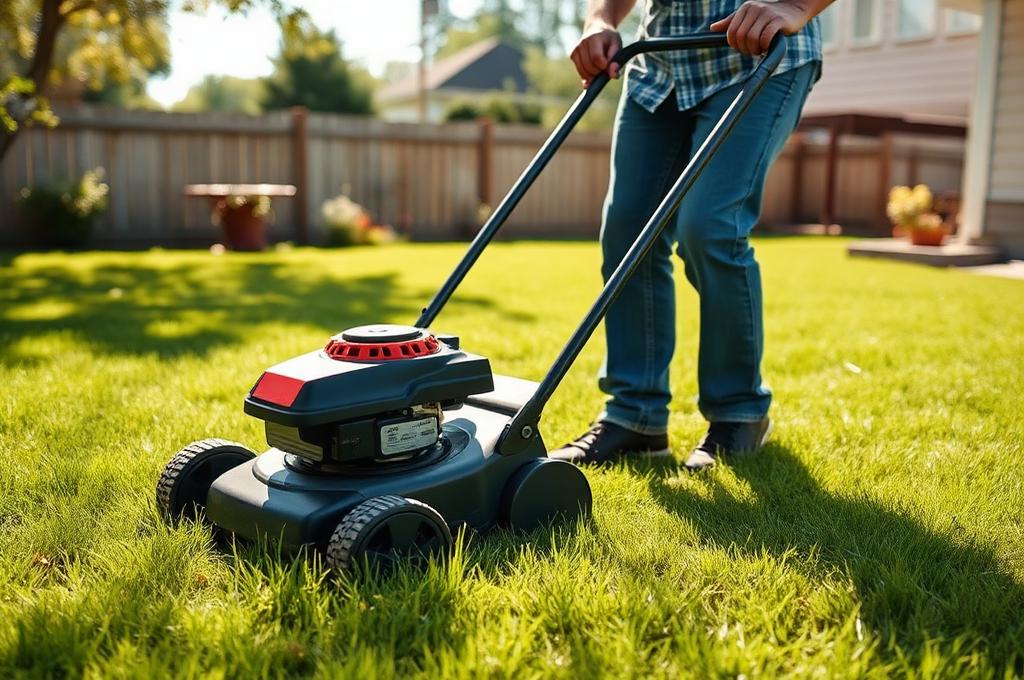
Lawn Mower
84 dB
Safe exposure
8 hours
Per NIOSH 85 dBA / 8 h reference (3 dB exchange rate)
Quick Answer
A decibel (dB) is a logarithmic unit used to measure sound intensity: an increase of 10 dB means ten times more sound energy.
At the operator's position, published manufacturer data measured to EN ISO 5395 puts walk-behind petrol mowers at about 84 dB(A) and ride-on mowers and lawn tractors at 83–92 dB(A) depending on deck size. NIOSH noise dosimetry on municipal grounds staff running petrol riding mowers recorded 87.7–90.3 dBA over partial shifts. The 94–96 dB(A) figure on a European mower's label is a guaranteed sound power level, a source quantity that is deliberately higher than anything measured at a person.
Deck size, deck on or off, and whether the machine is walk-behind, ride-on or robotic each move the figure by several decibels — which is why one "lawn mower" number cannot be right for all of them.
Prolonged exposure above 85 dB can damage hearing.
At a glance
| Typical range | 84 dB |
|---|---|
| Safety tier | Moderate |
How these figures were determined: Operator-position figures are manufacturer declarations measured to EN ISO 5395-1; the field range is NIOSH personal dosimetry on real work shifts; the label values are guaranteed sound power under EU Directive 2000/14/EC. Nothing on this page was measured by us, and we found no verifiable published figure for reel mowers or battery walk-behind mowers.
Measured levels by mower type
The most useful published numbers come from two places: manufacturer declarations, which are measured to a standard and printed in the manual, and occupational dosimetry, where a meter is worn by someone doing the job all day.
Read the table by column, not just by row. The operator-position column is sound pressure where a person's head is. The sound power column is a source quantity used for labelling and market limits — always higher, never a level you stand in.
| Mower | At the operator | Declared sound power | Source |
|---|---|---|---|
| Petrol walk-behind (Cub Cadet CC42/CC46) | 84 dB(A) | 94 dB(A) measured / 96 dB(A) guaranteed | Manufacturer EU emissions declaration |
| Lawn tractor, no deck (John Deere X584) | 83.0 ± 1 dB(A) | Not stated | Operator's manual, EN ISO 5395-1 |
| Lawn tractor, 48-inch deck (X584) | 89.7 ± 1 dB(A) | Not stated | Operator's manual, EN ISO 5395-1 |
| Lawn tractor, 54-inch deck (X584) | 90.7 ± 1 dB(A) | Not stated | Operator's manual, EN ISO 5395-1 |
| Zero-turn, no deck (John Deere Z425) | 87.5 ± 1 dB(A) | Not stated | Operator's manual, EN ISO 5395-1 |
| Zero-turn, 48-inch deck + Power Flow (Z425) | 91.7 ± 1 dB(A) | Not stated | Operator's manual, EN ISO 5395-1 |
| Zero-turn, no deck (John Deere Z645) | 90.5 ± 1 dB(A) | Not stated | Operator's manual, EN ISO 5395-1 |
| Robotic mower (Cub Cadet Lawnkeeper range) | 55–70 dB(A) | 70–74 dB(A) guaranteed | Manufacturer EU emissions declaration |
Manufacturer figures are declarations measured to a standard method, with the stated ± uncertainty where the manual gives one. They are not independent tests, and each row is one product line rather than a market average.
The single biggest variable is the deck
The John Deere manuals are unusually useful because they publish the same machine with and without its cutting deck. On the X584, going from no deck to a 48-inch deck adds 6.7 dB at the operator; the 54-inch deck adds 7.7 dB. On the Z425, a 48-inch deck plus the Power Flow collection system adds 4.2 dB.
That is a large effect for what people think of as the same mower, and it is why a specification sheet number and a real mowing session can differ. Blade tip speed and airflow through the deck, not just the engine, are doing a lot of the work.
What grounds crews actually accumulate
A NIOSH health hazard evaluation at a city public works department put dosimeters on employees operating petrol riding mowers. Individual partial-shift readings were 87.7, 87.8, 89.0, 90.0 and 90.3 dBA; extrapolated to a full shift, the report puts the time-weighted averages at roughly 89–91 dBA against the NIOSH recommended exposure limit and 87–89 dBA against the OSHA permissible exposure limit calculation.
The report is candid about its own limits: a small sample at one employer, some dosimeters malfunctioned, and the shifts sampled were two to three hours rather than eight. It is still the best kind of evidence for this question, because it measures the job rather than the machine.
For reference rather than personal advice: the NIOSH recommended exposure limit is 85 dBA over 8 hours with a 3 dB exchange rate, and OSHA's permissible exposure limit is 90 dBA over 8 hours with a 5 dB exchange rate and an 85 dBA action level. Those two frameworks give different answers for the same measured level, which is why the NIOSH report quotes both.
What the label number is for
EU Directive 2000/14/EC sets maximum guaranteed sound power levels for lawnmowers by cutting width, and requires the guaranteed value to be marked on the machine. The permitted ceilings are 96 dB(A) rising to 94 dB(A) for cutting widths up to 50 cm, 100 then 98 dB(A) for 50–120 cm, and 105 then 103 dB(A) above 120 cm, where the second figure in each pair is the tighter Stage II limit.
Two consequences follow. First, a guaranteed value is a ceiling with a safety margin built in, not a precise measurement of the unit you bought. Second, comparing two mowers' guaranteed LWA values against each other is legitimate and useful — comparing one of them against an operator-ear figure is not.
Where we could not find a number
Reel (push, unpowered) mowers: no published measurement with a stated method or position was found. They are obviously quieter, and we are not going to invent a decibel figure for that.
Battery walk-behind mowers: we found comparative claims expressed as percentages against an occupational exposure limit, and marketing statements about being "three times quieter", but no raw sound level at a stated position from an independent source. Declared sound power values on individual products are the reliable comparison until better data surfaces.
Measuring your own mower
You cannot verify a manufacturer's EN ISO 5395 declaration with a phone or a browser: that figure comes from a defined test at a defined position with instrument-grade equipment.
What our browser meter can do honestly is comparative. Uncalibrated, it shows A-weighted digital signal level in dBFS — a relative number rather than sound pressure. After a one-time calibration against a trusted meter it reports an estimated dBA figure, useful for questions like whether the ride-on is louder than the push mower on your own lawn, or how much level you lose by moving 10 metres away.
Hearing Safety
Most gas-powered lawn mowers exceed 85 dB at the operator's position — the level at which NIOSH recommends hearing protection and OSHA's 85 dBA action level applies at work. Foam earplugs (NRR 30) cost a few dollars and prevent permanent, irreversible noise-induced hearing loss.
Frequently Asked Questions
How loud is a petrol push mower?
One manufacturer's EU declaration for its petrol walk-behind range gives 84 dB(A) at the operator's position, with a measured sound power of 94 dB(A) and a guaranteed label value of 96 dB(A). Other models will differ; the operator figure is the one comparable to what you hear.
Is a ride-on mower louder than a push mower?
In the published data, yes, and the deck is why. Lawn tractors and zero-turns run 83–92 dB(A) at the operator depending on deck size — 89.7 dB(A) with a 48-inch deck versus 83.0 dB(A) with no deck on the same machine.
Why is the number on my mower's label so much higher?
It is a guaranteed sound power level required by EU Directive 2000/14/EC — total radiated acoustic energy, with no distance attached and a compliance margin included. It is meant for comparing machines and enforcing market limits, not for describing what your ears receive.
Do I need hearing protection to mow the lawn?
Operator levels of 84–92 dB(A) sit at or above the 85 dBA reference NIOSH uses for an 8-hour day, and NIOSH dosimetry on grounds crews found full-shift averages around 86–91 dBA. For anything beyond a short mow, protection is a reasonable precaution. This page does not calculate a personal exposure time.
How quiet is a robotic mower?
One manufacturer's declaration for its robotic range gives 55–70 dB(A) at the operator position and guaranteed sound power of 70–74 dB(A) — well below any petrol mower in the same document.
How loud is a battery mower?
We could not find an independently published sound level at a stated position for battery walk-behind mowers, only relative marketing comparisons. Compare the guaranteed sound power values printed on the specific products instead.
Explore More
Related Noise Guides
How Loud Is a Vacuum Cleaner? What the Label Actually Measures
Every vacuum sold in the EU carries a decibel figure on its label, and it is not the level you hear. The distinction is the whole story on this page — and the reason we will not give you a single number.
7 min readMeasurement TipsHow Accurate Are Phone Decibel Meters?
Two research groups have tested phone sound meters properly — one at NIOSH, one across 100 handsets in a reverberation room. Their findings are more specific, and more useful, than "phones are inaccurate".
8 min readHome NoiseHow Loud Is a Chainsaw? (Decibel Levels & Hearing Risk)
A chainsaw has three different published sound levels — the operator's ear, the CE label's sound power, and the level a bystander hears — and they are not interchangeable. Here is what each one actually measures.
5 min readEvidence behind the levels on this page
Every sound level quoted above comes from one of the publications below. For each one we record what was actually measured, the microphone position or distance where that is stated, the metric used, and what the figure can and cannot tell you. Where a source did not state a condition, we say so rather than filling the gap.
EU emissions / noise declaration overview for Cub Cadet garden machinery
Cub Cadet (MTD Products) · Manufacturer compliance datasheet under Directive 2000/14/EC and EN ISO 5395
- What was measured
- Sound pressure at the operator position and measured/guaranteed sound power for petrol walk-behind and robotic mowers
- Reported level
- Petrol push mowers: LpA 84 dB(A), LWA measured 94 dB(A), guaranteed 96 dB(A). Robotic mowers: LpA 55–70 dB(A), guaranteed LWA 70–74 dB(A)
- Distance / position
- Operator position for LpA; sound power has no distance
- Frequency weighting
- A
- Conditions
- Standard test methods per the EN ISO 5395 series and Directive 2000/14/EC
- Supports on this page
- The walk-behind and robotic rows of the type table, and the label explanation
- Limitations
- Manufacturer self-declaration for one brand's product lines, not an independent test or a market average.
Operator's manuals, X584 lawn tractor and Z425 / Z645 zero-turn mowers
John Deere · Manufacturer technical data declared to EN ISO 5395-1
- What was measured
- Sound level at the operator's work station, with and without cutting decks of different widths
- Reported level
- X584: 83.0 ± 1 (no deck), 89.7 ± 1 (48 in), 90.7 ± 1 (54 in) dB(A). Z425: 87.5 ± 1 (no deck), 89.7 ± 1 (48 in), 91.7 ± 1 (48 in + Power Flow). Z645: 90.5 ± 1 (no deck)
- Distance / position
- Operator's work station
- Frequency weighting
- A
- Conditions
- Measured at 3350 rpm per EN ISO 5395-1
- Supports on this page
- The ride-on rows of the table and the deck-size comparison
- Limitations
- One manufacturer's model family; declared values with a stated ±1 dB uncertainty rather than independent measurements.
Health Hazard Evaluation Report 2016-0047-3270 (city public works department)
NIOSH / CDC · 2017 · US federal agency field investigation with personal noise dosimetry
- What was measured
- Noise dose on employees operating petrol riding lawn mowers during real work shifts
- Reported level
- Partial-shift dosimeter readings 87.7, 87.8, 89.0, 90.0 and 90.3 dBA; extrapolated full-shift averages ≈89–91 dBA (NIOSH REL calculation) and ≈87–89 dBA (OSHA PEL calculation)
- Distance / position
- Body-worn dosimeter near the ear, not a fixed distance
- Frequency weighting
- A
- Conditions
- Real municipal grounds work; sampled shifts of two to three hours, some dosimeter malfunctions
- Supports on this page
- The field-exposure section and the hearing-protection answer
- Limitations
- Small sample at a single employer, riding mowers only, partial shifts extrapolated to full days.
Directive 2000/14/EC, Annex I — permissible sound power levels for lawnmowers
European Union · 2000 · EU legislation
- What was measured
- Maximum guaranteed sound power level by cutting width, and the requirement to mark it on the machine
- Reported level
- Cutting width ≤50 cm: 96 then 94 dB(A); 50–70 cm and 70–120 cm: 100 then 98 dB(A); >120 cm: 105 then 103 dB(A) (Stage I then Stage II)
- Distance / position
- Not applicable — sound power
- Frequency weighting
- A
- Conditions
- Measured on a standardised surface per the harmonised test method
- Supports on this page
- The label-numbers section
- Limitations
- A legal ceiling with a compliance margin, not a typical or measured product level.
Levels on this page are published measurements, quoted with the position and conditions their source states. See our editorial standards for how we source and review noise data.
Test Your Environment
Use Snap Decibel Meter to measure sound levels around you — free, private, and instant.
Start Noise Measurement