Noise Basics

    The Complete Guide to Noise Levels and Decibels

    The definitive resource covering everything about noise levels, decibels, safe sound exposure, and how to measure environmental noise — from whispers to jet engines.

    14 min read Updated 2026-03-15
    By Snap Decibel Meter Team·Updated 2026-03-15·Sourced from OSHA, NIOSH, WHO, CDC

    Reviewed by our team against authoritative public-health sources. See our editorial standards.
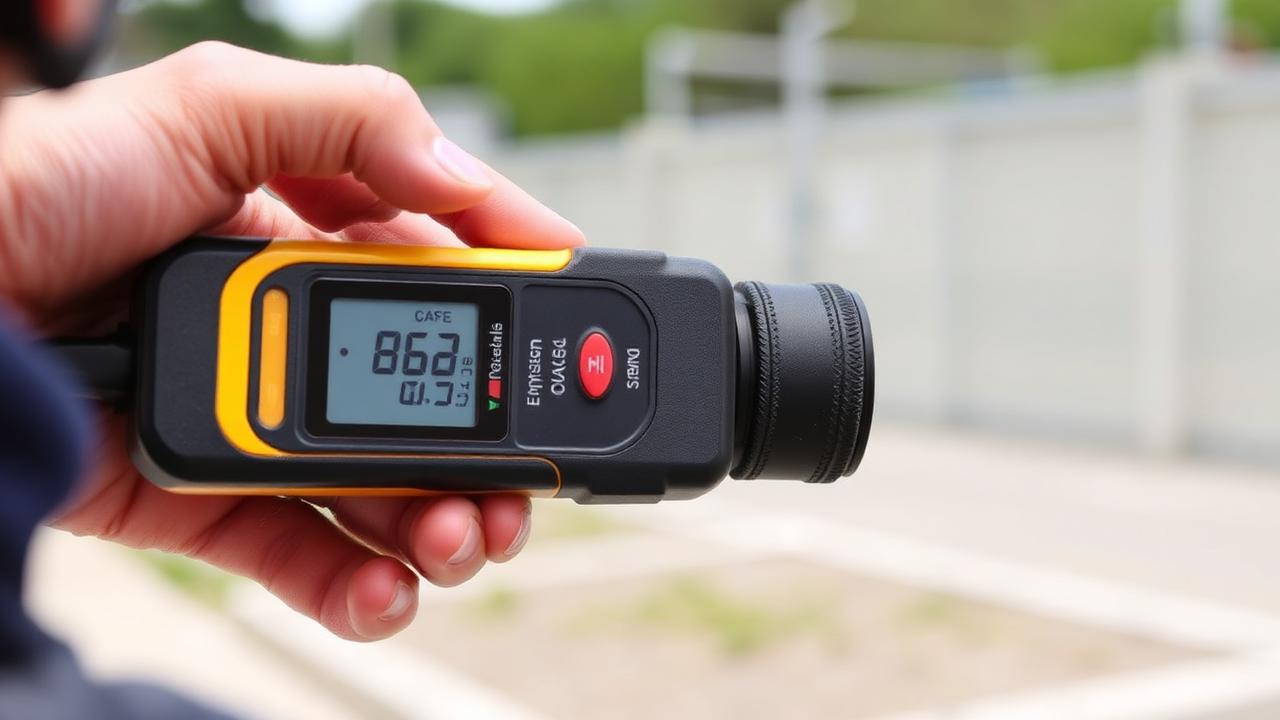
    professional sound level meter measuring environmental noise decibels
    Understanding noise levels and decibels is essential for protecting your hearing and managing your sound environment.

    Quick Answer

    Noise levels are measured in decibels (dB) on a logarithmic scale. Sounds below 70 dB are generally safe for unlimited exposure. Above 85 dB, hearing damage becomes possible with prolonged exposure. Common sounds range from 10 dB (breathing) to over 130 dB (jet takeoff). Understanding these levels helps you protect your hearing and manage your environment.

    70 dBDangerous

    📊 Similar in loudness to a garbage disposal or a vacuum cleaner.

    Prolonged exposure above 85 dB can damage hearing.

    Most household sounds: 30–90 dB+10 dB = 10× sound energy

    At a glance

    Typical range
    70 dB
    Safety tier
    Dangerous
    Safe exposure
    All-day OK
    Audible at
    ~20–30 ft

    Quieter than a vacuum cleaner (75 dB), louder than a busy restaurant (65 dB).

    Introduction: Why Noise Levels Matter

    Sound is an inescapable part of daily life. From the hum of your refrigerator to the roar of traffic outside your window, you are constantly immersed in a world of noise. But how loud is too loud? When does noise cross the line from mere background ambience to a genuine health hazard? These are questions that matter to everyone — whether you live in a busy city, work on a construction site, or simply want to ensure your home is a peaceful retreat.

    Understanding noise levels isn't just about comfort — it's about health. The World Health Organization has identified environmental noise as the second-largest environmental health risk in Europe, behind only air pollution. Prolonged exposure to high noise levels has been linked to hearing loss, cardiovascular disease, sleep disturbance, cognitive impairment in children, and chronic stress.

    This comprehensive guide covers everything you need to know about noise levels and decibels: what they are, how they're measured, what levels are safe, and how you can assess your own environment using modern tools. Whether you're concerned about traffic noise near your home, workplace sound levels, or concert volumes, this guide provides the knowledge you need to make informed decisions about your acoustic environment.

    For detailed breakdowns of specific environments, explore our support articles on topics like traffic noise, construction noise, concert noise, and safe sound levels for sleep. Each article provides in-depth coverage of its specific topic while this guide gives you the complete picture.

    decibel scale chart showing sound levels from 0 to 140 dB
    The decibel scale is logarithmic — every 10 dB increase represents a tenfold increase in sound energy.

    Your ears can't tell you the real danger level here…

    Noise Level: The Complete Guide to Noise Levels and Decibels

    70 dB
    20 dB — Whisper85 dB — Risk140 dB — Pain

    Classification

    Moderate

    Safe Exposure

    No time limit

    Adjust This Level to Your Environment

    What Is a Decibel?

    A decibel (dB) is a unit of measurement used to quantify the intensity of sound. Named after Alexander Graham Bell, the decibel scale is logarithmic rather than linear. This means that every increase of 10 dB represents a tenfold increase in sound intensity — and roughly a doubling of perceived loudness to the human ear.

    The logarithmic nature of the decibel scale exists because the human ear can detect an enormous range of sound pressures. The quietest sound we can hear (0 dB, the threshold of hearing) has a sound pressure roughly 10 million times smaller than the sound pressure of a jet engine at close range (around 140 dB). A linear scale would require impossibly large numbers to represent this range, making logarithmic measurement far more practical.

    a sound at 60 dB (normal conversation) has 10 times more energy than a sound at 50 dB (quiet office). A sound at 70 dB (busy restaurant) has 100 times more energy than 50 dB. And a sound at 90 dB (motorcycle) has 10,000 times more energy than 50 dB. This exponential relationship is why even small increases in decibel readings represent significant changes in actual sound energy.

    The A-weighted decibel scale (dBA) is the most commonly used measurement for environmental and occupational noise. It adjusts the measurement to account for the frequencies that the human ear is most sensitive to, giving a reading that more closely corresponds to perceived loudness. Most noise regulations, safety standards, and consumer noise level apps use dBA measurements. For a deeper dive into the decibel concept, see our article on what a decibel is.

    • 0 dB — threshold of human hearing (near silence)
    • 10 dB increase = 10× more sound energy
    • 20 dB increase = 100× more sound energy
    • 30 dB increase = 1,000× more sound energy
    • Every 10 dB increase sounds roughly twice as loud
    • The human hearing range spans from 0 dB to about 140 dB

    Typical Sound Levels

    10 dBBreathing
    20 dBRustling leaves
    30 dBWhisper
    40 dBQuiet library
    50 dBQuiet office
    60 dBNormal conversation
    70 dBBusy restaurant
    80 dBCity traffic
    85 dBLawn mower (hearing damage threshold)
    90 dBMotorcycle
    100 dBNightclub / power tools
    110 dBRock concert
    120 dBEmergency siren
    130 dBJet takeoff at 100m
    140 dBFireworks / threshold of pain

    Most noise-induced hearing loss happens gradually — without any pain…

    Did You Know?

    Noise-induced hearing loss is the second most common form of sensorineural hearing deficit, after age-related loss.

    Measure Your Environment

    Use Snap Decibel Meter to estimate the sound level around you right now.

    Open Noise Meter

    Typical Everyday Noise Levels

    Understanding where common sounds fall on the decibel scale gives you a practical framework for interpreting noise measurements and assessing your environment. Here is a comprehensive overview of typical noise levels you encounter in daily life, from the quietest to the most extreme.

    Very quiet environments (0–30 dB) include near-silence situations: breathing (10 dB), rustling leaves (20 dB), and whispering (30 dB). These levels pose no hearing risk whatsoever and are generally associated with calm, relaxing environments. A quiet rural area at night might register 20–30 dB.

    Quiet to moderate environments (30–60 dB) encompass most comfortable indoor settings: a library (35 dB), quiet home with no appliances running (40 dB), light rainfall (45 dB), a quiet office (50 dB), and normal conversation at 1 meter distance (55–65 dB). These levels are safe for unlimited exposure and represent the acoustic baseline of daily life for most people.

    Moderately loud environments (60–80 dB) begin to demand attention: a busy restaurant (70 dB), a vacuum cleaner (75 dB), city traffic from the sidewalk (80 dB), and a garbage disposal (80 dB). While generally not immediately dangerous, prolonged exposure at the upper end of this range (above 70 dB) has been associated with stress and cardiovascular effects in long-term studies.

    Loud environments (80–100 dB) present real hearing risks with extended exposure: a lawn mower (85 dB), a motorcycle (90 dB), a power drill (95 dB), and a nightclub (100 dB). The 85 dB threshold is critical — it's the level at which hearing damage begins with prolonged exposure. At 85 dB, the safe exposure limit is 8 hours. At 100 dB, it drops to just 15 minutes.

    Very loud to extreme environments (100+ dB) are immediately hazardous: a rock concert near speakers (110–115 dB), an emergency siren (120 dB), a jet engine at 100 meters (130 dB), and fireworks at close range (140–150 dB). These levels can cause pain and immediate hearing damage. Hearing protection is absolutely essential. For a detailed breakdown, see our guide to typical everyday sound levels.

    construction site noise levels heavy machinery
    Construction sites regularly produce noise levels of 85–110 dB, requiring hearing protection for workers.

    Safe Noise Exposure Levels

    Understanding safe noise exposure limits is crucial for protecting your long-term hearing health. The relationship between noise level and safe exposure duration follows a clear pattern: the louder the sound, the less time you can safely be exposed to it.

    The internationally recognized threshold for hearing damage risk is 85 dB with continuous exposure over 8 hours. This is the NIOSH recommended exposure limit (REL), and the same 85 dBA 8-hour average is OSHA’s action level for hearing conservation programs. OSHA’s own permissible exposure limit is separate: 90 dBA over 8 hours with a 5 dB exchange rate. Below 70 dB, noise is generally considered safe for unlimited exposure durations.

    The 3 dB exchange rate (used by WHO and NIOSH, not by OSHA) means that for every 3 dB increase above 85 dB, the safe exposure time is halved. At 88 dB, the limit drops to 4 hours. At 91 dB, it's 2 hours. At 94 dB, just 1 hour. At 100 dB, only 15 minutes. At 110 dB, safe exposure is measured in seconds, not minutes.

    It's important to understand that hearing damage from noise is cumulative and permanent. The hair cells in the inner ear that detect sound vibrations cannot regenerate once damaged. This makes prevention the only effective strategy. There is no treatment that can restore hearing lost to noise damage.

    Children are especially vulnerable to noise exposure. Their ear canals are smaller, which can amplify sound, and they may not recognize or communicate discomfort from loud environments. The WHO recommends that children's exposure to recreational noise should not exceed 75 dB to provide an additional safety margin. For comprehensive information on safe levels, read our guide to safe noise levels for daily exposure.

    • Below 70 dB — safe for unlimited exposure
    • 85 dB — maximum 8 hours (workplace safety threshold)
    • 88 dB — maximum 4 hours
    • 91 dB — maximum 2 hours
    • 94 dB — maximum 1 hour
    • 97 dB — maximum 30 minutes
    • 100 dB — maximum 15 minutes
    • 110 dB — maximum 1 minute
    • Above 120 dB — immediate pain and hearing damage risk

    Traffic Noise

    Traffic noise is the most pervasive source of environmental noise pollution worldwide. The European Environment Agency estimates that over 100 million people in Europe alone are exposed to harmful levels of road traffic noise. In urban areas, traffic is often the dominant noise source, creating a constant acoustic backdrop that affects quality of life, sleep, and health.

    Typical traffic noise levels vary significantly depending on the type of road and traffic volume. A quiet residential street with occasional cars generates about 55–65 dB. A moderately busy urban road produces 65–75 dB. A major urban arterial with heavy traffic reaches 75–85 dB. Highways with truck traffic can exceed 85–90 dB. Individual vehicles produce different noise levels: a passing car at 50 km/h generates about 70 dB at 7.5 meters, while a heavy truck at the same distance produces 80–85 dB. Motorcycles can exceed 90 dB.

    The health impacts of chronic traffic noise exposure are well-documented. Long-term exposure to road traffic noise above 53 dB (day-evening-night average) has been associated with increased risk of cardiovascular disease, including hypertension and heart attack. Night-time traffic noise above 45 dB disrupts sleep patterns even when it doesn't fully wake you. The WHO considers traffic noise a significant public health concern.

    If you live near a busy road, measuring traffic noise can help you understand your exposure and decide whether noise-reduction measures are warranted. Double-glazed windows, heavy curtains, and sealing gaps can reduce indoor noise by 10–25 dB. For a detailed analysis, see our article on how loud traffic noise really is.

    home appliance noise levels vacuum cleaner washing machine
    Common household appliances generate moderate noise levels between 55–85 dB.

    Construction Noise

    Construction sites are among the loudest environments most people regularly encounter. The noise generated by construction activities can affect workers on-site, nearby residents, and the surrounding community. Understanding typical construction noise levels is important for both occupational safety and community awareness.

    General construction activity — movement of materials, hand tools, verbal communication — typically produces 80–85 dB. Heavy equipment like excavators and bulldozers generates 85–95 dB. Power tools including circular saws (90–100 dB), hammer drills (100–110 dB), and jackhammers (100–110 dB) push noise levels into the dangerous range. Pile driving, one of the loudest construction activities, can produce 95–105 dB at the work site and remain audible at significant distances.

    Workers on construction sites are required by law in most countries to wear hearing protection when noise levels exceed 85 dB. Employers must conduct noise assessments, provide appropriate hearing protection, and implement engineering controls to reduce noise where possible. Despite these regulations, construction-related hearing loss remains one of the most common occupational health issues.

    For nearby residents, most local noise ordinances limit construction noise at property boundaries to 65–75 dB during permitted hours (typically daytime on weekdays). If you suspect a nearby construction site is exceeding these limits, measuring the noise with Snap Decibel Meter can provide useful documentation. For more details, read our guide to construction noise levels.

    aircraft noise levels airplane approaching residential area
    Aircraft produce some of the loudest noise in daily life, exceeding 130 dB at close range during takeoff.

    Airport and Aircraft Noise

    Aircraft noise represents one of the most intense noise sources in residential environments. Communities near airports can experience noise levels far exceeding those from traffic or construction, particularly during takeoff and landing operations.

    At close range, jet aircraft produce extraordinary noise levels. During takeoff, noise at the runway threshold can exceed 130 dB — well above the pain threshold. At 1 kilometer from the runway, takeoff noise is typically 90–105 dB. At 2–3 kilometers, it drops to 75–90 dB. Landing aircraft are somewhat quieter but still produce 75–85 dB at 1–2 kilometers.

    The impact of airport noise extends beyond simple annoyance. Research has shown that chronic aircraft noise exposure is associated with cardiovascular disease, learning difficulties in children attending schools near airports, and significant sleep disruption. Many countries have established airport noise zones with building restrictions and soundproofing requirements for homes within affected areas.

    If you're evaluating a home near an airport or concerned about aircraft noise in your area, measuring noise over several hours or days captures the full pattern of exposure. Single measurements during quiet periods don't represent the complete picture. For guidance on measuring airport noise, see our airport noise measurement guide.

    Noise at Home

    Your home should be a sanctuary from noise, but many common household activities and appliances produce significant sound levels. Understanding home noise helps you create a more comfortable and healthier living environment.

    Common home noise sources and their approximate levels include: a refrigerator humming (35–40 dB), dishwasher running (55–65 dB), washing machine on spin cycle (65–75 dB), television at normal volume (55–65 dB), vacuum cleaner (70–80 dB), blender (80–90 dB), and a food processor (80–85 dB). Most of these fall within safe ranges for temporary use, but a vacuum cleaner and blender approach levels where prolonged exposure could be concerning.

    Bedroom noise is particularly important because it directly affects sleep quality. The WHO recommends indoor bedroom noise should not exceed 30 dB for quality sleep. Even moderate noise levels of 40–50 dB can reduce deep sleep time and increase nighttime awakenings. Traffic noise, neighbors, and even household appliances can push bedroom noise above recommended levels.

    Simple noise-reduction strategies for the home include: using quieter appliance settings when possible, running dishwashers and washing machines during daytime hours, adding rugs and soft furnishings to absorb sound, weatherstripping doors and windows, and choosing quieter appliance models when replacing old ones. For sleep-specific guidance, read our article on noise levels for healthy sleep.

    • Refrigerator: 35–40 dB
    • Dishwasher: 55–65 dB
    • Washing machine (spin): 65–75 dB
    • TV at normal volume: 55–65 dB
    • Vacuum cleaner: 70–80 dB
    • Blender: 80–90 dB
    • Hair dryer: 80–90 dB
    using smartphone to measure environmental noise levels in decibels
    Modern smartphones can function as basic sound level meters for everyday noise assessment.

    How to Measure Noise

    Measuring noise levels used to require expensive professional equipment, but modern technology has made basic sound measurement accessible to everyone. There are several methods available, each with different levels of accuracy and cost.

    Professional sound level meters (Type 1 and Type 2) are calibrated instruments that meet international standards (IEC 61672). Type 1 meters, used for precision measurements, cost $1,000–$5,000 or more. Type 2 meters, suitable for general field measurements, range from $200–$1,000. These instruments are required for legal compliance measurements, occupational safety assessments, and scientific research.

    Smartphone-based sound meters have emerged as practical alternatives for everyday use. Apps like Snap Decibel Meter use the phone's built-in microphone and the Web Audio API to estimate noise levels in real time. While not as precise as professional instruments (typical accuracy is ±3–10 dB), they provide useful estimates for everyday noise assessment — checking if your office is too noisy, getting a sense of traffic volume, or comparing different environments.

    For the most accurate phone measurements, keep these tips in mind: hold your phone at arm's length with the microphone pointed toward the noise source. Avoid covering the microphone with your fingers. Measure for at least 30 seconds to get a meaningful average, since environmental noise fluctuates constantly. Shield your phone from wind when measuring outdoors, as wind can add 10–20 dB of false noise. For detailed outdoor measurement tips, read our guide to measuring environmental noise outdoors.

    Using Your Phone as a Noise Meter

    The smartphone in your pocket is a surprisingly capable noise measurement tool. Modern phones have high-quality MEMS microphones that, combined with the right software, can provide useful estimates of environmental noise levels. Tools like Snap Decibel Meter process audio in real time using the Web Audio API, calculating RMS amplitude and converting it to an estimated dB value.

    The accuracy of phone-based noise measurements depends on several factors. The microphone quality varies between phone models — flagship phones generally have better microphones with wider frequency response and lower noise floors. Environmental conditions matter: wind is the biggest enemy of accurate outdoor measurements, adding 10–20 dB of false noise. Reflections from nearby surfaces, the phone's orientation, and even a protective case can affect readings.

    Despite these limitations, phone noise meters are perfectly practical for the use cases most people need: getting a quick sense of how loud your environment is, comparing different locations or times of day, checking whether your home or workplace exceeds comfortable levels, and building general awareness of the sound levels in your daily life.

    Phone noise meters should not be used as substitutes for professional instruments in contexts requiring certified measurements: legal noise complaints, occupational safety documentation, real estate disclosures, or scientific research. For these purposes, a calibrated Type 1 or Type 2 sound level meter is required. For more on phone accuracy, read can your phone measure decibels accurately.

    busy city street traffic noise levels measurement
    Traffic is one of the most common sources of environmental noise pollution, typically ranging from 70–85 dB.

    Most people underestimate this sound — don't be one of them.

    🎯 Guess the Decibel Level

    How loud do you think The Complete Guide to Noise Levels and Decibels is? Drag the slider and find out!

    🤫 Whisper70 dB🔊 Jet Engine

    Hearing Safety

    Noise-induced hearing loss is permanent and cumulative. There is no medical treatment that can restore hearing damaged by noise exposure. Prevention through awareness and hearing protection is the only effective strategy. If you need to raise your voice to be heard by someone 1 meter away, the noise level likely exceeds 85 dB and hearing protection should be used.

    construction site noise levels heavy machinery
    Construction sites regularly produce noise levels of 85–110 dB, requiring hearing protection for workers.

    Frequently Asked Questions

    What is a safe noise level?

    Below 70 dB is generally safe for unlimited exposure. Above 85 dB, hearing protection is recommended. The safe exposure time decreases as the noise level increases — at 100 dB, the limit is just 15 minutes.

    How many decibels is too loud?

    Sustained exposure above 85 dB can cause hearing damage over time. Sounds above 120 dB can cause immediate pain and potential injury. Even brief exposure to 140+ dB can cause permanent damage.

    Can I measure decibels with my phone?

    Yes. Apps like Snap Decibel Meter use your phone's microphone to estimate sound levels. While not as precise as professional meters (±3–10 dB), they're practical for everyday use.

    What is the loudest sound a human can hear?

    The threshold of pain is approximately 120–130 dB. Sounds above 140 dB can cause immediate permanent hearing damage. The loudest recorded sound was the 1883 eruption of Krakatoa, estimated at 180 dB at 160 km away.

    How does noise affect health?

    Chronic noise exposure above 70 dB has been linked to cardiovascular disease, hypertension, sleep disturbance, cognitive impairment, and chronic stress. The WHO considers environmental noise the second-largest environmental health risk in Europe.

    Is road traffic noise dangerous?

    Typical traffic noise (70–85 dB) rarely causes direct hearing damage but prolonged daily exposure has been linked to cardiovascular disease, sleep disruption, and stress-related health effects.

    How Does The Complete Guide to Noise Levels and Decibels Compare?

    Tap any sound to learn more about its noise level.

    Test Your Environment

    Use Snap Decibel Meter to measure sound levels around you — free, private, and instant.

    Start Noise Measurement