How Loud Is a School Classroom? Noise & Learning Impact
Classroom acoustics is one of the best-regulated areas in this whole subject — for empty rooms. What an occupied classroom actually measures is far less well documented, and this page says so.
Reviewed by our team against authoritative public-health sources. See our editorial standards.
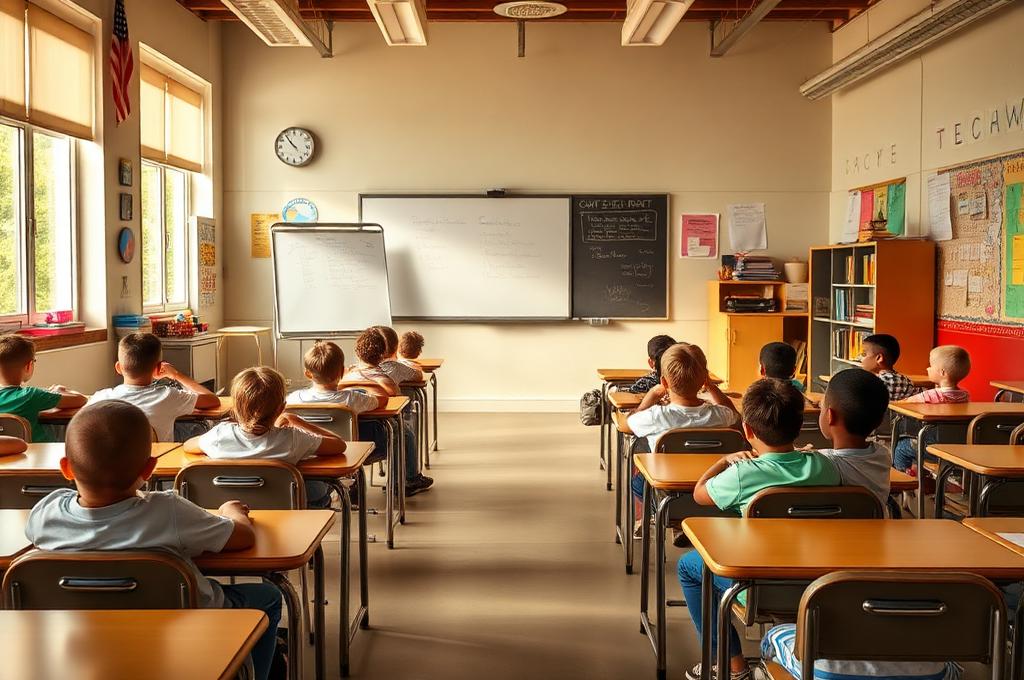
School Classroom
35 dB
Safe exposure
All-day OK
Per NIOSH 85 dBA / 8 h reference (3 dB exchange rate)
Quick Answer
A decibel (dB) is a logarithmic unit used to measure sound intensity: an increase of 10 dB means ten times more sound energy.
The well-documented classroom figures are design limits for unoccupied rooms: 35 dB(A) background noise under ANSI/ASA S12.60 for core learning spaces, 35 dB LAeq under WHO community-noise guidance during teaching, and 35 dB LAeq for new-build primary classrooms in the UK's Building Bulletin 93 (40 dB for refurbishments). Occupied levels are considerably higher, but we could not find a defensible published figure for general classroom activity noise — the verified occupied data we found covers school gymnasiums, where physical-education sessions measured 68–90 dB LAeq.
Almost every number in classroom acoustics is a target for an empty room, because that is what a building can be designed and tested against. Occupied levels depend on the activity and the number of children.
At a glance
| Typical range | 35 dB |
|---|---|
| Safety tier | Safe |
How these figures were determined: The limits are quoted from the ANSI/ASA classroom acoustics standard, WHO community-noise guidelines and UK Building Bulletin 93. The occupied figures come from a peer-reviewed survey of 68 Portuguese school gymnasiums. Where we had no verified occupied-classroom data, the page says so rather than estimating.
The standards: what an empty classroom should measure
Three independent frameworks converge on almost the same number, which is unusual and worth noticing. ANSI/ASA S12.60 Part 1 sets a one-hour average background level of 35 dB(A) for core learning spaces up to 20,000 cubic feet, together with reverberation limits of 0.6 seconds — tightened to 0.3 seconds for rooms serving pupils with hearing loss.
The WHO's Guidelines for Community Noise recommend 35 dB LAeq in classrooms during teaching sessions. The UK's Building Bulletin 93 requires an indoor ambient noise level of 35 dB LAeq over 30 minutes for new primary classrooms and 40 dB for refurbishments, 30 dB for spaces serving pupils with very high sensitivity to noise, and caps discrete events at 60 dB LA1 over 30 minutes.
All of these are unoccupied criteria: they describe the room's inherent quietness, not the lesson. That is deliberate — you can design and verify a building, but you cannot design how loud a class of nine-year-olds is.
| Framework | Background noise limit | Reverberation / other |
|---|---|---|
| ANSI/ASA S12.60-2010 Part 1 (R2015) | 35 dB(A), 1-hour average, core learning spaces ≤20,000 ft³ | RT ≤0.6 s; ≤0.3 s where pupils have hearing loss |
| WHO Guidelines for Community Noise (1999) | 35 dB LAeq during teaching | Recommendation, not a building code |
| UK Building Bulletin 93 — new primary classroom | 35 dB LAeq,30min | Discrete events ≤60 dB LA1,30min |
| UK Building Bulletin 93 — refurbishment | 40 dB LAeq,30min | Same event criterion |
| UK Building Bulletin 93 — very high noise sensitivity | 30 dB LAeq,30min | Applies to specified SEN spaces |
These are design and compliance criteria for the empty room. None of them describes the level during a lesson.
What an occupied classroom measures: an honest gap
This is where the evidence thins out. We looked for peer-reviewed measurements of activity noise in occupied general classrooms with a stated method, and did not find figures we could verify. A large 2021 study in the Journal of the Acoustical Society of America surveyed 220 classrooms and reported that 74% met reverberation recommendations, but we could not extract its occupied-level values.
So rather than repeat the 60–70 dB figures that circulate without sourcing, we are stating the gap. What can be said with confidence: occupied levels are far above the 35 dB design criterion, they vary with activity and group size, and a room that fails its unoccupied criterion will be worse in every occupied condition too.
Where occupied data does exist: school gymnasiums
A peer-reviewed survey of 68 school gymnasiums in Portugal measured both states, and it is the clearest occupied-versus-unoccupied contrast we found in a school setting.
Unoccupied, the gymnasiums measured 30–59 dB LAeq with a median of 42 dB. Occupied during physical education, they measured 68–90 dB LAeq with a median of 80 dB — roughly 38 dB above the unoccupied median. Reverberation times ran 2.5 to 8.1 seconds (median 4.8), and speech transmission scores (RASTI) were 0.26–0.54 with a median of 0.34, which is poor.
Gymnasiums are not classrooms, and nobody should transfer the 80 dB median into a maths lesson. What the data does show is the scale of the occupied-versus-empty difference in a real school building, and how badly long reverberation damages intelligibility.
| Condition | Range | Median |
|---|---|---|
| Unoccupied background level | 30–59 dB LAeq | 42 dB LAeq |
| Occupied during physical education | 68–90 dB LAeq | 80 dB LAeq |
| Reverberation time | 2.5–8.1 s | 4.8 s |
| Speech transmission index (RASTI) | 0.26–0.54 | 0.34 |
Gymnasiums, not classrooms. Included because it is verified occupied school data with a stated method.
Why background level matters more than it sounds
The reason standards care about a 5 dB difference in an empty room is speech intelligibility. What matters for a child is the signal-to-noise ratio between the teacher's voice and everything else, and reverberation smears speech over time as well as adding level.
The gymnasium data shows both effects at once: a median RASTI of 0.34 with reverberation approaching five seconds means speech is genuinely hard to follow, regardless of how loudly anyone talks. That is why BB93 and ANSI/ASA regulate reverberation alongside background noise, and why the standards tighten both for pupils with hearing loss.
Cafeterias and other school spaces
School cafeterias come up constantly in this discussion, and the sourcing is weak. An Acoustical Society of America lay-language summary reports that some school cafeterias exceed 85 dBA, which is plausible and consistent with the gymnasium data, but it is a summary rather than a measurement report with a stated method.
We are including it flagged as low-weight evidence rather than as a figure to rely on.
Measuring a classroom yourself
There is a real limit here that is easy to miss: a 35 dB(A) criterion is close to the noise floor of consumer microphone hardware. Verifying an unoccupied classroom against BB93 or ANSI/ASA requires an instrument-grade meter with a low enough self-noise, and a phone or laptop is not that instrument.
Occupied levels, at 60 dB and above, are well within range of a calibrated consumer measurement. Uncalibrated, our meter reports A-weighted signal level in dBFS — a relative figure, useful for comparing group work against quiet reading in the same room on the same device. Calibrated once against a trusted meter, it reports an estimated dBA figure. Neither mode can be used for a compliance test.
Frequently Asked Questions
How quiet should a classroom be?
Unoccupied, 35 dB(A) is the recurring criterion: ANSI/ASA S12.60 sets 35 dB(A) as a one-hour average for core learning spaces, the WHO recommends 35 dB LAeq during teaching, and UK Building Bulletin 93 requires 35 dB LAeq,30min for new primary classrooms (40 dB for refurbishments).
How loud is an occupied classroom?
We could not find verifiable published measurements of activity noise in occupied general classrooms, so this page does not give a figure. Verified occupied school data exists for gymnasiums, where physical-education sessions measured 68–90 dB LAeq with a median of 80 dB.
Why do the standards regulate reverberation as well as noise?
Because intelligibility depends on both. In the gymnasium survey, reverberation times of 2.5–8.1 seconds produced RASTI speech-transmission scores of 0.26–0.54 — poor comprehension regardless of level. ANSI/ASA limits reverberation to 0.6 seconds in classrooms, and 0.3 seconds where pupils have hearing loss.
Are school cafeterias dangerously loud?
An Acoustical Society of America lay-language summary reports that some exceed 85 dBA. We flag that as low-weight evidence: it is a summary rather than a measurement report with a stated method.
Can I check my classroom's noise level with a phone?
Not against the 35 dB standards — that level is close to the noise floor of consumer microphones, and compliance testing needs an instrument-grade meter. Comparing occupied conditions in the same room on the same device is a reasonable use.
Explore More
Related Noise Guides
How Loud Is a Concert or Festival?
Concert loudness is one of the few sound questions with real regulatory numbers attached. The WHO standard, Swiss ordinance and Flemish rules all set ceilings — and they set them on different averaging times, which changes everything.
9 min readMeasurement TipsHow Accurate Are Phone Decibel Meters?
Two research groups have tested phone sound meters properly — one at NIOSH, one across 100 handsets in a reverberation room. Their findings are more specific, and more useful, than "phones are inaccurate".
8 min readEvidence behind the levels on this page
Every sound level quoted above comes from one of the publications below. For each one we record what was actually measured, the microphone position or distance where that is stated, the metric used, and what the figure can and cannot tell you. Where a source did not state a condition, we say so rather than filling the gap.
ANSI/ASA S12.60-2010/Part 1 (R2015) — Acoustical Performance Criteria for Schools
Acoustical Society of America / ANSI · 2010, reaffirmed 2015 · National consensus standard
- What was measured
- Maximum background noise level and reverberation time for core learning spaces
- Reported level
- 35 dB(A) one-hour average background level for core learning spaces ≤20,000 ft³
- Distance / position
- Room criterion, unoccupied
- Frequency weighting
- A
- Conditions
- Unoccupied room; RT ≤0.6 s, ≤0.3 s for rooms serving pupils with hearing loss
- Supports on this page
- The design-limits table and the reverberation discussion
- Limitations
- A design criterion for empty rooms; it says nothing about levels during teaching.
Guidelines for Community Noise
World Health Organization · 1999 · International health-agency guidance
- What was measured
- Recommended background level for classrooms during teaching
- Reported level
- 35 dB LAeq
- Distance / position
- Room criterion
- Frequency weighting
- A
- Conditions
- During teaching sessions
- Supports on this page
- The WHO row of the limits table
- Limitations
- Guidance rather than a building code, and no occupied activity levels are given.
Building Bulletin 93 — Acoustic design of schools: performance standards
UK Department for Education · 2014–2015 · National government performance standard
- What was measured
- Indoor ambient noise level limits by room type and build status, and limits on discrete noise events
- Reported level
- New primary classrooms 35 dB LAeq,30min; refurbishment 40 dB; spaces for pupils with very high noise sensitivity 30 dB; discrete events ≤60 dB LA1,30min
- Distance / position
- Room criterion, unoccupied
- Frequency weighting
- A
- Conditions
- Measured over 30 minutes in the unoccupied room
- Supports on this page
- The UK rows of the limits table
- Limitations
- Applies to building design and verification, not to occupied lesson levels.
Acoustic characterisation of school gymnasiums
University of Porto (Carvalho & Barreira) · 2014 · Peer-reviewed field survey of 68 school gymnasiums
- What was measured
- Background and occupied sound levels, reverberation time and RASTI in 68 school gymnasiums
- Reported level
- Unoccupied 30–59 dB LAeq (median 42); occupied during PE 68–90 dB LAeq (median 80); RT 2.5–8.1 s (median 4.8); RASTI 0.26–0.54 (median 0.34)
- Distance / position
- Room measurements at defined positions within each gymnasium
- Frequency weighting
- A
- Conditions
- Both unoccupied and during physical-education sessions
- Supports on this page
- The gymnasium table and the intelligibility discussion
- Limitations
- Gymnasiums, not classrooms, and one country's school stock. The occupied median cannot be transferred to a classroom.
Lay-language paper on school cafeteria noise
Acoustical Society of America (Bridger, lay-language summary) · Conference lay-language summary — low evidential weight
- What was measured
- Noise levels in school cafeterias
- Reported level
- Some cafeterias exceed 85 dBA
- Distance / position
- Not stated
- Frequency weighting
- A
- Conditions
- Not stated
- Supports on this page
- Only the flagged cafeteria paragraph
- Limitations
- A summary without a published method, sample or measurement position.
Levels on this page are published measurements, quoted with the position and conditions their source states. See our editorial standards for how we source and review noise data.
Test Your Environment
Use Snap Decibel Meter to measure sound levels around you — free, private, and instant.
Start Noise Measurement