How Loud Is a Parrot? Decibel Levels Explained
Parrots produce 70–120 dB depending on species — large cockatoos and macaws rival rock concert volumes.
Reviewed by our team against authoritative public-health sources. See our editorial standards.
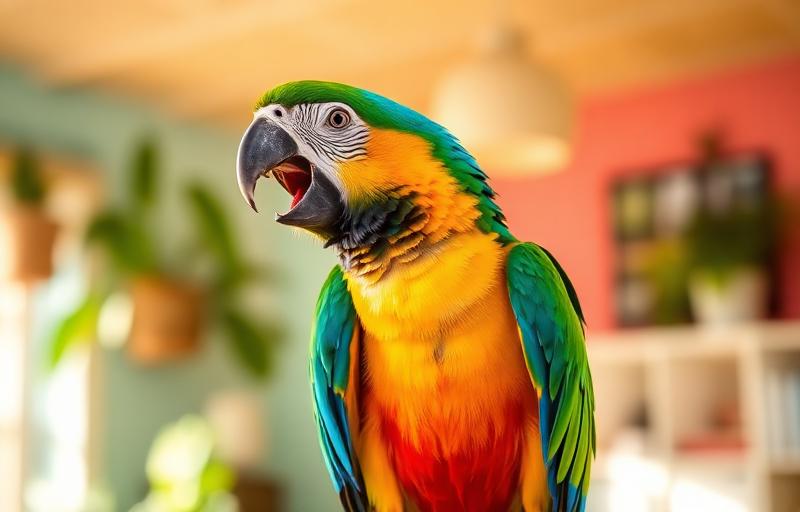
Parrot
70–120 dB
Safe exposure
Instant risk
Per NIOSH 85 dBA / 8 h reference (3 dB exchange rate)
Above 85 dB can damage hearing with prolonged exposure. Use ear protection.
Personalized verdict
Is this dangerous for you?
Parrot
95 dB
Typical
Your room
— dB
Tap Compare
Difference
—
Waiting
Audio is processed locally in your browser — nothing is recorded or sent. Prefer the full meter? Open Snap dB
Compare Parrot to:
Quick Answer
A decibel (dB) is a logarithmic unit used to measure sound intensity: an increase of 10 dB means ten times more sound energy.
Parrot noise ranges from 70 to 120 decibels depending on species. Budgerigars and cockatiels are relatively quiet at 70–85 dB. Amazon parrots reach 85–100 dB. Macaws and cockatoos are the loudest at 100–120 dB — comparable to a chainsaw or rock concert. These are sustained levels that parrots can maintain for hours, making species selection critical for noise-sensitive households.
📊 Similar in loudness to a motorcycle at 25 feet (about 95 dB).
Prolonged exposure above 85 dB can damage hearing.
At a glance
| Typical range | 70–120 dB |
|---|---|
| Safety tier | Dangerous |
| Safe exposure (NIOSH REL) | Immediate risk |
| Audible at | ~50+ ft |
Louder than a busy restaurant (65 dB), quieter than a jet takeoff at 100 metres (130 dB).
How these figures were determined: Values are based on published reference levels from NIOSH, OSHA, the WHO and the CDC, together with manufacturer specifications where available. Actual sound levels vary with distance, room acoustics, equipment condition and measurement method, and readings taken with a phone microphone are estimates rather than calibrated measurements.
Noise Levels by Parrot Species
Parrot volume correlates roughly with body size, but vocal behavior matters too:
- Budgerigar (parakeet): 65–75 dB — chirps and chattering
- Cockatiel: 70–82 dB — whistles and contact calls
- Conure (sun, green-cheeked): 80–95 dB — piercing contact screams
- Amazon parrot: 85–100 dB — loud talking and screaming
- African grey: 80–95 dB — moderate screams, excellent mimicry
- Cockatoo (moluccan, umbrella): 100–120 dB — ear-splitting screams
- Macaw (scarlet, blue-and-gold): 100–115 dB — deep, powerful calls
Your ears can't tell you the real danger level here…
Noise Level: Parrot
Classification
Loud – Hearing Risk
Safe Exposure
1 hour
Why Parrots Scream
In the wild, parrots call to maintain flock contact across dense forest canopy. These calls evolved to travel 1–3 km through vegetation — they're designed to be loud, piercing, and impossible to ignore. In captivity, the same instinctual calling behavior produces indoor noise levels that can exceed 100 dB.
Parrots typically have two daily screaming periods: dawn and dusk flock calls lasting 15–30 minutes each. Additional screaming occurs from boredom, attention-seeking, fright, or excitement. Well-socialized parrots with enrichment and routine tend to scream less, but some vocalization is an unavoidable part of parrot ownership.
Typical Sound Levels
Most noise-induced hearing loss happens gradually — without any pain…
Your ears never turn off — even during sleep, your auditory system processes sounds and can trigger stress responses.
Measure Your Environment
Use Snap Decibel Meter to estimate the sound level around you right now.
Open Noise MeterParrots in Apartments
Large parrots are among the most common sources of noise complaints in apartment buildings. A cockatoo screaming at 110 dB is audible through multiple walls and floors. Even with closed windows, neighbors can experience 60–80 dB — well above nuisance thresholds.
For apartment living, species selection is everything. Budgerigars, cockatiels, and parrotlets are generally acceptable in apartments. Conures, Amazons, and any cockatoo or macaw species are virtually guaranteed to generate noise complaints in shared-wall housing.
Protecting Your Hearing Around Parrots
Parrot owners — especially those with cockatoos and macaws — should be aware of cumulative hearing damage. Handling a screaming cockatoo at arm's length exposes you to 100–120 dB. Even across a room (3–5 meters), levels of 85–95 dB can exceed safe daily exposure limits during extended screaming episodes.
Discreet foam earplugs during known screaming periods (dawn/dusk) reduce exposure by 25–30 dB. Teaching a parrot to communicate with words and whistles instead of screams can also reduce peak volume by 10–20 dB over time.
Most people underestimate this sound — don't be one of them.
Decibel Profile: Parrot in Detail
Unlike mechanical noise that remains constant, parrot sound fluctuates with behavioral state, time of day, season, and social context. Peak vocalizations during territorial displays or distress calls can exceed the typical 70–120 dB range by 10–15 dB for brief bursts.
At 70–120 dB, parrot is in the "hazardous" range where unprotected exposure causes measurable hearing damage. The outer hair cells in the cochlea, which amplify quiet sounds and sharpen frequency discrimination, are the first casualties. Their loss results in reduced speech clarity, particularly in noisy environments — the classic "I can hear you but can't understand you" complaint.
The habitat where you encounter parrot dramatically shapes the sound experience. In a reverberant bathroom or hallway, the effective level can be 6–10 dB higher than the same vocalization outdoors where sound energy disperses in all directions without reflective surfaces.
Seasonal Patterns of Parrot Noise
Parrot noise follows predictable seasonal rhythms driven by breeding cycles, migration patterns, and food availability. Peak vocalization periods typically coincide with mating seasons, when males compete for female attention through escalating vocal displays. During these periods, the sustained acoustic output can be 10–20 dB higher than baseline.
For people living near parrot habitats, understanding these seasonal patterns helps with planning. Breeding season noise typically lasts 4–12 weeks and follows a bell curve — gradually increasing, peaking for 2–3 weeks, then tapering off. Knowing when the peak occurs allows you to prepare with white noise machines, earplugs, or temporary schedule adjustments.
How Parrot Compares to Other Sounds
At 70–120 dB, parrot produces roughly the same sound pressure level as a motorcycle at 25 feet (95 dB). Both sit in the "significant noise" range. If you've experienced one, you have a reliable reference for the other — though the frequency content and temporal pattern make each sound subjectively different.
On the quieter end, a food blender running registers about 85 dB — that's 10 dB below parrot, representing roughly 2× less perceived loudness. Moving louder, a rock concert front row reaches 110 dB — 15 dB above parrot, approximately 3× louder to your ears.
The relationship between body size and vocalization volume in animals isn't linear. Small tree frogs (2 cm) can produce 90 dB calls, while an elephant's rumble at 10 meters may register only 65 dB. Parrot at 70–120 dB reflects the specific acoustic adaptations of the species rather than simply its body mass.
Safe Exposure Duration for Parrot
According to NIOSH guidelines, the maximum safe exposure time at 120 dB is Immediate risk. This level can cause instant pain and hearing damage.
NIOSH Exposure Limits Reference
The Biology Behind Parrot Vocalizations
Parrot sound production involves specialized anatomical structures that have evolved over millions of years. Most vertebrate vocalizations are produced by vibrating membranes (vocal cords, syrinx, or specialized skin patches) that convert respiratory airflow into acoustic energy. The size of these structures determines the fundamental frequency — larger animals generally produce lower-pitched calls.
The intensity of parrot vocalizations at 70–120 dB reflects significant metabolic investment. Producing loud calls requires sustained respiratory effort, and the energy cost scales exponentially with volume. A 10 dB increase in vocal output requires roughly 10× more metabolic energy, which is why animals typically reserve their loudest calls for high-stakes situations like territorial defense or mating.
Hearing sensitivity in animals often matches their own vocalization frequencies. Species that produce parrot sounds at 70–120 dB typically have peak hearing sensitivity in the same frequency range, ensuring that conspecifics can detect calls over the longest possible distance while filtering out environmental noise in other frequency bands.
How to Stay Safe Around Parrot
At 120 dB, parrot exceeds the hearing damage threshold of 85 dB. Your approach to protection should match your exposure: brief, infrequent contact (minutes per week) poses minimal risk even unprotected, but regular exposure (daily or weekly for 30+ minutes) demands consistent use of NRR 20+ hearing protection to prevent cumulative damage.
Behavioral approaches can complement acoustic ones. For domestic animals, positive reinforcement training can reduce excessive parrot vocalization by 50–80% over 2–4 weeks. For wildlife, habitat modification (removing food sources, adjusting lighting) can discourage animals from establishing territories near your home.
- Install double-glazed windows facing the noise source for 25–30 dB of attenuation
- Plant dense hedgerows as natural sound barriers (5–8 dB reduction per 30m depth)
- For pets: consult a behaviorist about positive reinforcement training to reduce excessive vocalization
- Use foam earplugs at night if parrot disrupts sleep (NRR 25+ blocks most animal vocalizations)
- Keep interior doors closed between living areas and the noise source
Getting Accurate Decibel Readings of Parrot
Measuring parrot noise is challenging because animal vocalizations are intermittent and unpredictable. Set your decibel meter to record continuously and review the data for peak levels and average exposure. For the most accurate results, measure at the distance where you normally experience parrot — not at the source (which may be dangerous or impractical).
Measuring loud sounds like parrot at 95 dB requires caution — the measurement process itself exposes you to potentially damaging noise. Wear hearing protection during measurement sessions, use a remote microphone or tripod placement when possible, and limit measurement duration to the minimum needed for representative data.
Long-Term Health Effects of Parrot Noise
Regular unprotected exposure to parrot at 120 dB poses a real risk of noise-induced hearing loss (NIHL). The hair cells in your cochlea convert sound vibrations into electrical signals for the brain. Excessive noise physically damages these delicate structures, and unlike birds and reptiles, humans cannot regenerate damaged hair cells — the loss is permanent.
Warning signs of overexposure to parrot noise include: ringing, buzzing, or hissing in the ears after exposure; speech sounding muffled or distant; difficulty following conversations in restaurants or social settings; and needing to gradually increase TV or headphone volume. If you experience any of these after exposure to parrot, reduce future exposure immediately and consult an audiologist.
Warning Signs of Overexposure
- Ringing, buzzing, or hissing in your ears after exposure to parrot
- Sounds seem muffled or distant after leaving the noisy environment
- Difficulty understanding speech in crowded or noisy settings
- Gradually increasing your TV or headphone volume over weeks
Measure Parrot Noise Yourself
Want to know how loud parrot is in your own environment? Use our free decibel meter to take a real-time reading, or check the complete decibel chart to see where 70–120 dB sits on the full scale. You can also compare sounds side by side or use the noise distance calculator to estimate levels at different distances.
🎯 Guess the Decibel Level
How loud do you think Parrot is? Drag the slider and find out!
Hearing Safety
Large parrots exceed 100 dB and can cause hearing damage with repeated exposure. Use hearing protection during screaming episodes.
Frequently Asked Questions
What is the loudest parrot?
Moluccan cockatoos are the loudest at 120+ dB, followed by macaws at 100–115 dB.
What is the quietest parrot?
Budgerigars (parakeets) are among the quietest at 65–75 dB.
Can a parrot's scream damage hearing?
Yes — cockatoo and macaw screams at 100–120 dB can cause hearing damage with repeated close-range exposure.
Explore More
Related Noise Guides
How Loud Is a Dog Bark? Decibel Levels Explained
Dog barking ranges from 80–90 dB — louder than most people expect. Learn which breeds bark loudest and how it affects hearing.
7 min readAnimal NoiseHow Loud Is a Cat Purring? The Quietest Animal Sound
A cat purring produces 25–50 dB — one of the softest, most soothing sounds in nature. Some exceptional cats purr as loud as 67 dB.
4 min readAnimal NoiseHow Loud Is a Rooster Crowing? Decibel Levels Explained
A rooster crows at 90–130 dB, rivaling the loudness of a chainsaw or jackhammer at close range.
5 min readAnimal NoiseHow Loud Is a Cockatoo? Decibel Levels Explained
Cockatoos are the loudest pet species on Earth at 100–135 dB, rivaling industrial machinery and jet engines.
5 min readHow Does Parrot Compare?
Tap any sound to learn more about its noise level.
| Sound level | Sound | Vs. Parrot | Risk |
|---|---|---|---|
| 95 dB | Parrot (this page) | — | Loud |
| 83 dB | Hair Dryer | −12 dB quieter | Moderate |
| 83 dB | Pressure Washer | −12 dB quieter | Moderate |
| 85 dB | What Noise Level Is Safe for Humans | −10 dB quieter | Moderate |
| 85 dB | Dog Bark | −10 dB quieter | Moderate |
| 110 dB | Concert or Festival | +15 dB louder | Danger |
| 110 dB | What Does 110 dB Sound Like | +15 dB louder | Danger |
Compare With Other Sounds
See how this noise level compares to other everyday sounds.
Test Your Environment
Use Snap Decibel Meter to measure sound levels around you — free, private, and instant.
Start Noise Measurement