How Loud Is a Cat Purring? The Quietest Animal Sound
A cat purring produces 25–50 dB — one of the softest, most soothing sounds in nature. Some exceptional cats purr as loud as 67 dB.
Reviewed by our team against authoritative public-health sources. See our editorial standards.
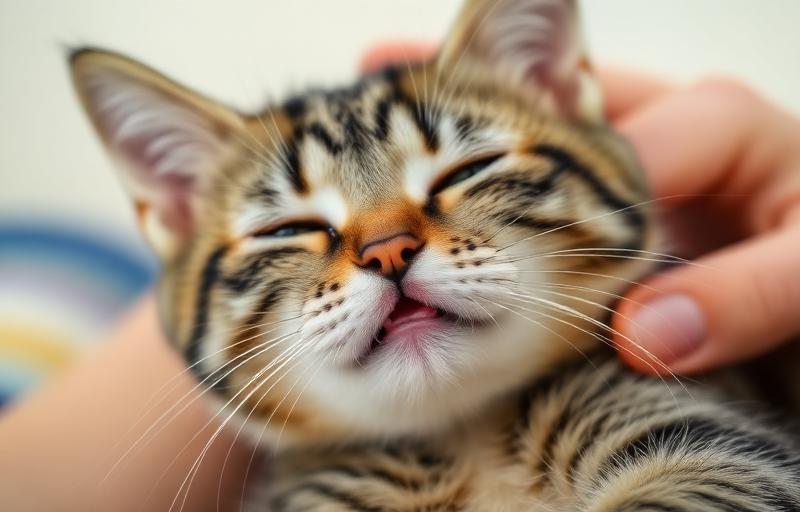
Cat Purring
25–50 dB
Safe exposure
All-day OK
Per NIOSH 85 dBA / 8 h reference (3 dB exchange rate)
Personalized verdict
Is this dangerous for you?
Cat Purring
38 dB
Typical
Your room
— dB
Tap Compare
Difference
—
Waiting
Audio is processed locally in your browser — nothing is recorded or sent. Prefer the full meter? Open Snap dB
Compare Cat Purring to:
Quick Answer
A decibel (dB) is a logarithmic unit used to measure sound intensity: an increase of 10 dB means ten times more sound energy.
A typical cat purr measures 25–50 dB, making it one of the quietest animal sounds. Most cats purr around 25–30 dB — barely above a whisper. The loudest recorded cat purr (Merlin, a UK rescue cat) reached 67.8 dB, setting a Guinness World Record.
📊 Similar in loudness to light rainfall on a window (about 40 dB).
At a glance
| Typical range | 25–50 dB |
|---|---|
| Safety tier | Safe |
| Safe exposure (NIOSH REL) | All-day OK |
| Audible at | ~a few feet |
Louder than a whisper at 5 feet (20 dB), quieter than a coffee shop (55 dB).
How these figures were determined: Values are based on published reference levels from NIOSH, OSHA, the WHO and the CDC, together with manufacturer specifications where available. Actual sound levels vary with distance, room acoustics, equipment condition and measurement method, and readings taken with a phone microphone are estimates rather than calibrated measurements.
Cat Purring Volume
Purring volume varies by cat and situation. Larger cats tend to purr louder, and cats often increase their purring volume when they want attention or food:
- Quiet, contented purr: 25–30 dB
- Normal purr during petting: 30–40 dB
- Loud, demanding purr: 40–50 dB
- Exceptionally loud purr: 50–60 dB
- World record (Merlin): 67.8 dB
- Most purring is quieter than normal speech (60 dB)
You're probably exposed to this more often than you realize…
Noise Level: Cat Purring
Classification
Safe
Safe Exposure
No time limit
Compared to Other Animal Sounds
Cat purring is remarkably quiet compared to other animals, making it one of the gentlest sounds in the animal kingdom:
- Cat purring: 25–50 dB
- Dog bark: 80–110 dB
- Bird song: 40–80 dB
- Cat meow: 45–65 dB
- Horse neigh: 80–90 dB
- Cricket chirping: 55–70 dB
Most noise-induced hearing loss happens gradually — without any pain…
Your ears never turn off — even during sleep, your auditory system processes sounds and can trigger stress responses.
Measure Your Environment
Use Snap Decibel Meter to estimate the sound level around you right now.
Open Noise MeterHow Cats Produce Their Purr
The purring mechanism has puzzled scientists for decades. The current understanding is that the laryngeal muscles in the cat's throat dilate and constrict the glottis (the opening between the vocal cords) rhythmically, at a rate of about 25–30 cycles per second.
This creates a vibration on both inhalation and exhalation — which is why purring sounds continuous, unlike vocalizations in most other animals. Interestingly, big cats like lions and tigers cannot purr continuously; they can only vocalize while exhaling. Domestic cats traded the ability to roar for the ability to purr non-stop.
The Purr Frequency
Cat purring occurs at 25–150 Hz — a low frequency that's felt as much as heard. This frequency range is interesting because it overlaps with frequencies used in therapeutic vibration treatments for bone density and healing.
The low frequency also explains why purring is so soothing — low-frequency sounds are naturally calming to the human nervous system. Research at the University of Sussex found that cats have a special 'solicitation purr' that embeds a higher frequency (300–600 Hz) cry within the purr when they want food, making it harder for owners to ignore.
Health Benefits of Purring
Studies suggest exposure to a purring cat may have measurable health benefits for humans:
- Reduced stress and anxiety (lower cortisol levels)
- Lowered blood pressure and resting heart rate
- The 25–150 Hz frequency range may promote bone healing
- Improved mood through oxytocin release during petting
- Natural calming effect similar to white noise for sleep
Your daily noise exposure might already exceed safe limits.
What Makes Cat Purring Sound the Way It Does
The frequency spectrum of cat purring is as important as its volume. Many animal vocalizations are concentrated in frequency bands that penetrate specific environments effectively — low frequencies travel farther through dense vegetation, while high frequencies carry better in open air. This spectral shaping means 25–50 dB from cat purring may be more or less audible to human ears than a mechanical sound at the same level.
At 25–50 dB, cat purring sits in the "comfortable background" zone. The World Health Organization considers sustained levels below 55 dB safe for residential areas during daytime. You can carry on a normal conversation, concentrate on detailed tasks, and sleep without disruption alongside this sound.
The habitat where you encounter cat purring dramatically shapes the sound experience. In a reverberant bathroom or hallway, the effective level can be 6–10 dB higher than the same vocalization outdoors where sound energy disperses in all directions without reflective surfaces.
Seasonal Patterns of Cat purring Noise
Cat purring noise follows predictable seasonal rhythms driven by breeding cycles, migration patterns, and food availability. Peak vocalization periods typically coincide with mating seasons, when males compete for female attention through escalating vocal displays. During these periods, the sustained acoustic output can be 10–20 dB higher than baseline.
For people living near cat purring habitats, understanding these seasonal patterns helps with planning. Breeding season noise typically lasts 4–12 weeks and follows a bell curve — gradually increasing, peaking for 2–3 weeks, then tapering off. Knowing when the peak occurs allows you to prepare with white noise machines, earplugs, or temporary schedule adjustments.
Putting Cat Purring Noise in Perspective
The closest everyday comparison to cat purring at 25–50 dB is light rainfall on a window, which registers at 40 dB. Both sounds occupy the same energy band and present similar exposure considerations, though their frequency profiles and duration patterns create distinct listening experiences.
On the quieter end, a quiet library registers about 30 dB — that's 8 dB below cat purring, representing roughly 2× less perceived loudness. Moving louder, a quiet office reaches 45 dB — 7 dB above cat purring, approximately 2× louder to your ears.
The relationship between body size and vocalization volume in animals isn't linear. Small tree frogs (2 cm) can produce 90 dB calls, while an elephant's rumble at 10 meters may register only 65 dB. Cat purring at 25–50 dB reflects the specific acoustic adaptations of the species rather than simply its body mass.
The Biology Behind Cat purring Vocalizations
Cat purring sound production involves specialized anatomical structures that have evolved over millions of years. Most vertebrate vocalizations are produced by vibrating membranes (vocal cords, syrinx, or specialized skin patches) that convert respiratory airflow into acoustic energy. The size of these structures determines the fundamental frequency — larger animals generally produce lower-pitched calls.
The intensity of cat purring vocalizations at 25–50 dB reflects significant metabolic investment. Producing loud calls requires sustained respiratory effort, and the energy cost scales exponentially with volume. A 10 dB increase in vocal output requires roughly 10× more metabolic energy, which is why animals typically reserve their loudest calls for high-stakes situations like territorial defense or mating.
Hearing sensitivity in animals often matches their own vocalization frequencies. Species that produce cat purring sounds at 25–50 dB typically have peak hearing sensitivity in the same frequency range, ensuring that conspecifics can detect calls over the longest possible distance while filtering out environmental noise in other frequency bands.
Minimizing Cat Purring Noise Impact
At 50 dB, cat purring is well within safe levels and poses no hearing risk. The following tips focus on comfort optimization — creating the most pleasant acoustic environment rather than preventing health damage.
Behavioral approaches can complement acoustic ones. For domestic animals, positive reinforcement training can reduce excessive cat purring vocalization by 50–80% over 2–4 weeks. For wildlife, habitat modification (removing food sources, adjusting lighting) can discourage animals from establishing territories near your home.
- For pets: consult a behaviorist about positive reinforcement training to reduce excessive vocalization
- Use foam earplugs at night if cat purring disrupts sleep (NRR 25+ blocks most animal vocalizations)
- Keep interior doors closed between living areas and the noise source
- Use a white noise machine tuned to match cat purring vocalization frequencies for effective masking
- Install double-glazed windows facing the noise source for 25–30 dB of attenuation
How to Measure Cat Purring Sound Accurately
Measuring cat purring noise is challenging because animal vocalizations are intermittent and unpredictable. Set your decibel meter to record continuously and review the data for peak levels and average exposure. For the most accurate results, measure at the distance where you normally experience cat purring — not at the source (which may be dangerous or impractical).
When measuring quiet sounds like cat purring, background noise is your biggest challenge. Ensure the environment is at least 10 dB quieter than the source — turn off other appliances, close windows, and measure during quiet hours. Consumer smartphone apps have a noise floor of about 30–35 dB, which limits their usefulness for very quiet sounds.
The Wellness Impact of Cat Purring Sound
At 50 dB, cat purring presents no risk to your hearing or physical health. The human auditory system handles sounds below 70 dB comfortably and indefinitely. In fact, moderate ambient sound in the 40–60 dB range has been shown to improve creative thinking and reduce the stress associated with complete silence, which some people find unsettling or anxiety-inducing.
Understanding cat purring noise at 50 dB builds the acoustic awareness that protects you in genuinely dangerous situations. People who understand the decibel scale recognize hazardous noise faster, seek protection sooner, and make better decisions about their sound environment — whether choosing a restaurant, buying a home, or operating power tools.
Measure Cat Purring Noise Yourself
Want to know how loud cat purring is in your own environment? Use our free decibel meter to take a real-time reading, or check the complete decibel chart to see where 25–50 dB sits on the full scale. You can also compare sounds side by side or use the noise distance calculator to estimate levels at different distances.
🎯 Guess the Decibel Level
How loud do you think Cat Purring is? Drag the slider and find out!
Frequently Asked Questions
What's the loudest a cat can purr?
The Guinness World Record is 67.8 dB, set by Merlin, a rescue cat from the UK. This is about as loud as a normal conversation.
Why can't I hear my cat purring?
Quiet purring at 25 dB is barely above the threshold of hearing. You may feel the vibration by touch even when you can't hear it.
Is purring always a sign of happiness?
Not always. Cats also purr when stressed, injured, or hungry. Context matters — but the sound is always at a soothing frequency.
Explore More
Related Noise Guides
How Loud Is a Dog Bark? Decibel Levels Explained
Dog barking ranges from 80–90 dB — louder than most people expect. Learn which breeds bark loudest and how it affects hearing.
7 min readHuman SoundsHow Loud Is a Whisper in Decibels?
A whisper registers 20–30 dB — among the quietest sounds the human ear can detect. Here's what that means in real-world terms.
4 min readDecibel QuestionsIs 40 dB Loud? Understanding Quiet Sound Levels
40 dB is a quiet, comfortable sound level — similar to a library, light rainfall, or a quiet residential area at night.
4 min readDecibel QuestionsWhat Does 30 dB Sound Like? The Sound of Near-Silence
30 dB is whisper-quiet — the sound of a ticking clock, soft breathing, or rustling leaves. It's the ideal level for sleep.
4 min readHow Does Cat Purring Compare?
Tap any sound to learn more about its noise level.
| Sound level | Sound | Vs. Cat Purring | Risk |
|---|---|---|---|
| 38 dB | Cat Purring (this page) | — | Safe |
| 25 dB | Whisper in Decibels | −13 dB quieter | Safe |
| 25 dB | Wind Noise in Decibels | −13 dB quieter | Safe |
| 30 dB | Can Your Phone Measure Decibels | −8 dB quieter | Safe |
| 40 dB | What Noise Level Is Too Loud for Sleep | +2 dB louder | Safe |
| 50 dB | Snoring | +12 dB louder | Safe |
| 50 dB | Is 50 dB Loud | +12 dB louder | Safe |
Compare With Other Sounds
See how this noise level compares to other everyday sounds.


Test Your Environment
Use Snap Decibel Meter to measure sound levels around you — free, private, and instant.
Start Noise Measurement