How Loud Is a Pressure Washer? Outdoor Cleaning Noise
A pressure washer produces 80–100 dB — louder than most people expect. Gas models are significantly noisier than electric.
Reviewed by our team against authoritative public-health sources. See our editorial standards.
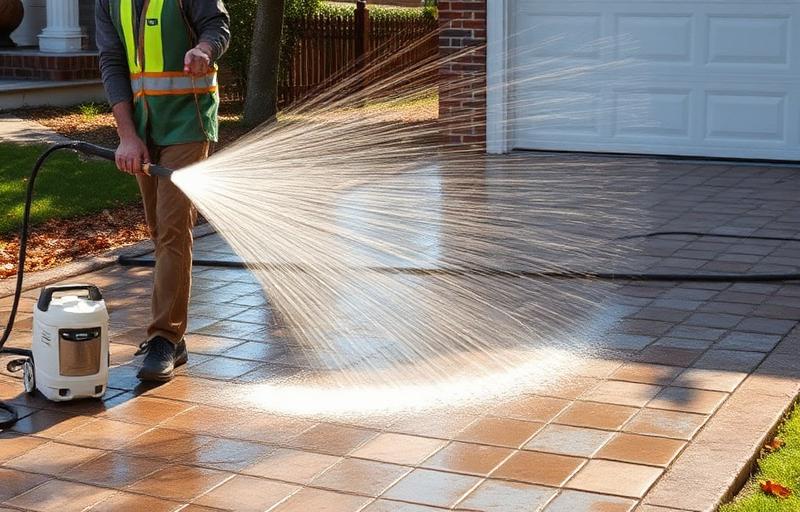
Pressure Washer
78–88 dB
Safe exposure
2 hours
Per NIOSH 85 dBA / 8 h reference (3 dB exchange rate)
Above 85 dB can damage hearing with prolonged exposure. Use ear protection.
Personalized verdict
Is this dangerous for you?
Pressure Washer
83 dB
Typical
Your room
— dB
Tap Compare
Difference
—
Waiting
Audio is processed locally in your browser — nothing is recorded or sent. Prefer the full meter? Open Snap dB
Compare Pressure Washer to:
Quick Answer
A decibel (dB) is a logarithmic unit used to measure sound intensity: an increase of 10 dB means ten times more sound energy.
An electric pressure washer produces 78–88 dB, while a gas pressure washer hits 85–100 dB. Gas models are significantly louder due to the combustion engine. Hearing protection is recommended for gas models and for extended use of any type.
📊 Similar in loudness to a food blender running (about 85 dB).
At a glance
| Typical range | 78–88 dB |
|---|---|
| Safety tier | Loud |
| Safe exposure (NIOSH REL) | 4 hours |
| Audible at | ~20–30 ft |
Louder than a vacuum cleaner at 10 feet (75 dB), quieter than a gas-powered lawn mower (90 dB).
How these figures were determined: Values are based on published reference levels from NIOSH, OSHA, the WHO and the CDC, together with manufacturer specifications where available. Actual sound levels vary with distance, room acoustics, equipment condition and measurement method, and readings taken with a phone microphone are estimates rather than calibrated measurements.
Pressure Washer Noise by Type
The power source makes the biggest difference:
- Electric (1500–2000 PSI): 78–85 dB
- Electric (2000–3000 PSI): 82–88 dB
- Gas (2500–3000 PSI): 85–92 dB
- Gas (3000–4000 PSI): 90–100 dB
- Commercial gas units: 95–105 dB
- Water impact noise adds 5–10 dB on hard surfaces
You're probably exposed to this more often than you realize…
Noise Level: Pressure Washer
Classification
Moderate
Safe Exposure
No time limit
Where the Noise Comes From
Pressure washer noise has multiple sources:
- Engine/motor: 70–90 dB (main source for gas)
- Pump operation: 60–75 dB
- Water impact on surface: 70–85 dB (echoes amplify this)
- Nozzle spray: 65–80 dB (higher pressure = louder)
- Total combined: louder than any single source
Most noise-induced hearing loss happens gradually — without any pain…
Noise pollution increases the risk of cardiovascular disease — chronic exposure to traffic noise above 65 dB raises heart attack risk by 20%.
Measure Your Environment
Use Snap Decibel Meter to estimate the sound level around you right now.
Open Noise MeterHearing Protection Needs
For electric models under 85 dB, brief use is safe without protection. Gas models above 85 dB require hearing protection for any session longer than 30 minutes:
- Gas pressure washer + earplugs: reduces to 60–75 dB
- Extended sessions (30+ minutes): always wear protection
- In enclosed areas (garages): noise reflects and amplifies by 3–6 dB
- Use Snap Decibel Meter to check your specific model's output
Gas vs Electric: The Noise Tradeoff
The choice between gas and electric pressure washers often comes down to power vs noise. Gas models deliver 2,500–4,000+ PSI with 85–100 dB noise, while electric models top out at 2,000–3,000 PSI but operate at 78–88 dB.
For residential driveways, patios, and car washing, an electric model provides sufficient cleaning power at 10–15 dB less noise. The difference is dramatic — 15 dB less is perceived as roughly 3 times quieter. Gas models are necessary for heavy-duty cleaning like paint stripping, oil stains, and commercial applications.
Neighborhood Considerations
Pressure washing is one of the loudest residential outdoor activities:
- At 15 meters: gas model reaches 70–85 dB
- At 30 meters: drops to 65–75 dB
- Sound reflects off driveways and walls, amplifying perceived noise
- Check local noise ordinances before weekend cleaning
- Electric models are much more neighbor-friendly
Most people underestimate this sound — don't be one of them.
Pressure Washer Noise: The Complete Breakdown
Ground surface absorption affects pressure washer noise propagation. Sound traveling over grass or soft earth loses 1–3 dB per 100 meters due to ground absorption. The same sound over pavement or water loses almost nothing, traveling significantly farther at 78–88 dB and above. This is why pressure washer noise seems louder near roads and parking areas.
At 78–88 dB, you would need to speak loudly to be understood at arm's length. This volume triggers the acoustic reflex — your stapedius muscle contracts to dampen sound transmission through the middle ear — but this protective mechanism fatigues with sustained exposure and provides only 10–15 dB of attenuation.
Time-of-day restrictions for pressure washer vary by municipality but typically allow operation between 7:00 AM and 9:00 PM on weekdays and 8:00 AM to 6:00 PM on weekends. Some HOAs impose stricter limits. Exceeding these limits with pressure washer noise at 88 dB can result in fines of $50–$500 per violation.
Noise Ordinances and Pressure washer Usage
Most municipalities regulate pressure washer noise through local ordinances that set maximum decibel limits at property boundaries — typically 55–65 dB during daytime (7 AM–10 PM) and 45–55 dB at night. With pressure washer producing 78–88 dB at the source, you'll typically comply at the property line if your neighbor is 15+ meters away, though terrain and wind can affect propagation.
Some jurisdictions use time-based restrictions instead of decibel limits: power equipment may only be operated during specific hours (e.g., 8 AM–6 PM weekdays, 9 AM–5 PM weekends). Others use "nuisance" standards where any noise that "unreasonably disturbs the peace" can trigger enforcement, regardless of measured decibel level.
Enforcement of noise ordinances varies widely. In some areas, code enforcement officers respond with calibrated sound level meters; in others, the standard is simply whether a "reasonable person" would find the noise disturbing. Documentation helps — if you're concerned about pressure washer noise from a neighbor, keep a log of dates, times, and durations before filing a complaint.
Sound Comparison: Pressure Washer on the Decibel Scale
Pressure washer noise at 78–88 dB matches a food blender running (85 dB) on the decibel scale. While the measured levels are equivalent, your brain perceives these sounds very differently based on their spectral content, temporal pattern, and your learned associations with each source.
On the quieter end, a busy restaurant registers about 65 dB — that's 18 dB below pressure washer, representing roughly 3× less perceived loudness. Moving louder, a nightclub dance floor reaches 100 dB — 17 dB above pressure washer, approximately 3× louder to your ears.
The decibel scale is logarithmic — each 10 dB increase represents a tenfold jump in sound energy and roughly a doubling of perceived loudness. At 78–88 dB, pressure washer carries 199,526,231× more acoustic energy than the threshold of hearing (0 dB), placing it in a well-characterized region of the audible spectrum.
Safe Exposure Duration for Pressure Washer
According to NIOSH guidelines, the maximum safe exposure time at 88 dB is 4 hours. Every 3 dB increase halves the safe exposure time.
NIOSH Exposure Limits Reference
Electric vs. Gas-Powered Pressure washer: Noise Comparison
The shift from gas-powered to electric pressure washer alternatives is one of the most significant noise-reduction trends in outdoor equipment. Electric models typically produce 10–20 dB less noise than their gas equivalents — a reduction that means the electric version sounds 50–75% quieter to human ears.
Gas engines produce noise through combustion events, exhaust pulses, and mechanical vibration. Electric motors generate only electromagnetic hum and bearing noise, with no combustion events or exhaust. The dominant noise source in electric pressure washer is usually the blade, bit, or working element rather than the power source itself.
Battery capacity has been the main barrier to electric pressure washer adoption. Modern 56V and 80V lithium-ion platforms deliver 45–90 minutes of runtime — sufficient for most residential tasks. For professional users requiring all-day operation, swappable battery packs or hybrid gas-electric designs offer a compromise between noise reduction and endurance.
Protecting Your Hearing from Pressure Washer Noise
Sustained exposure to pressure washer at 88 dB requires a deliberate hearing protection strategy. The National Institute for Deafness recommends the "3-E" approach: Engineering controls (reduce the source noise), Environmental modifications (increase distance, add barriers), and Equipment (wear proper hearing protection). Apply these in order — prevent the noise first, protect against the remainder.
Timing is the simplest noise reduction strategy for pressure washer. Operating during midday when ambient noise is highest (traffic, other activities) means pressure washer at 88 dB has less contrast against the background. Morning and evening operation, when ambient levels drop to 35–45 dB, makes the same pressure washer noise stand out dramatically — perceived as 10–20 dB more intrusive.
- Maintain equipment: sharp blades, tight bolts, and proper lubrication reduce noise 3–8 dB
- Wear NRR 25+ over-ear hearing protection for all gas-powered equipment use
- Inform neighbors before extended pressure washer use and respect local noise ordinance hours
- Position equipment as far from property boundaries and windows as feasible
- Operate pressure washer during midday hours when ambient noise provides natural masking
Measuring Pressure Washer Noise: Methods and Tools
To measure pressure washer noise as accurately as possible, use a dedicated Type 2 sound level meter or a calibrated smartphone app such as NIOSH SLM. Snap Decibel Meter gives you a fast relative estimate — useful for comparing environments, but uncalibrated and unweighted. Position the device at 1 meter from the source, at the height where you'd normally hear it. Take readings over 30–60 seconds and note both average (Leq) and peak (Lmax) values.
For sounds at 83 dB like pressure washer, most smartphone decibel meter apps provide reasonably accurate readings (typically within ±3–5 dB of professional equipment). For more precision, calibrate your app against a known reference sound or use a dedicated Type 2 sound level meter. The key to accuracy is consistent positioning and adequate sampling time.
The Medical Impact of Pressure Washer Sound
The progression of hearing damage from pressure washer exposure follows a predictable pattern: first, temporary threshold shift (sounds seem muffled after exposure), then persistent tinnitus (ringing or buzzing that doesn't resolve), then permanent threshold shift (measurable hearing loss on audiometric testing). Early-stage damage is often unnoticed because the brain compensates by "filling in" missing signals from context.
Warning signs of overexposure to pressure washer noise include: ringing, buzzing, or hissing in the ears after exposure; speech sounding muffled or distant; difficulty following conversations in restaurants or social settings; and needing to gradually increase TV or headphone volume. If you experience any of these after exposure to pressure washer, reduce future exposure immediately and consult an audiologist.
Warning Signs of Overexposure
- Ringing, buzzing, or hissing in your ears after exposure to pressure washer
- Sounds seem muffled or distant after leaving the noisy environment
- Difficulty understanding speech in crowded or noisy settings
- Gradually increasing your TV or headphone volume over weeks
Measure Pressure Washer Noise Yourself
Want to know how loud pressure washer is in your own environment? Use our free decibel meter to take a real-time reading, or check the complete decibel chart to see where 78–88 dB sits on the full scale. You can also compare sounds side by side or use the noise distance calculator to estimate levels at different distances.
🎯 Guess the Decibel Level
How loud do you think Pressure Washer is? Drag the slider and find out!
Frequently Asked Questions
Do I need hearing protection for a pressure washer?
For gas models, yes — they exceed 85 dB. Electric models under 85 dB are safer for brief use but protection helps for long sessions.
Are electric pressure washers quieter?
Yes, significantly — about 10–15 dB less than equivalent gas models, which is perceived as roughly half as loud.
Can I pressure wash at night?
Most noise ordinances prohibit loud outdoor equipment after 8–10 PM. Even during daytime, gas models may draw complaints.
Explore More
Related Noise Guides
How Loud Is a Leaf Blower? Decibel Levels and Hearing Risks
Leaf blower noise depends entirely on who is listening. At the operator's ear a gas blower runs 95–105 dBA; a neighbour 15 metres away hears 65–75 dBA. Here are the numbers, distance by distance.
10 min readEnvironmental NoiseHow Loud Is a Lawn Mower? Decibel Levels by Mower Type
Lawn mowers produce anywhere from 55 dB (manual reel) to 100 dB (commercial zero-turn). We break down the exact decibel range for every mower type — and what it means for your hearing.
9 min readHearing SafetyIs 90 dB Dangerous? Exposure Limits & Real-World Risks
90 dB is dangerous — your hearing can only handle 2 hours of exposure. Lawn mowers, motorcycles, and subways all hit this level.
5 min readOutdoor EquipmentHow Loud Is a Generator? Portable & Standby dB Levels
Generators range from 50 dB (inverter models) to 100+ dB (large diesel units) — one of the loudest common machines you'll encounter.
5 min readHow Does Pressure Washer Compare?
Tap any sound to learn more about its noise level.
| Sound level | Sound | Vs. Pressure Washer | Risk |
|---|---|---|---|
| 83 dB | Pressure Washer (this page) | — | Moderate |
| 70 dB | The Complete Guide to Noise Levels and Decibels | −13 dB quieter | Moderate |
| 70 dB | Car | −13 dB quieter | Moderate |
| 78 dB | Traffic Noise | −5 dB quieter | Moderate |
| 85 dB | What Noise Level Is Safe for Humans | +2 dB louder | Moderate |
| 95 dB | Snow Blower | +12 dB louder | Loud |
| 95 dB | Is 95 dB Dangerous | +12 dB louder | Loud |
Compare With Other Sounds
See how this noise level compares to other everyday sounds.
Test Your Environment
Use Snap Decibel Meter to measure sound levels around you — free, private, and instant.
Start Noise Measurement