How Loud Is a Rooster Crowing? Decibel Levels Explained
A rooster crows at 90–130 dB, rivaling the loudness of a chainsaw or jackhammer at close range.
Reviewed by our team against authoritative public-health sources. See our editorial standards.
Quick Answer
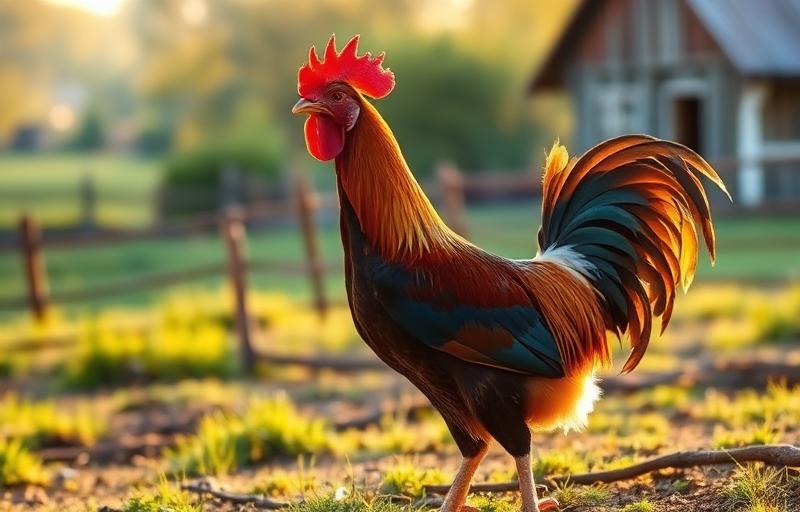
A rooster's crow typically measures 90–130 decibels, with peak readings reaching 130 dB at the bird's head. That's comparable to a chainsaw, a rock concert, or standing near a jet engine. Surprisingly, roosters protect their own hearing by tilting their heads when crowing, effectively covering their ear canals.
Prolonged exposure above 85 dB can damage hearing.
Rooster Crow Decibel Levels
Research from the University of Antwerp measured rooster crows at 100–130 dB at the bird's head, with the average peak around 100 dB at 1 meter. The loudest breeds can hit 130 dB — only 10 dB below the pain threshold for human hearing.
These extreme volumes serve an evolutionary purpose. In the wild, a rooster's crow establishes territory and needs to carry across large areas. A 130 dB crow at the source can still be clearly heard at 2 km distance in open terrain.
You're probably exposed to this more often than you realize…
How Roosters Protect Their Own Hearing
Researchers discovered that roosters have a built-in biological hearing protection mechanism. When a rooster tilts its head back to crow, soft tissue covers approximately 50% of the ear canal, acting as a natural earplug. Additionally, the basilar papilla (the avian equivalent of the cochlea) regenerates damaged hair cells — unlike mammals, birds can recover from noise-induced hearing damage.
This means a rooster can produce sounds that would permanently damage human hearing at the same distance, yet suffer no lasting harm itself. This regenerative ability is currently being studied for potential applications in human hearing loss treatment.
Typical Sound Levels
This is the point where hearing damage starts…
The world's quietest room at Microsoft measures -20.6 dB — so quiet you can hear your own blood flowing.
Measure Your Environment
Use Snap Decibel Meter to estimate the sound level around you right now.
Open Noise MeterNoise Impact on Neighbors
For backyard chicken keepers, rooster noise is the most common source of neighbor complaints. A 100 dB crow at 1 meter attenuates to roughly 60 dB at 30 meters — still clearly audible and roughly equivalent to normal conversation volume. At 50 meters through a closed window, it drops to approximately 40–45 dB, which can still wake light sleepers.
- At 1 meter: 100–130 dB (hearing damage risk)
- At 5 meters: 85–100 dB (very loud)
- At 15 meters: 70–85 dB (clearly audible)
- At 50 meters indoors: 40–50 dB (can disturb sleep)
How to Reduce Rooster Noise
Several strategies can minimize the impact of rooster crowing. Insulated coops with sound-dampening walls reduce transmitted noise by 10–20 dB. Keeping roosters in a darkened coop until after 8 AM delays the dawn chorus. Some breeds, like Silkies and Cochins, are naturally quieter than Mediterranean breeds like Leghorns.
No-crow collars (gentle elastic bands around the neck) reduce crow volume by approximately 50% by limiting air sac expansion, though their use remains controversial among poultry keepers. Strategic placement of the coop behind a solid fence or building provides an additional 10–15 dB of noise reduction through barrier attenuation.
Noise Regulations for Roosters
Many urban and suburban areas have specific ordinances regarding roosters. Some cities ban them entirely, while others limit the number per property or require minimum setback distances from neighboring homes. In noise-complaint situations, local code enforcement typically measures at the property line, where readings above 50–60 dB during nighttime hours may violate noise ordinances.
Most people underestimate this sound — don't be one of them.
Hearing Safety
A rooster's crow can reach 130 dB at close range — enough to cause immediate hearing damage. Avoid prolonged exposure without ear protection when working near crowing roosters.
Frequently Asked Questions
How many decibels is a rooster's crow?
A rooster's crow ranges from 90–130 dB, with an average of about 100 dB at 1 meter distance.
Can a rooster's crow damage human hearing?
Yes. At close range (under 2 meters), the 100–130 dB levels can cause hearing damage with repeated exposure.
Why don't roosters go deaf from crowing?
Roosters have a natural ear-covering mechanism when they crow, and bird hearing cells regenerate — unlike human hair cells.
Explore More
Related Noise Guides
How Loud Is a Dog Bark? Decibel Levels Explained
Dog barking ranges from 80–90 dB — louder than most people expect. Learn which breeds bark loudest and how it affects hearing.
7 min readAnimal NoiseHow Loud Is a Cat Purring? The Quietest Animal Sound
A cat purring produces 25–50 dB — one of the softest, most soothing sounds in nature. Some exceptional cats purr as loud as 67 dB.
4 min readAnimal NoiseHow Loud Is a Cicada? Decibel Levels Explained
Cicadas are nature's loudest insects at 80–120 dB, with mass emergences creating sound walls rivaling machinery.
5 min readAnimal NoiseHow Loud Is a Parrot? Decibel Levels Explained
Parrots produce 70–120 dB depending on species — large cockatoos and macaws rival rock concert volumes.
5 min readCompare With Other Sounds
See how this noise level compares to other everyday sounds.


Test Your Environment
Use Snap Decibel Meter to measure sound levels around you — free, private, and instant.
Start Noise Measurement