How Loud Is a Frog Croaking? Decibel Levels Explained
Frogs produce 50–100 dB depending on species — some tropical species are as loud as a lawnmower.
Reviewed by our team against authoritative public-health sources. See our editorial standards.
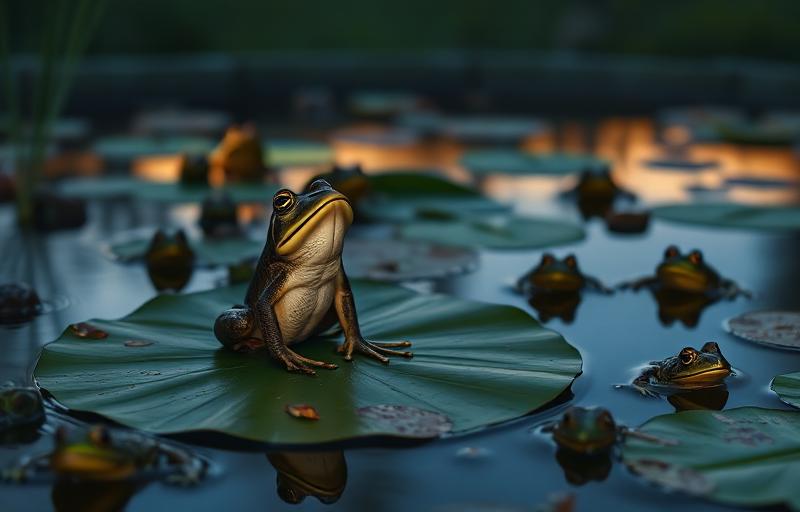
Frog Croaking
50–100 dB
Safe exposure
7 minutes
Per NIOSH 85 dBA / 8 h reference (3 dB exchange rate)
Above 85 dB can damage hearing with prolonged exposure. Use ear protection.
Personalized verdict
Is this dangerous for you?
Frog Croaking
75 dB
Typical
Your room
— dB
Tap Compare
Difference
—
Waiting
Audio is processed locally in your browser — nothing is recorded or sent. Prefer the full meter? Open Snap dB
Compare Frog Croaking to:
Quick Answer
A decibel (dB) is a logarithmic unit used to measure sound intensity: an increase of 10 dB means ten times more sound energy.
Frog croaking ranges from 50 to 100 decibels depending on species. Common garden frogs produce 60–70 dB calls, while Puerto Rico's coqui frog reaches 90–100 dB — comparable to a lawn mower or motorcycle. A chorus of spring peepers can collectively exceed 90 dB from 15 meters away.
📊 Similar in loudness to a vacuum cleaner at 10 feet (about 75 dB).
At a glance
| Typical range | 50–100 dB |
|---|---|
| Safety tier | Loud |
| Safe exposure (NIOSH REL) | 15 minutes |
| Audible at | ~20–30 ft |
Louder than a quiet office (45 dB), quieter than a helicopter overhead at 100 feet (105 dB).
How these figures were determined: Values are based on published reference levels from NIOSH, OSHA, the WHO and the CDC, together with manufacturer specifications where available. Actual sound levels vary with distance, room acoustics, equipment condition and measurement method, and readings taken with a phone microphone are estimates rather than calibrated measurements.
Frog Noise Levels by Species
The decibel output varies enormously across frog species. Small tree frogs and garden frogs typically produce 50–70 dB calls. Larger bullfrogs reach 70–80 dB with their deep, resonant croaks. The famously loud coqui frog of Puerto Rico (Eleutherodactylus coqui) produces a two-note 'co-KEE' call reaching 90–100 dB at 0.5 meters — one of the loudest amphibian calls on Earth.
- Tree frogs: 50–65 dB
- Garden frogs: 55–70 dB
- Spring peepers: 70–90 dB (in chorus)
- Bullfrogs: 70–80 dB
- Coqui frog: 90–100 dB
- Chorus (multiple species): 85–100+ dB
Your ears can't tell you the real danger level here…
Noise Level: Frog Croaking
Classification
Moderate
Safe Exposure
No time limit
The Chorus Effect: When Frogs Sing Together
Individual frogs are often manageable in terms of noise. The real acoustic impact comes from choruses — hundreds or thousands of frogs calling simultaneously from a pond or wetland. A spring peeper chorus can produce a combined output exceeding 100 dB at the shoreline, audible from over 1 km away.
Frog choruses follow complex timing patterns. Males alternate their calls to avoid acoustic masking, creating a wall of sound that fluctuates rhythmically. This behavior, called chorusing, evolved to maximize each male's chance of being heard by females — but for nearby human residents, it creates sustained high-intensity noise throughout the breeding season.
Typical Sound Levels
Most noise-induced hearing loss happens gradually — without any pain…
Over 1 billion young people worldwide risk hearing loss from unsafe listening levels on personal audio devices.
Measure Your Environment
Use Snap Decibel Meter to estimate the sound level around you right now.
Open Noise MeterWhy Frogs Are So Loud
Male frogs croak to attract mates, and louder calls generally attract more females. Natural selection has driven frog vocalization volumes to remarkable extremes. Frogs amplify their calls using inflatable vocal sacs that function as resonating chambers, similar to how a speaker cabinet amplifies a driver.
Temperature plays a significant role — warmer nights increase metabolic rate, causing frogs to call more loudly and frequently. A warm spring night near a pond can be dramatically louder than a cool one, with the same frog population producing 10–15 dB more output.
Living Near Frog Habitats
For homeowners near ponds, wetlands, or streams, spring and summer frog choruses can significantly impact sleep quality. A chorus producing 85 dB outdoors translates to roughly 50–60 dB inside a closed-window bedroom — above the WHO's recommended 30 dB for undisturbed sleep.
Solutions include sealing window gaps, using white noise machines to mask the frequency range of frog calls (typically 1–5 kHz), and accepting the seasonal nature of the noise (most species call intensively for only 2–4 months during breeding season).
Your daily noise exposure might already exceed safe limits.
Decibel Profile: Frog Croaking in Detail
The acoustic output of frog croaking has evolved over millions of years to serve specific biological functions — territory defense, mate attraction, predator warning, or offspring communication. At 50–100 dB, this vocalization represents a finely tuned evolutionary strategy for maximizing signal reach while minimizing energy expenditure.
The 50–100 dB range puts frog croaking at the boundary where noise transitions from "annoying" to "potentially harmful." NIOSH sets 85 dBA over 8 hours as its recommended exposure limit, and OSHA uses the same 85 dBA 8-hour average as the action level that triggers a hearing conservation program. Below this, the risk is primarily comfort and stress; above it, physical damage to hearing structures becomes measurable with sufficient exposure duration.
The habitat where you encounter frog croaking dramatically shapes the sound experience. In a reverberant bathroom or hallway, the effective level can be 6–10 dB higher than the same vocalization outdoors where sound energy disperses in all directions without reflective surfaces.
Seasonal Patterns of Frog croaking Noise
Frog croaking noise follows predictable seasonal rhythms driven by breeding cycles, migration patterns, and food availability. Peak vocalization periods typically coincide with mating seasons, when males compete for female attention through escalating vocal displays. During these periods, the sustained acoustic output can be 10–20 dB higher than baseline.
For people living near frog croaking habitats, understanding these seasonal patterns helps with planning. Breeding season noise typically lasts 4–12 weeks and follows a bell curve — gradually increasing, peaking for 2–3 weeks, then tapering off. Knowing when the peak occurs allows you to prepare with white noise machines, earplugs, or temporary schedule adjustments.
How Frog Croaking Compares to Other Sounds
The closest everyday comparison to frog croaking at 50–100 dB is a vacuum cleaner at 10 feet, which registers at 75 dB. Both sounds occupy the same energy band and present similar exposure considerations, though their frequency profiles and duration patterns create distinct listening experiences.
On the quieter end, a busy restaurant registers about 65 dB — that's 10 dB below frog croaking, representing roughly 2× less perceived loudness. Moving louder, a food blender running reaches 85 dB — 10 dB above frog croaking, approximately 2× louder to your ears.
The relationship between body size and vocalization volume in animals isn't linear. Small tree frogs (2 cm) can produce 90 dB calls, while an elephant's rumble at 10 meters may register only 65 dB. Frog croaking at 50–100 dB reflects the specific acoustic adaptations of the species rather than simply its body mass.
Safe Exposure Duration for Frog Croaking
According to NIOSH guidelines, the maximum safe exposure time at 100 dB is 15 minutes. Even brief exposure requires hearing protection.
NIOSH Exposure Limits Reference
The Biology Behind Frog croaking Vocalizations
Frog croaking sound production involves specialized anatomical structures that have evolved over millions of years. Most vertebrate vocalizations are produced by vibrating membranes (vocal cords, syrinx, or specialized skin patches) that convert respiratory airflow into acoustic energy. The size of these structures determines the fundamental frequency — larger animals generally produce lower-pitched calls.
The intensity of frog croaking vocalizations at 50–100 dB reflects significant metabolic investment. Producing loud calls requires sustained respiratory effort, and the energy cost scales exponentially with volume. A 10 dB increase in vocal output requires roughly 10× more metabolic energy, which is why animals typically reserve their loudest calls for high-stakes situations like territorial defense or mating.
Hearing sensitivity in animals often matches their own vocalization frequencies. Species that produce frog croaking sounds at 50–100 dB typically have peak hearing sensitivity in the same frequency range, ensuring that conspecifics can detect calls over the longest possible distance while filtering out environmental noise in other frequency bands.
How to Stay Safe Around Frog Croaking
Because frog croaking reaches 100 dB, hearing protection during exposure is not optional — it's a medical necessity. The type and level of protection depends on your exposure pattern: occasional home users can rely on disposable foam earplugs (NRR 29–33), while daily professional users should invest in custom-molded earplugs or electronic earmuffs.
Behavioral approaches can complement acoustic ones. For domestic animals, positive reinforcement training can reduce excessive frog croaking vocalization by 50–80% over 2–4 weeks. For wildlife, habitat modification (removing food sources, adjusting lighting) can discourage animals from establishing territories near your home.
- For pets: consult a behaviorist about positive reinforcement training to reduce excessive vocalization
- Use foam earplugs at night if frog croaking disrupts sleep (NRR 25+ blocks most animal vocalizations)
- Keep interior doors closed between living areas and the noise source
- Use a white noise machine tuned to match frog croaking vocalization frequencies for effective masking
- Install double-glazed windows facing the noise source for 25–30 dB of attenuation
Getting Accurate Decibel Readings of Frog Croaking
Measuring frog croaking noise is challenging because animal vocalizations are intermittent and unpredictable. Set your decibel meter to record continuously and review the data for peak levels and average exposure. For the most accurate results, measure at the distance where you normally experience frog croaking — not at the source (which may be dangerous or impractical).
For sounds at 75 dB like frog croaking, most smartphone decibel meter apps provide reasonably accurate readings (typically within ±3–5 dB of professional equipment). For more precision, calibrate your app against a known reference sound or use a dedicated Type 2 sound level meter. The key to accuracy is consistent positioning and adequate sampling time.
Long-Term Health Effects of Frog Croaking Noise
Regular unprotected exposure to frog croaking at 100 dB poses a real risk of noise-induced hearing loss (NIHL). The hair cells in your cochlea convert sound vibrations into electrical signals for the brain. Excessive noise physically damages these delicate structures, and unlike birds and reptiles, humans cannot regenerate damaged hair cells — the loss is permanent.
Warning signs of overexposure to frog croaking noise include: ringing, buzzing, or hissing in the ears after exposure; speech sounding muffled or distant; difficulty following conversations in restaurants or social settings; and needing to gradually increase TV or headphone volume. If you experience any of these after exposure to frog croaking, reduce future exposure immediately and consult an audiologist.
Warning Signs of Overexposure
- Ringing, buzzing, or hissing in your ears after exposure to frog croaking
- Sounds seem muffled or distant after leaving the noisy environment
- Difficulty understanding speech in crowded or noisy settings
- Gradually increasing your TV or headphone volume over weeks
Measure Frog Croaking Noise Yourself
Want to know how loud frog croaking is in your own environment? Use our free decibel meter to take a real-time reading, or check the complete decibel chart to see where 50–100 dB sits on the full scale. You can also compare sounds side by side or use the noise distance calculator to estimate levels at different distances.
🎯 Guess the Decibel Level
How loud do you think Frog Croaking is? Drag the slider and find out!
Frequently Asked Questions
How loud is a frog's croak in decibels?
Individual frogs produce 50–100 dB depending on species. Coqui frogs are among the loudest at 90–100 dB.
Can frog noise affect sleep?
Yes. A nearby frog chorus can produce 50–60 dB inside a bedroom — enough to disrupt light sleepers.
When are frogs loudest?
Frogs are loudest during spring and summer breeding season, especially on warm, humid nights.
Explore More
Related Noise Guides
How Loud Is a Dog Bark? Decibel Levels Explained
Dog barking ranges from 80–90 dB — louder than most people expect. Learn which breeds bark loudest and how it affects hearing.
7 min readNatural SoundsHow Loud Is Rain? From Drizzle to Thunderstorm
Rain ranges from 35 dB (light drizzle) to 70 dB (heavy rain on a metal roof) — a natural white noise source loved by sleepers.
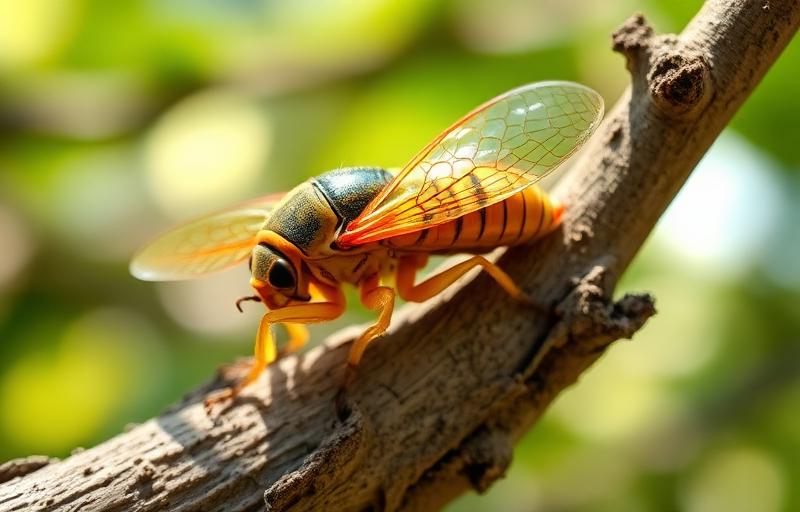
4 min readAnimal NoiseHow Loud Is a Cicada? Decibel Levels Explained
Cicadas are nature's loudest insects at 80–120 dB, with mass emergences creating sound walls rivaling machinery.
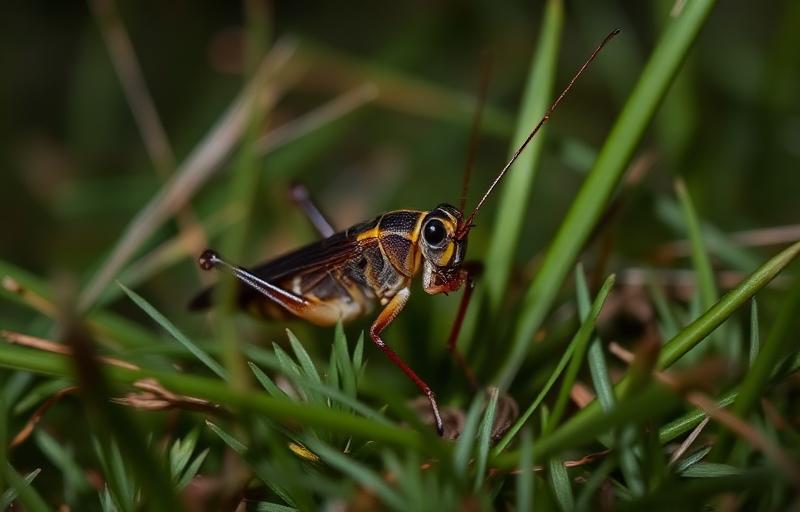
5 min readAnimal NoiseHow Loud Is a Cricket Chirping? Decibel Levels Explained
Crickets chirp at 50–100 dB, with some species producing remarkably loud calls for their tiny size.
4 min readHow Does Frog Croaking Compare?
Tap any sound to learn more about its noise level.
| Sound level | Sound | Vs. Frog Croaking | Risk |
|---|---|---|---|
| 75 dB | Frog Croaking (this page) | — | Moderate |
| 63 dB | School Classroom | −12 dB quieter | Moderate |
| 64 dB | Clothes Dryer | −11 dB quieter | Moderate |
| 70 dB | The Complete Guide to Noise Levels and Decibels | −5 dB quieter | Moderate |
| 85 dB | What Noise Level Is Safe for Humans | +10 dB louder | Moderate |
| 88 dB | Gym Music | +13 dB louder | Loud |
| 90 dB | Motorcycle | +15 dB louder | Loud |
Compare With Other Sounds
See how this noise level compares to other everyday sounds.
Test Your Environment
Use Snap Decibel Meter to measure sound levels around you — free, private, and instant.
Start Noise Measurement