How Loud Is a Microwave Oven? (Decibels Explained)
Microwaves: 55–75 dB — louder than you think.
Reviewed by our team against authoritative public-health sources. See our editorial standards.
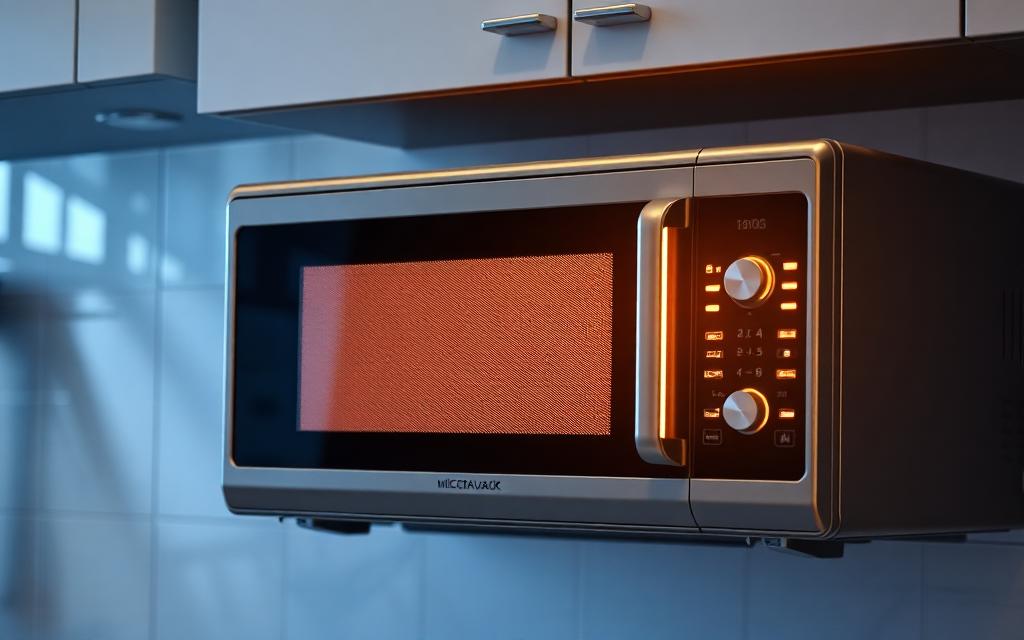
Microwave Oven
55–75 dB
Safe exposure
All-day OK
Per NIOSH 85 dBA / 8 h reference (3 dB exchange rate)
Personalized verdict
Is this dangerous for you?
Microwave Oven
65 dB
Typical
Your room
— dB
Tap Compare
Difference
—
Waiting
Audio is processed locally in your browser — nothing is recorded or sent. Prefer the full meter? Open Snap dB
Compare Microwave Oven to:
Quick Answer
A decibel (dB) is a logarithmic unit used to measure sound intensity: an increase of 10 dB means ten times more sound energy.
Operating: 55–75 dB. Magnetron hum: 55–65 dB. Fan: 50–60 dB. End beep: 80–85 dB. No hearing risk, but the beep is disproportionately loud at night.
📊 Similar in loudness to a busy restaurant (about 65 dB).
At a glance
| Typical range | 55–75 dB |
|---|---|
| Safety tier | Moderate |
| Safe exposure (NIOSH REL) | All-day OK |
| Audible at | ~10–15 ft |
Louder than moderate rainfall (50 dB), quieter than a garbage disposal (80 dB).
How these figures were determined: Values are based on published reference levels from NIOSH, OSHA, the WHO and the CDC, together with manufacturer specifications where available. Actual sound levels vary with distance, room acoustics, equipment condition and measurement method, and readings taken with a phone microphone are estimates rather than calibrated measurements.
Noise by Source
Magnetron hum: 55–65 dB. Cooling fan: 50–60 dB. Turntable: 40–50 dB. Combined: 59–72 dB at 1 meter.
Inverter microwaves are 5–10 dB quieter — smooth power modulation vs. on/off cycling. The end beep at 80–85 dB is dramatically louder than operating noise — the #1 complaint.
- Magnetron: 55–65 dB
- Fan: 50–60 dB
- Turntable: 40–50 dB
- Combined: 59–72 dB
- End beep: 80–85 dB
- Door slam: 70–80 dB
This might be louder than you think…
Noise Level: Microwave Oven
Classification
Moderate
Safe Exposure
No time limit
What It Sounds Like
The steady hum at 60 dB is audible but doesn't prevent conversation. Conventional microwaves cycle on/off, creating an annoying pulsating pattern that inverter models eliminate.
Late-night use: in a quiet house (30 dB), the 65 dB microwave is a 35 dB jump. The 85 dB beep at midnight wakes family members in adjacent rooms.
Typical Sound Levels
Here's where it becomes dangerous…
A 10 dB increase sounds roughly twice as loud to human ears, even though the actual sound energy increases tenfold.
Measure Your Environment
Use Snap Decibel Meter to estimate the sound level around you right now.
Open Noise MeterHealth Concerns?
Zero hearing risk at 55–75 dB. The concern is annoyance and sleep disruption from the beep. For people with sound sensitivity, the repetitive hum can be genuinely distressing.
Using It Quietly
Many microwaves have silent mode — try holding 1 or 0 for 3–5 seconds. Works on Samsung, LG, Panasonic and others.
Place on a rubber mat to absorb vibration. Ensure ventilation clearance. Close the door gently. Stop the timer before the beep cycle starts.
Comparisons
Quieter than blender (80–90 dB) and food processor (80–95 dB). Comparable to dishwasher spray cycle (55–65 dB). Louder than fridge (35–45 dB). Similar to toaster oven fan (55–65 dB).
The difference between 'fine' and 'damaging' is smaller than you think.
Microwave Oven Noise: The Complete Breakdown
At 55–75 dB, microwave oven falls within a well-studied range of the decibel scale. Acoustic engineers, occupational health researchers, and environmental scientists have extensively characterized sounds in this range, providing robust data on health effects, safe exposure durations, and effective mitigation strategies.
At 55–75 dB, microwave oven is roughly equivalent to the ambient level inside a typical car on a highway. It's the kind of sound that becomes "normal" — you adapt to it, but it's measurably affecting your stress physiology. The European Environment Agency estimates that 113 million Europeans live with traffic noise above 55 dB, a threshold linked to adverse health outcomes.
Room acoustics have a major impact on how loud microwave oven actually sounds. Hard, reflective surfaces (tile, glass, concrete) create reverberation that can increase the effective level by 5–10 dB. Soft materials like curtains, carpet, and upholstered furniture absorb sound waves and make the same source noticeably quieter.
Sound Comparison: Microwave Oven on the Decibel Scale
At 55–75 dB, microwave oven produces roughly the same sound pressure level as a busy restaurant (65 dB). Both sit in the "social setting" range. If you've experienced one, you have a reliable reference for the other — though the frequency content and temporal pattern make each sound subjectively different.
On the quieter end, moderate rainfall registers about 50 dB — that's 15 dB below microwave oven, representing roughly 3× less perceived loudness. Moving louder, a garbage disposal reaches 80 dB — 15 dB above microwave oven, approximately 3× louder to your ears.
The decibel scale is logarithmic — each 10 dB increase represents a tenfold jump in sound energy and roughly a doubling of perceived loudness. At 55–75 dB, microwave oven carries 3,162,278× more acoustic energy than the threshold of hearing (0 dB), placing it in a well-characterized region of the audible spectrum.
Managing Microwave Oven Noise in Your Environment
While microwave oven at 75 dB doesn't require hearing protection, managing this noise improves comfort, reduces stress, and preserves the quiet that supports concentration, sleep, and cardiovascular health. The strategies below focus on environmental modifications rather than personal protective equipment.
The most effective noise reduction combines source treatment, path interruption, and receiver protection — the "source-path-receiver" model used by acoustic engineers. For microwave oven at 75 dB, start at the source (can you reduce the noise output?), then address the path (can you add distance, barriers, or absorption?), and finally protect yourself (hearing protection, time limits).
- Monitor cumulative daily exposure — multiple moderate sources compound over time
- Increase distance from microwave oven when possible — every doubling cuts the level by 6 dB
- Measure microwave oven noise with a smartphone app to establish your actual exposure level
- Add soft furnishings (rugs, curtains, upholstered furniture) to absorb reflected microwave oven sound
- Close doors and seal gaps between rooms to reduce transmitted noise by 15–25 dB
Measuring Microwave Oven Noise: Methods and Tools
To measure microwave oven noise as accurately as possible, use a dedicated Type 2 sound level meter or a calibrated smartphone app such as NIOSH SLM. Snap Decibel Meter gives you a fast relative estimate — useful for comparing environments, but uncalibrated and unweighted. Position the device at 1 meter from the source, at the height where you'd normally hear it. Take readings over 30–60 seconds and note both average (Leq) and peak (Lmax) values.
For sounds at 65 dB like microwave oven, most smartphone decibel meter apps provide reasonably accurate readings (typically within ±3–5 dB of professional equipment). For more precision, calibrate your app against a known reference sound or use a dedicated Type 2 sound level meter. The key to accuracy is consistent positioning and adequate sampling time.
Microwave Oven Noise and Your Health
The WHO estimates that environmental noise causes 12,000 premature deaths and 48,000 new cases of ischemic heart disease annually in Europe alone. While microwave oven is just one contributor, managing every noise source in your environment contributes to better long-term cardiovascular and mental health outcomes.
Measure Microwave Oven Noise Yourself
Want to know how loud microwave oven is in your own environment? Use our free decibel meter to take a real-time reading, or check the complete decibel chart to see where 55–75 dB sits on the full scale. You can also compare sounds side by side or use the noise distance calculator to estimate levels at different distances.
🎯 Guess the Decibel Level
How loud do you think Microwave Oven is? Drag the slider and find out!
Frequently Asked Questions
How loud?
55–75 dB operating. Beep: 80–85 dB.
Mute the beep?
Try holding 1 or 0 for 3–5 seconds.
Why is mine loud?
Aging magnetron, restricted ventilation, or countertop vibration.
Inverter quieter?
Yes — 5–10 dB less.
Explore More
Related Noise Guides
How Loud Is a Dishwasher? Decibel Levels Explained
Modern dishwashers produce 40–60 dB — quieter than many people think. Here's how to interpret dishwasher noise ratings.
5 min readHome NoiseHow Loud Is a Washing Machine? Decibel Levels Explained
Washing machines produce 50–75 dB, with the spin cycle creating the most noise. Here's what affects the volume and how to minimize it.
5 min readDecibel QuestionsIs 60 dB Loud? Understanding Normal Conversation Volume
60 dB is the volume of normal conversation — not loud at all. It's the acoustic baseline of everyday life and completely safe for hearing.
4 min readHow Does Microwave Oven Compare?
Tap any sound to learn more about its noise level.
| Sound level | Sound | Vs. Microwave Oven | Risk |
|---|---|---|---|
| 65 dB | Microwave Oven (this page) | — | Moderate |
| 50 dB | Snoring | −15 dB quieter | Safe |
| 50 dB | Is 50 dB Loud | −15 dB quieter | Safe |
| 70 dB | The Complete Guide to Noise Levels and Decibels | +5 dB louder | Moderate |
| 75 dB | Vacuum Cleaner | +10 dB louder | Moderate |
| 76 dB | Lawn Mower | +11 dB louder | Moderate |
| 78 dB | Traffic Noise | +13 dB louder | Moderate |
Compare With Other Sounds
See how this noise level compares to other everyday sounds.
Test Your Environment
Use Snap Decibel Meter to measure sound levels around you — free, private, and instant.
Start Noise Measurement