How Loud Is an Air Conditioner? (Decibels Explained)
Air conditioners produce 40–80 dB depending on type.
Reviewed by our team against authoritative public-health sources. See our editorial standards.
Air Conditioner
60–80 dB
Safe exposure
8 hours
Per NIOSH 85 dBA / 8 h reference (3 dB exchange rate)
Personalized verdict
Is this dangerous for you?
Air Conditioner
70 dB
Typical
Your room
— dB
Tap Compare
Difference
—
Waiting
Audio is processed locally in your browser — nothing is recorded or sent. Prefer the full meter? Open Snap dB
Compare Air Conditioner to:
Quick Answer
A decibel (dB) is a logarithmic unit used to measure sound intensity: an increase of 10 dB means ten times more sound energy.
Window AC: 60–80 dB. Mini-split: 19–45 dB indoors. Central air outdoor: 55–75 dB. No hearing risk, but affects comfort and sleep.
📊 Similar in loudness to a running shower (about 70 dB).
At a glance
| Typical range | 60–80 dB |
|---|---|
| Safety tier | Moderate |
| Safe exposure (NIOSH REL) | All-day OK |
| Audible at | ~20–30 ft |
Louder than a coffee shop (55 dB), quieter than a food blender running (85 dB).
How these figures were determined: Values are based on published reference levels from NIOSH, OSHA, the WHO and the CDC, together with manufacturer specifications where available. Actual sound levels vary with distance, room acoustics, equipment condition and measurement method, and readings taken with a phone microphone are estimates rather than calibrated measurements.
AC Noise by Type
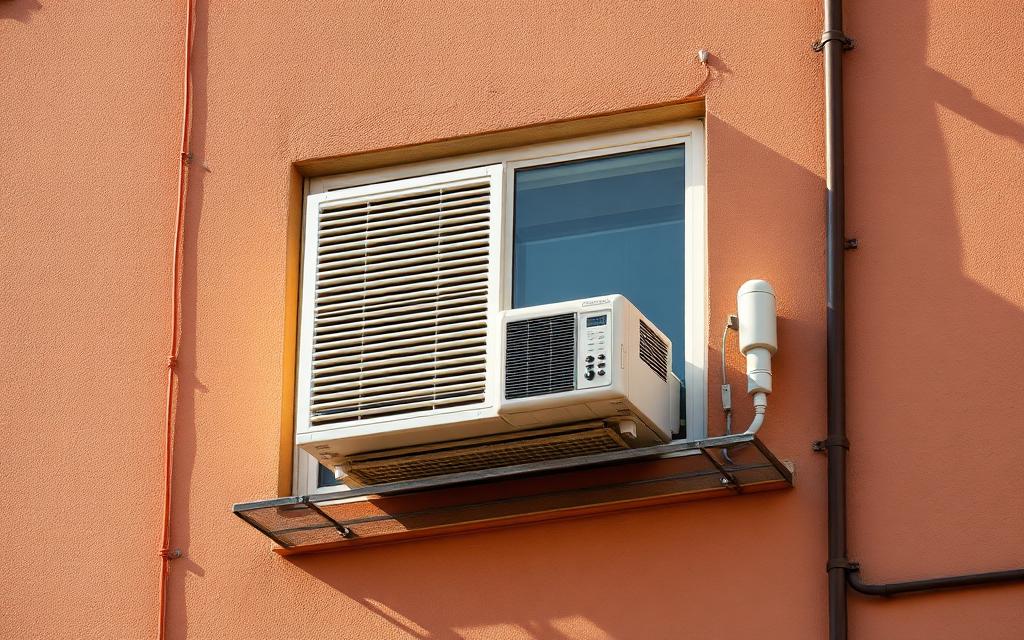
Ductless mini-splits: 19–45 dB indoor — barely audible. Window units: 60–80 dB, comparable to a shower. Central air splits noise: indoor handler 40–55 dB, outdoor condenser 55–75 dB.
Portable AC units: surprisingly loud at 55–70 dB with everything in one unit inside your room.
- Mini-split indoor: 19–45 dB
- Central indoor: 40–55 dB
- Central outdoor: 55–75 dB
- Portable: 55–70 dB
- Window low: 55–65 dB
- Window high: 65–80 dB
Most people are surprised by how loud this actually is…
Noise Level: Air Conditioner
Classification
Moderate
Safe Exposure
No time limit
What They Sound Like
A premium mini-split at 22 dB is inaudible. At 35 dB, gentle airflow like a light breeze. A window unit at 65 dB is a constant companion — some find the white noise helpful for sleep.
Outdoor condensers at 65 dB cause neighbor disputes. At 3 meters from a bedroom window: 45–55 dB inside — above WHO's 30 dB sleep recommendation.
Typical Sound Levels
Beyond this level, your hearing cells don't recover…
A 10 dB increase sounds roughly twice as loud to human ears, even though the actual sound energy increases tenfold.
Measure Your Environment
Use Snap Decibel Meter to estimate the sound level around you right now.
Open Noise MeterChoosing a Quiet AC
Target 40 dB or lower for indoor units, 25 dB for bedrooms. Inverter compressors ramp smoothly (quieter) vs. fixed-speed cycling on/off. Proper installation prevents vibration noise (+5–10 dB).
Health Concerns?
No hearing risk — even 80 dB window units are below threshold. But WHO recommends bedroom noise below 30 dB. The 60→25 dB difference between window unit and mini-split is transformative for sleep.
Comparisons
Quiet mini-split (22 dB) ≈ rustling leaves. Central handler (50 dB) ≈ quiet office. Window unit (70 dB) ≈ running shower. Fridge (35–45 dB) ≈ good mini-split.
The difference between 'fine' and 'damaging' is smaller than you think.
What Makes Air Conditioner Sound the Way It Does
Your subjective experience of air conditioner at 60–80 dB depends on more than just the decibel number. Duration, frequency content, temporal pattern (steady vs. intermittent), predictability, controllability, and your attitude toward the source all influence the annoyance response. Two sounds at identical decibel levels can produce vastly different subjective reactions.
In the 60–80 dB range, air conditioner sits in a transitional zone. It's clearly audible and may require you to raise your voice slightly in conversation. Sustained exposure won't damage your hearing, but environmental noise research links chronic levels above 65 dB to elevated stress hormones and disrupted cardiovascular rhythms.
The inverse square law governs how air conditioner sound diminishes with distance. Every doubling of distance reduces the level by approximately 6 dB. At 80 dB measured at 1 meter, expect roughly 74 dB at 2 meters, 68 dB at 4 meters, and 60 dB at 10 meters.
Putting Air Conditioner Noise in Perspective
At 60–80 dB, air conditioner produces roughly the same sound pressure level as a running shower (70 dB). Both sit in the "audible household" range. If you've experienced one, you have a reliable reference for the other — though the frequency content and temporal pattern make each sound subjectively different.
On the quieter end, a coffee shop registers about 55 dB — that's 15 dB below air conditioner, representing roughly 3× less perceived loudness. Moving louder, a food blender running reaches 85 dB — 15 dB above air conditioner, approximately 3× louder to your ears.
Human hearing perception compresses the enormous physical range of sound into a more manageable subjective scale. The difference between 70 dB and 80 dB sounds like "about twice as loud" to most listeners, even though the actual energy difference is 10-fold. This compression is why small decibel differences feel significant — a 3 dB reduction removes half the sound energy.
Minimizing Air Conditioner Noise Impact
While air conditioner at 80 dB doesn't require hearing protection, managing this noise improves comfort, reduces stress, and preserves the quiet that supports concentration, sleep, and cardiovascular health. The strategies below focus on environmental modifications rather than personal protective equipment.
Simple environmental changes can reduce your effective exposure to air conditioner noise. Closing a standard interior door reduces transmitted sound by 15–20 dB. Adding a rug to a hard floor absorbs 2–4 dB of reflected energy. Hanging heavy curtains adds 5–8 dB of high-frequency absorption. These modest steps compound to create meaningful noise reduction.
- Add soft furnishings (rugs, curtains, upholstered furniture) to absorb reflected air conditioner sound
- Close doors and seal gaps between rooms to reduce transmitted noise by 15–25 dB
- Wear NRR 20+ hearing protection if air conditioner exposure exceeds 85 dB
- Monitor cumulative daily exposure — multiple moderate sources compound over time
- Increase distance from air conditioner when possible — every doubling cuts the level by 6 dB
How to Measure Air Conditioner Sound Accurately
For reliable air conditioner measurements, standardize your approach: measure at 1 meter distance, at ear height, with the microphone pointed toward the source. Run the measurement for at least 30 seconds and average multiple readings. Background noise should be at least 10 dB below your target to avoid interference.
For sounds at 70 dB like air conditioner, most smartphone decibel meter apps provide reasonably accurate readings (typically within ±3–5 dB of professional equipment). For more precision, calibrate your app against a known reference sound or use a dedicated Type 2 sound level meter. The key to accuracy is consistent positioning and adequate sampling time.
The Wellness Impact of Air Conditioner Sound
Chronic exposure to air conditioner at 80 dB falls below the hearing damage threshold but contributes to non-auditory health effects. The European Environment Agency links sustained noise above 55 dB to cardiovascular risk, and above 65 dB to measurable cortisol elevation and sleep disruption. These effects accumulate over years of daily exposure.
Measure Air Conditioner Noise Yourself
Want to know how loud air conditioner is in your own environment? Use our free decibel meter to take a real-time reading, or check the complete decibel chart to see where 60–80 dB sits on the full scale. You can also compare sounds side by side or use the noise distance calculator to estimate levels at different distances.
🎯 Guess the Decibel Level
How loud do you think Air Conditioner is? Drag the slider and find out!
Frequently Asked Questions
Good dB for AC?
Under 40 indoor, under 60 outdoor. Bedrooms: 25 or less.
Why is mine loud?
Dirty filters, loose mounting, worn bearings, or aging compressor.
Mini-splits quieter?
Yes — dramatically. 19–45 vs. 60–80 dB.
Bother neighbors?
Outdoor condensers at 60–75 dB are common complaints. Use vibration pads.
Explore More
Related Noise Guides
How Loud Is a Ceiling Fan? (Decibels Explained)
Ceiling fans: 30–55 dB — quiet, but some are surprisingly noisy.
6 min readDecibel QuestionsIs 50 dB Loud? What 50 Decibels Really Sounds Like
50 dB is the sound of a quiet conversation or light rain — not loud at all. Here's what it sounds like and how it compares.
5 min readDecibel QuestionsIs 60 dB Loud? Understanding Normal Conversation Volume
60 dB is the volume of normal conversation — not loud at all. It's the acoustic baseline of everyday life and completely safe for hearing.
4 min readHow Does Air Conditioner Compare?
Tap any sound to learn more about its noise level.
| Sound level | Sound | Vs. Air Conditioner | Risk |
|---|---|---|---|
| 70 dB | Air Conditioner (this page) | — | Moderate |
| 58 dB | Generator | −12 dB quieter | Safe |
| 58 dB | Electric Toothbrush | −12 dB quieter | Safe |
| 70 dB | The Complete Guide to Noise Levels and Decibels | same level | Moderate |
| 78 dB | Traffic Noise | +8 dB louder | Moderate |
| 82 dB | Woodpecker | +12 dB louder | Moderate |
| 83 dB | Hair Dryer | +13 dB louder | Moderate |
Compare With Other Sounds
See how this noise level compares to other everyday sounds.

Test Your Environment
Use Snap Decibel Meter to measure sound levels around you — free, private, and instant.
Start Noise Measurement