How Loud Is a Jet Ski? Watercraft Noise Levels Explained
A jet ski produces 85–115 dB at the rider position — louder than most people realize, with significant hearing risk at full throttle.
Reviewed by our team against authoritative public-health sources. See our editorial standards.
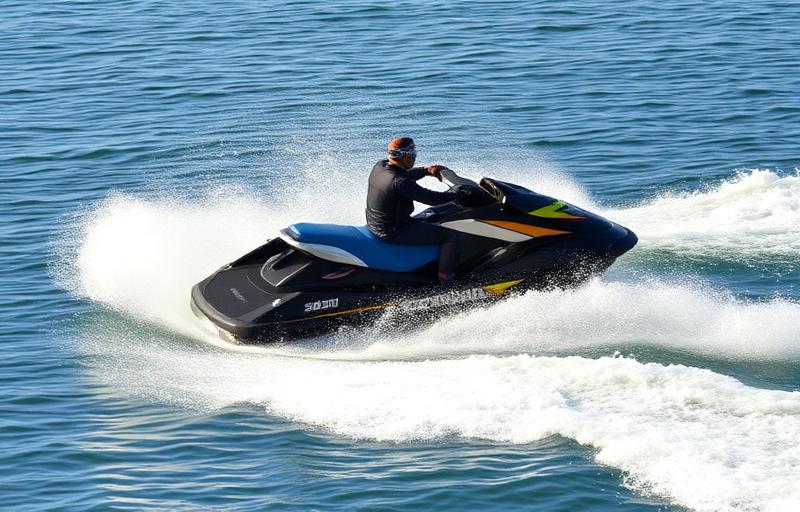
Jet Ski
85–100 dB
Safe exposure
7 minutes
Per NIOSH 85 dBA / 8 h reference (3 dB exchange rate)
Above 85 dB can damage hearing with prolonged exposure. Use ear protection.
Personalized verdict
Is this dangerous for you?
Jet Ski
93 dB
Typical
Your room
— dB
Tap Compare
Difference
—
Waiting
Audio is processed locally in your browser — nothing is recorded or sent. Prefer the full meter? Open Snap dB
Compare Jet Ski to:
Quick Answer
A decibel (dB) is a logarithmic unit used to measure sound intensity: an increase of 10 dB means ten times more sound energy.
A jet ski produces 85–100 dB at the rider's ear at cruising speed and can reach 105–115 dB at full throttle. Combined with wind noise, total noise exposure while riding can exceed 100 dB consistently, making hearing protection important for regular riders.
📊 Similar in loudness to a motorcycle at 25 feet (about 95 dB).
Prolonged exposure above 85 dB can damage hearing.
At a glance
| Typical range | 85–100 dB |
|---|---|
| Safety tier | Loud |
| Safe exposure (NIOSH REL) | 15 minutes |
| Audible at | ~50+ ft |
Louder than a garbage disposal (80 dB), quieter than a helicopter overhead at 100 feet (105 dB).
How these figures were determined: Values are based on published reference levels from NIOSH, OSHA, the WHO and the CDC, together with manufacturer specifications where available. Actual sound levels vary with distance, room acoustics, equipment condition and measurement method, and readings taken with a phone microphone are estimates rather than calibrated measurements.
Jet Ski Noise Levels
Noise varies significantly by speed:
- Idle: 70–80 dB
- Low speed / no-wake zone: 78–85 dB
- Cruising (30 mph): 85–95 dB
- Full throttle (50+ mph): 95–110 dB
- Two-stroke models: 5–10 dB louder than four-stroke
- Plus wind noise: adds 10–20 dB at speed
This might be louder than you think…
Noise Level: Jet Ski
Classification
Loud – Hearing Risk
Safe Exposure
2 hours
Combined Noise Exposure
Riders experience combined engine and wind noise that together exceed either source alone. This is a critical point that many riders miss — even at moderate speeds, the total noise load is significant:
- Engine at rider ear: 85–110 dB
- Wind noise at 30 mph: 85–90 dB
- Wind noise at 50 mph: 95–105 dB
- Combined total: 90–115 dB
- Water surface reflects sound, adding 2–3 dB
- A 2-hour ride at 95+ dB far exceeds safe exposure limits
Typical Sound Levels
Here's where it becomes dangerous…
The human ear can distinguish over 400,000 different sounds and detect pressure changes as small as one billionth of atmospheric pressure.
Measure Your Environment
Use Snap Decibel Meter to estimate the sound level around you right now.
Open Noise MeterHearing Protection for Riders
Regular jet ski riders face genuine hearing damage risk. Unlike motorcyclists, who increasingly use earplugs, most jet ski riders are unaware of the noise levels involved:
- Waterproof earplugs: essential for rides over 30 minutes
- Reduce noise by 15–25 dB while still hearing warnings
- Custom-molded waterproof plugs: best fit and retention
- Helmet with ear coverage provides wind noise reduction
- Riders often don't notice volume due to adrenaline masking
Environmental Noise Impact
Jet skis are among the most complained-about sources of recreational noise. Sound travels especially well over water because the flat surface acts as a near-perfect reflector:
- Noise carries over water with little attenuation (no obstacles to block it)
- At 100 meters: still 75–85 dB (clearly audible on shore)
- At 300 meters: 65–75 dB (annoying to lakeside residents)
- Many lakes have noise limit regulations (typically 75–80 dB at 15m)
- Four-stroke models are significantly quieter and meet most regulations
- Some lakes ban two-stroke jet skis entirely due to noise and emissions
The difference between 'fine' and 'damaging' is smaller than you think.
Understanding Jet Ski Noise Levels
Electric vehicles are transforming jet ski noise patterns. Below 30 km/h, EVs are 6–10 dB quieter than combustion vehicles because tire and wind noise haven't yet dominated the sound profile. Above 50 km/h, the difference shrinks to 1–2 dB as aerodynamic and tire noise become the primary contributors regardless of powertrain.
Noise at 85–100 dB from jet ski exceeds the maximum level that any regulatory body considers safe for unlimited exposure. At this intensity, sound energy is sufficient to physically damage the stereocilia (hair-like structures) on inner ear sensory cells. These structures do not regenerate in mammals — every exposure above safe limits contributes to permanent, cumulative hearing loss.
Tire-road interaction generates most jet ski noise above 50 km/h. The sound is caused by air being compressed and released from tread grooves as the tire rolls. Porous asphalt road surfaces can reduce this component by 3–5 dB compared to standard dense asphalt — a difference that's clearly noticeable to roadside residents.
Commuter Noise Exposure from Jet ski
The average urban commuter accumulates 60–90 minutes of daily noise exposure from transportation sources including jet ski. At 85–100 dB, this represents a significant portion of the daily noise dose — potentially exceeding safe limits when combined with other daily noise sources.
Subway commuters face some of the highest transportation noise exposure. Platform noise levels during train arrival average 85–95 dB, with in-car levels of 75–85 dB. Combined with jet ski exposure, daily transit users can accumulate noise doses equivalent to 2–4 hours of 85 dB exposure — bordering on NIOSH limits.
Commuter noise exposure is largely involuntary, which increases its psychological impact. Research consistently shows that involuntary noise exposure produces greater stress responses (cortisol elevation, blood pressure increase) than voluntary exposure at the same decibel level. You can't opt out of jet ski noise on your commute the way you can turn off a loud appliance at home.
Jet Ski vs. Common Noise Sources
Jet ski noise at 85–100 dB matches a motorcycle at 25 feet (95 dB) on the decibel scale. While the measured levels are equivalent, your brain perceives these sounds very differently based on their spectral content, temporal pattern, and your learned associations with each source.
On the quieter end, a vacuum cleaner at 10 feet registers about 75 dB — that's 18 dB below jet ski, representing roughly 3× less perceived loudness. Moving louder, a rock concert front row reaches 110 dB — 17 dB above jet ski, approximately 3× louder to your ears.
The decibel scale is logarithmic — each 10 dB increase represents a tenfold jump in sound energy and roughly a doubling of perceived loudness. At 85–100 dB, jet ski carries 1,995,262,315× more acoustic energy than the threshold of hearing (0 dB), placing it in a well-characterized region of the audible spectrum.
Safe Exposure Duration for Jet Ski
According to NIOSH guidelines, the maximum safe exposure time at 100 dB is 15 minutes. Even brief exposure requires hearing protection.
NIOSH Exposure Limits Reference
How Jet ski Noise Affects Property Values
Real estate research consistently shows that transportation noise reduces property values by 0.5–2% per decibel above 55 dB. For a home near a source of jet ski noise at 100 dB, this translates to a 45–90% reduction in market value compared to equivalent properties in quieter locations.
The noise discount is not uniform — it depends on local housing supply, buyer demographics, and whether the noise is constant or intermittent. Jet ski noise that occurs during sleeping hours receives a larger discount than daytime-only exposure. Properties with effective noise mitigation (double-glazed windows, sound walls) recover some but not all of the noise penalty.
Hearing Protection Strategies for Jet Ski
Sustained exposure to jet ski at 100 dB requires a deliberate hearing protection strategy. The National Institute for Deafness recommends the "3-E" approach: Engineering controls (reduce the source noise), Environmental modifications (increase distance, add barriers), and Equipment (wear proper hearing protection). Apply these in order — prevent the noise first, protect against the remainder.
The most effective noise reduction combines source treatment, path interruption, and receiver protection — the "source-path-receiver" model used by acoustic engineers. For jet ski at 100 dB, start at the source (can you reduce the noise output?), then address the path (can you add distance, barriers, or absorption?), and finally protect yourself (hearing protection, time limits).
- Choose quieter transit options when available (newer trains, electric buses)
- Schedule annual hearing screenings if you commute daily in noisy conditions
- When house-hunting, use a decibel meter to measure jet ski noise at different times of day
- Seal window and door gaps in homes near jet ski sources — air leaks transmit significant noise
- Use noise-canceling headphones or foam earplugs during commutes exposed to jet ski noise
Test It Yourself: Measuring Jet Ski Noise
To measure jet ski noise as accurately as possible, use a dedicated Type 2 sound level meter or a calibrated smartphone app such as NIOSH SLM. Snap Decibel Meter gives you a fast relative estimate — useful for comparing environments, but uncalibrated and unweighted. Position the device at 1 meter from the source, at the height where you'd normally hear it. Take readings over 30–60 seconds and note both average (Leq) and peak (Lmax) values.
Measuring loud sounds like jet ski at 93 dB requires caution — the measurement process itself exposes you to potentially damaging noise. Wear hearing protection during measurement sessions, use a remote microphone or tripod placement when possible, and limit measurement duration to the minimum needed for representative data.
How Jet Ski Noise Affects Your Health
The progression of hearing damage from jet ski exposure follows a predictable pattern: first, temporary threshold shift (sounds seem muffled after exposure), then persistent tinnitus (ringing or buzzing that doesn't resolve), then permanent threshold shift (measurable hearing loss on audiometric testing). Early-stage damage is often unnoticed because the brain compensates by "filling in" missing signals from context.
Warning signs of overexposure to jet ski noise include: ringing, buzzing, or hissing in the ears after exposure; speech sounding muffled or distant; difficulty following conversations in restaurants or social settings; and needing to gradually increase TV or headphone volume. If you experience any of these after exposure to jet ski, reduce future exposure immediately and consult an audiologist.
Warning Signs of Overexposure
- Ringing, buzzing, or hissing in your ears after exposure to jet ski
- Sounds seem muffled or distant after leaving the noisy environment
- Difficulty understanding speech in crowded or noisy settings
- Gradually increasing your TV or headphone volume over weeks
Measure Jet Ski Noise Yourself
Want to know how loud jet ski is in your own environment? Use our free decibel meter to take a real-time reading, or check the complete decibel chart to see where 85–100 dB sits on the full scale. You can also compare sounds side by side or use the noise distance calculator to estimate levels at different distances.
🎯 Guess the Decibel Level
How loud do you think Jet Ski is? Drag the slider and find out!
Hearing Safety
Extended jet ski riding at cruising speed or above exposes you to 95+ dB. Wear waterproof earplugs for any ride over 30 minutes.
Frequently Asked Questions
Do I need hearing protection on a jet ski?
Yes, for rides over 30 minutes. Combined engine and wind noise regularly exceeds 95 dB at cruising speed.
Are four-stroke jet skis quieter?
Yes — significantly. Four-stroke engines are 5–10 dB quieter than two-stroke models at equivalent speeds.
How loud is a jet ski from shore?
At 100 meters, a jet ski at full throttle still measures 75–85 dB — clearly audible and often annoying to shore residents.
Explore More
Related Noise Guides
How Loud Is a Motorcycle? Decibel Levels Explained
Motorcycles produce 80–100 dB at close range — louder than a car and potentially harmful to hearing. Here's what you need to know.
7 min readHearing SafetyIs 100 dB Dangerous? The 15-Minute Warning
100 dB gives you just 15 minutes of safe exposure. Nightclubs, power tools, and live music all exceed this level. Here's the full danger picture.
5 min readTransportation NoiseHow Loud Is an Airplane Takeoff? Decibels by Distance
Jet takeoff produces 140+ dB at the runway — one of the loudest regular events on Earth. Here's how it scales with distance.
5 min readHearing SafetyIs 95 dB Dangerous? Hearing Damage Timeline Explained
95 dB is dangerous with prolonged exposure — hearing damage can occur in less than 50 minutes without hearing protection.
5 min readHow Does Jet Ski Compare?
Tap any sound to learn more about its noise level.
| Sound level | Sound | Vs. Jet Ski | Risk |
|---|---|---|---|
| 93 dB | Jet Ski (this page) | — | Loud |
| 80 dB | Construction Noise | −13 dB quieter | Moderate |
| 82 dB | Woodpecker | −11 dB quieter | Moderate |
| 85 dB | What Noise Level Is Safe for Humans | −8 dB quieter | Moderate |
| 85 dB | Dog Bark | −8 dB quieter | Moderate |
| 105 dB | Baby Cry | +12 dB louder | Danger |
| 105 dB | Car Horn | +12 dB louder | Danger |
Compare With Other Sounds
See how this noise level compares to other everyday sounds.
Test Your Environment
Use Snap Decibel Meter to measure sound levels around you — free, private, and instant.
Start Noise Measurement