How Loud Is a Police Siren? Decibel Levels Explained
Police sirens produce 110–130 dB, making them one of the loudest sounds you encounter in daily life.
Reviewed by our team against authoritative public-health sources. See our editorial standards.
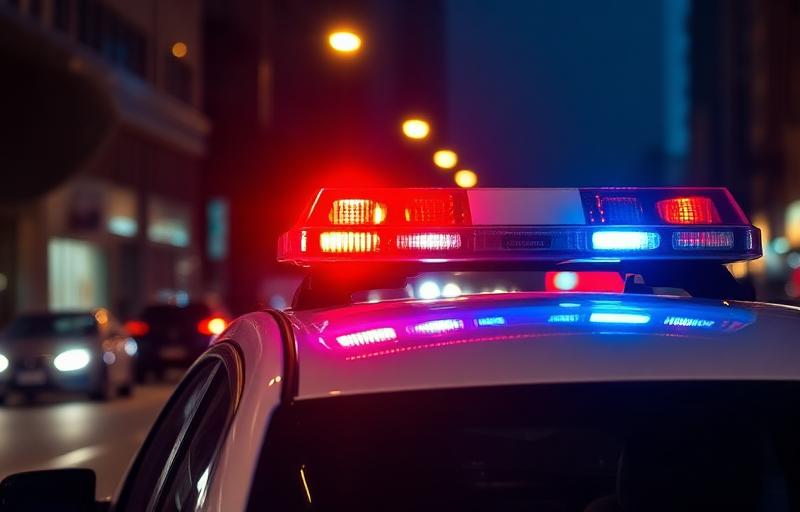
Police Siren
110–130 dB
Safe exposure
Instant risk
Per NIOSH 85 dBA / 8 h reference (3 dB exchange rate)
Above 85 dB can damage hearing with prolonged exposure. Use ear protection.
Personalized verdict
Is this dangerous for you?
Police Siren
120 dB
Typical
Your room
— dB
Tap Compare
Difference
—
Waiting
Audio is processed locally in your browser — nothing is recorded or sent. Prefer the full meter? Open Snap dB
Compare Police Siren to:
Quick Answer
A decibel (dB) is a logarithmic unit used to measure sound intensity: an increase of 10 dB means ten times more sound energy.
A police siren typically produces 110–130 decibels at close range. Standing within 10 meters of an active siren exposes you to sound levels that can cause hearing pain and damage within seconds. At 30 meters, the level drops to roughly 90–100 dB — still loud enough to require caution.
📊 Similar in loudness to an ambulance siren at 10 feet (about 120 dB).
Prolonged exposure above 85 dB can damage hearing.
At a glance
| Typical range | 110–130 dB |
|---|---|
| Safety tier | Dangerous |
| Safe exposure (NIOSH REL) | Immediate risk |
| Audible at | ~50+ ft |
Louder than a helicopter overhead at 100 feet (105 dB), quieter than a gunshot at close range (140 dB).
How these figures were determined: Values are based on published reference levels from NIOSH, OSHA, the WHO and the CDC, together with manufacturer specifications where available. Actual sound levels vary with distance, room acoustics, equipment condition and measurement method, and readings taken with a phone microphone are estimates rather than calibrated measurements.
Police Siren Decibel Range
Emergency vehicle sirens are engineered to cut through ambient noise. A standard police siren generates 110–120 dB at 1 meter from the vehicle, with some high-powered models reaching 130 dB. Federal regulations in the United States require emergency sirens to produce at least 100 dB at 3 meters to ensure they can be heard by motorists.
The wail, yelp, and hi-lo tones cycle at different frequencies, making sirens harder to ignore. This frequency modulation is intentional — the human auditory system is less likely to habituate to a constantly changing sound pattern. At peak output, a police siren is comparable to a jackhammer or a rock concert front row.
Your ears can't tell you the real danger level here…
Noise Level: Police Siren
Classification
Dangerous
Safe Exposure
Immediate risk
How Distance Affects Siren Loudness
Sound follows the inverse-square law: every doubling of distance reduces intensity by approximately 6 dB. A 120 dB siren at 1 meter drops to about 100 dB at 10 meters, 80 dB at 100 meters, and 60 dB at 1 kilometer. This is why sirens are audible from blocks away but don't typically damage hearing at street distances.
- 1 meter: 110–130 dB (pain threshold)
- 10 meters: 95–110 dB (hearing damage risk)
- 30 meters: 85–100 dB (caution advised)
- 100 meters: 75–85 dB (uncomfortable)
- 300 meters: 65–70 dB (clearly audible)
Typical Sound Levels
This is the point where hearing damage starts…
Noise-induced hearing loss is the second most common form of sensorineural hearing deficit, after age-related loss.
Measure Your Environment
Use Snap Decibel Meter to estimate the sound level around you right now.
Open Noise MeterHealth Effects of Siren Exposure
For pedestrians and cyclists near intersections, repeated close-range siren exposure can contribute to cumulative hearing damage. Emergency responders face the greatest risk — paramedics riding in ambulances with windows open can experience sustained 85–100 dB levels during calls. Studies have documented elevated rates of noise-induced hearing loss among first responders compared to the general population.
Beyond hearing damage, sudden siren blasts trigger the startle reflex, causing spikes in blood pressure, heart rate, and cortisol. For people with anxiety disorders, hyperacusis, or autism spectrum conditions, sirens can be particularly distressing.
How to Protect Your Hearing Around Sirens
If you live near a busy emergency route, consider acoustic window treatments. Double-glazed windows reduce exterior noise by 25–35 dB, bringing a 100 dB siren down to a manageable 65–75 dB indoors. When walking on busy streets, noise-cancelling earbuds set to transparency mode can reduce sudden peaks while maintaining situational awareness.
Emergency workers should use communication-compatible earplugs that allow radio transmissions while attenuating siren noise. Custom-molded musician's earplugs with flat-frequency attenuation are ideal because they reduce volume evenly without muffling speech.
Police Siren vs. Other Emergency Sounds
Police sirens sit in the same intensity range as fire truck horns (105–125 dB) and ambulance sirens (110–130 dB). By comparison, a car alarm registers 100–105 dB and a smoke detector produces 85–100 dB. Tornado sirens, designed to cover entire neighborhoods, can reach 135 dB at the source.
Most people underestimate this sound — don't be one of them.
Understanding Police Siren Noise Levels
Rail noise from police siren has a distinctive pattern: a crescendo as the train approaches, a sharp peak as it passes, and a gradual fade. The peak-to-average ratio can be 15–20 dB, meaning a train averaging 120 dB over its pass-by can hit 135 dB momentarily. This intermittent pattern is particularly disruptive to sleep.
Noise at 110–130 dB from police siren exceeds the maximum level that any regulatory body considers safe for unlimited exposure. At this intensity, sound energy is sufficient to physically damage the stereocilia (hair-like structures) on inner ear sensory cells. These structures do not regenerate in mammals — every exposure above safe limits contributes to permanent, cumulative hearing loss.
Tire-road interaction generates most police siren noise above 50 km/h. The sound is caused by air being compressed and released from tread grooves as the tire rolls. Porous asphalt road surfaces can reduce this component by 3–5 dB compared to standard dense asphalt — a difference that's clearly noticeable to roadside residents.
Commuter Noise Exposure from Police siren
The average urban commuter accumulates 60–90 minutes of daily noise exposure from transportation sources including police siren. At 110–130 dB, this represents a significant portion of the daily noise dose — potentially exceeding safe limits when combined with other daily noise sources.
Subway commuters face some of the highest transportation noise exposure. Platform noise levels during train arrival average 85–95 dB, with in-car levels of 75–85 dB. Combined with police siren exposure, daily transit users can accumulate noise doses equivalent to 2–4 hours of 85 dB exposure — bordering on NIOSH limits.
Commuter noise exposure is largely involuntary, which increases its psychological impact. Research consistently shows that involuntary noise exposure produces greater stress responses (cortisol elevation, blood pressure increase) than voluntary exposure at the same decibel level. You can't opt out of police siren noise on your commute the way you can turn off a loud appliance at home.
Police Siren vs. Common Noise Sources
The closest everyday comparison to police siren at 110–130 dB is an ambulance siren at 10 feet, which registers at 120 dB. Both sounds occupy the same energy band and present similar exposure considerations, though their frequency profiles and duration patterns create distinct listening experiences.
On the quieter end, a rock concert front row registers about 110 dB — that's 10 dB below police siren, representing roughly 2× less perceived loudness. Moving louder, a jet takeoff at 100 meters reaches 130 dB — 10 dB above police siren, approximately 2× louder to your ears.
The decibel scale is logarithmic — each 10 dB increase represents a tenfold jump in sound energy and roughly a doubling of perceived loudness. At 110–130 dB, police siren carries 1,000,000,000,000× more acoustic energy than the threshold of hearing (0 dB), placing it in a well-characterized region of the audible spectrum.
Safe Exposure Duration for Police Siren
According to NIOSH guidelines, the maximum safe exposure time at 130 dB is Immediate risk. This level can cause instant pain and hearing damage.
NIOSH Exposure Limits Reference
How Police siren Noise Affects Property Values
Real estate research consistently shows that transportation noise reduces property values by 0.5–2% per decibel above 55 dB. For a home near a source of police siren noise at 130 dB, this translates to a 75–150% reduction in market value compared to equivalent properties in quieter locations.
The noise discount is not uniform — it depends on local housing supply, buyer demographics, and whether the noise is constant or intermittent. Police siren noise that occurs during sleeping hours receives a larger discount than daytime-only exposure. Properties with effective noise mitigation (double-glazed windows, sound walls) recover some but not all of the noise penalty.
Hearing Protection Strategies for Police Siren
Because police siren reaches 130 dB, hearing protection during exposure is not optional — it's a medical necessity. The type and level of protection depends on your exposure pattern: occasional home users can rely on disposable foam earplugs (NRR 29–33), while daily professional users should invest in custom-molded earplugs or electronic earmuffs.
The most effective noise reduction combines source treatment, path interruption, and receiver protection — the "source-path-receiver" model used by acoustic engineers. For police siren at 130 dB, start at the source (can you reduce the noise output?), then address the path (can you add distance, barriers, or absorption?), and finally protect yourself (hearing protection, time limits).
- Use noise-canceling headphones or foam earplugs during commutes exposed to police siren noise
- Keep vehicle windows closed in high-noise areas — open windows add 10–15 dB
- Choose quieter transit options when available (newer trains, electric buses)
- Schedule annual hearing screenings if you commute daily in noisy conditions
- When house-hunting, use a decibel meter to measure police siren noise at different times of day
Test It Yourself: Measuring Police Siren Noise
To measure police siren noise as accurately as possible, use a dedicated Type 2 sound level meter or a calibrated smartphone app such as NIOSH SLM. Snap Decibel Meter gives you a fast relative estimate — useful for comparing environments, but uncalibrated and unweighted. Position the device at 1 meter from the source, at the height where you'd normally hear it. Take readings over 30–60 seconds and note both average (Leq) and peak (Lmax) values.
Measuring loud sounds like police siren at 120 dB requires caution — the measurement process itself exposes you to potentially damaging noise. Wear hearing protection during measurement sessions, use a remote microphone or tripod placement when possible, and limit measurement duration to the minimum needed for representative data.
How Police Siren Noise Affects Your Health
The progression of hearing damage from police siren exposure follows a predictable pattern: first, temporary threshold shift (sounds seem muffled after exposure), then persistent tinnitus (ringing or buzzing that doesn't resolve), then permanent threshold shift (measurable hearing loss on audiometric testing). Early-stage damage is often unnoticed because the brain compensates by "filling in" missing signals from context.
Warning signs of overexposure to police siren noise include: ringing, buzzing, or hissing in the ears after exposure; speech sounding muffled or distant; difficulty following conversations in restaurants or social settings; and needing to gradually increase TV or headphone volume. If you experience any of these after exposure to police siren, reduce future exposure immediately and consult an audiologist.
Warning Signs of Overexposure
- Ringing, buzzing, or hissing in your ears after exposure to police siren
- Sounds seem muffled or distant after leaving the noisy environment
- Difficulty understanding speech in crowded or noisy settings
- Gradually increasing your TV or headphone volume over weeks
Measure Police Siren Noise Yourself
Want to know how loud police siren is in your own environment? Use our free decibel meter to take a real-time reading, or check the complete decibel chart to see where 110–130 dB sits on the full scale. You can also compare sounds side by side or use the noise distance calculator to estimate levels at different distances.
🎯 Guess the Decibel Level
How loud do you think Police Siren is? Drag the slider and find out!
Hearing Safety
Police sirens exceed 110 dB and can cause immediate hearing pain at close range. Cover your ears or move away when emergency vehicles pass nearby.
Frequently Asked Questions
How many decibels is a police siren?
A police siren produces 110–130 dB at close range, depending on the model and siren mode.
Can a police siren damage your hearing?
Yes. Exposure to 110+ dB for more than a few seconds can cause permanent hearing damage.
How far away can you hear a police siren?
Police sirens are typically audible from 300–600 meters away in urban environments and up to 1 km in quieter areas.
Explore More
Related Noise Guides
How Loud Is a Fire Alarm? (Smoke Detector Decibel Levels)
Fire alarms produce 85–120 dB by design — loud enough to wake you from deep sleep. Here is what those levels mean.
5 min readTraffic & City NoiseHow Loud Is a Car Horn? (Decibels + Distance Guide)
Car horns produce 100–110 dB at 1 meter — designed to be heard over traffic noise. Here is what that means at various distances.
5 min readEnvironmental NoiseHow Loud Is a Train Horn? (Decibels Explained)
Train horns: 96–110 dB at 30 meters — required by law.
6 min readEnvironmental NoiseHow Loud Is a Siren? Emergency Vehicle Decibel Levels
Emergency sirens blast 110–130 dB at close range. Even from a block away, they hit 80–90 dB. Here's the full noise picture.
5 min readHow Does Police Siren Compare?
Tap any sound to learn more about its noise level.
| Sound level | Sound | Vs. Police Siren | Risk |
|---|---|---|---|
| 120 dB | Police Siren (this page) | — | Danger |
| 105 dB | Baby Cry | −15 dB quieter | Danger |
| 105 dB | Car Horn | −15 dB quieter | Danger |
| 110 dB | Concert or Festival | −10 dB quieter | Danger |
| 120 dB | 120 Decibels | same level | Danger |
| 140 dB | Airplane Takeoff | +20 dB louder | Danger |
| 158 dB | Gunshot | +38 dB louder | Danger |
Compare With Other Sounds
See how this noise level compares to other everyday sounds.

Test Your Environment
Use Snap Decibel Meter to measure sound levels around you — free, private, and instant.
Start Noise Measurement