How Loud Is Rain? From Drizzle to Thunderstorm
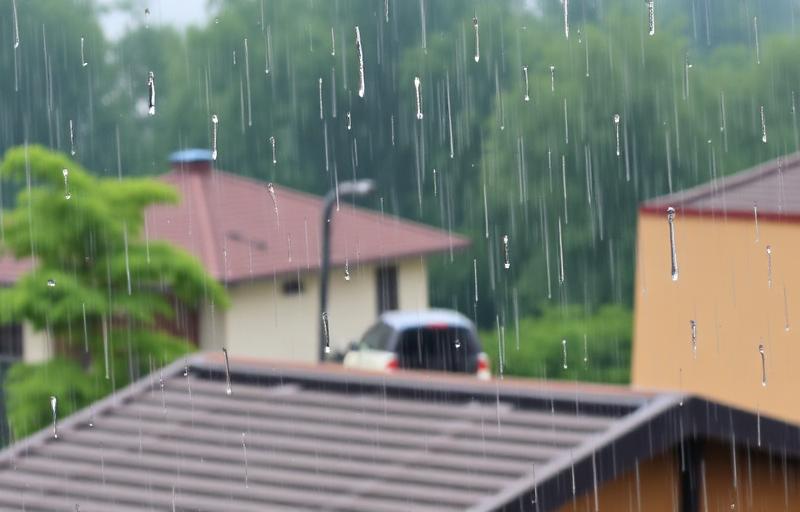
Rain ranges from 35 dB (light drizzle) to 70 dB (heavy rain on a metal roof) — a natural white noise source loved by sleepers.
Reviewed by our team against authoritative public-health sources. See our editorial standards.
Rain
35–40 dB
Safe exposure
All-day OK
Per NIOSH 85 dBA / 8 h reference (3 dB exchange rate)
Personalized verdict
Is this dangerous for you?
Rain
38 dB
Typical
Your room
— dB
Tap Compare
Difference
—
Waiting
Audio is processed locally in your browser — nothing is recorded or sent. Prefer the full meter? Open Snap dB
Compare Rain to:
Quick Answer
A decibel (dB) is a logarithmic unit used to measure sound intensity: an increase of 10 dB means ten times more sound energy.
Light rain produces about 35–40 dB, moderate rain reaches 45–55 dB, and heavy rainfall can hit 60–70 dB, especially on metal or tin roofs. Rain is completely safe for hearing and is one of the most popular natural sounds for relaxation and sleep.
📊 Similar in loudness to light rainfall on a window (about 40 dB).
At a glance
| Typical range | 35–40 dB |
|---|---|
| Safety tier | Safe |
| Safe exposure (NIOSH REL) | All-day OK |
| Audible at | ~a few feet |
Louder than a quiet library (30 dB), quieter than a quiet office (45 dB).
How these figures were determined: Values are based on published reference levels from NIOSH, OSHA, the WHO and the CDC, together with manufacturer specifications where available. Actual sound levels vary with distance, room acoustics, equipment condition and measurement method, and readings taken with a phone microphone are estimates rather than calibrated measurements.
Rain Noise by Intensity
Rainfall volume depends on intensity and what surface it hits:
- Light drizzle (indoors): 35–40 dB
- Moderate rain (windows closed): 40–50 dB
- Steady rain (windows open): 50–55 dB
- Heavy rain on shingles: 55–60 dB
- Heavy rain on metal roof: 60–70 dB
- Torrential downpour: 65–75 dB (with wind)
You're probably exposed to this more often than you realize…
Noise Level: Rain
Classification
Safe
Safe Exposure
No time limit
Why Rain Helps You Sleep
Rain is one of the most effective natural sleep aids because it creates consistent, broadband noise that masks disruptive sounds:
- Steady, predictable frequency pattern (no surprises)
- Masks traffic, conversations, and other disruptive sounds
- Triggers relaxation response in the brain
- No sharp peaks or sudden changes in volume
- This is why rain sound machines and apps are so popular
Most noise-induced hearing loss happens gradually — without any pain…
Continuous exposure to 85+ dB for 8 hours causes the same damage as 100 dB for just 15 minutes.
Measure Your Environment
Use Snap Decibel Meter to estimate the sound level around you right now.
Open Noise MeterRain Noise Indoors vs Outdoors
Your perception of rain depends heavily on your building construction and location within it:
- Concrete building, closed windows: 30–40 dB (barely noticeable)
- Wood frame, closed windows: 40–50 dB (pleasant background)
- Open windows: 50–60 dB (clearly audible)
- Metal roof without insulation: 60–70 dB (can be loud)
- Skylight: 55–65 dB (amplified by direct impact)
The Acoustics of Rainfall
Rain produces broadband 'pink noise' — a mix of frequencies weighted toward the lower end. This is acoustically different from white noise (which has equal energy across all frequencies). Pink noise is widely considered more natural and soothing.
The sound of individual raindrops hitting a surface creates tiny impact events — each one a micro-percussion at 500–5,000 Hz. Collectively, thousands of drops per minute merge into a smooth, continuous sound that your brain easily habituates to, making it excellent for masking intermittent disruptive noises.
Measuring Rain Volume
Curious how loud rain is at your location? Open Snap Decibel Meter during the next rainfall. You'll often be surprised how variable it is — gusty periods are much louder than steady rain, and surface material makes a huge difference.
Try comparing indoor readings with windows open vs closed. The difference is typically 10–20 dB, which demonstrates the effectiveness of basic building envelope as sound insulation.
Your daily noise exposure might already exceed safe limits.
Understanding Rain Noise Levels
Unlike mechanical noise that remains constant, rain sound fluctuates with behavioral state, time of day, season, and social context. Peak vocalizations during territorial displays or distress calls can exceed the typical 35–40 dB range by 10–15 dB for brief bursts.
Sounds at 38 dB are typically described as "noticeable but not intrusive." For reference, a quiet residential street at night registers about 30–40 dB. At 35–40 dB, rain is audible but won't interfere with daily activities, phone calls, or focus work for most people.
Seasonal and circadian patterns affect rain noise intensity. Many species vocalize most actively during dawn and dusk (crepuscular periods), and breeding seasons can amplify both the frequency and intensity of calls by 5–15 dB as individuals compete for mates.
The Biology Behind Rain Vocalizations
Rain sound production involves specialized anatomical structures that have evolved over millions of years. Most vertebrate vocalizations are produced by vibrating membranes (vocal cords, syrinx, or specialized skin patches) that convert respiratory airflow into acoustic energy. The size of these structures determines the fundamental frequency — larger animals generally produce lower-pitched calls.
The intensity of rain vocalizations at 35–40 dB reflects significant metabolic investment. Producing loud calls requires sustained respiratory effort, and the energy cost scales exponentially with volume. A 10 dB increase in vocal output requires roughly 10× more metabolic energy, which is why animals typically reserve their loudest calls for high-stakes situations like territorial defense or mating.
Hearing sensitivity in animals often matches their own vocalization frequencies. Species that produce rain sounds at 35–40 dB typically have peak hearing sensitivity in the same frequency range, ensuring that conspecifics can detect calls over the longest possible distance while filtering out environmental noise in other frequency bands.
Rain vs. Common Noise Sources
Rain noise at 35–40 dB matches a refrigerator humming (35 dB) on the decibel scale. While the measured levels are equivalent, your brain perceives these sounds very differently based on their spectral content, temporal pattern, and your learned associations with each source.
On the quieter end, normal breathing registers about 10 dB — that's 28 dB below rain, representing roughly 7× less perceived loudness. Moving louder, normal conversation at 3 feet reaches 60 dB — 22 dB above rain, approximately 5× louder to your ears.
In the animal kingdom, vocalization volume spans an enormous range — from a moth's ultrasonic click at 20 dB to a sperm whale's click at 230 dB underwater (the loudest biological sound recorded). Rain at 35–40 dB fits among quieter animal sounds, comparable to a housecat's purr or a songbird at moderate distance.
Seasonal Patterns of Rain Noise
Rain noise follows predictable seasonal rhythms driven by breeding cycles, migration patterns, and food availability. Peak vocalization periods typically coincide with mating seasons, when males compete for female attention through escalating vocal displays. During these periods, the sustained acoustic output can be 10–20 dB higher than baseline.
For people living near rain habitats, understanding these seasonal patterns helps with planning. Breeding season noise typically lasts 4–12 weeks and follows a bell curve — gradually increasing, peaking for 2–3 weeks, then tapering off. Knowing when the peak occurs allows you to prepare with white noise machines, earplugs, or temporary schedule adjustments.
Tips for a Quieter Rain Experience
At 40 dB, rain is well within safe levels and poses no hearing risk. The following tips focus on comfort optimization — creating the most pleasant acoustic environment rather than preventing health damage.
Managing rain noise requires different strategies than mechanical noise because the source is a living creature. Sound masking (white noise machines tuned to the vocalization frequency) is often more effective than blocking. For outdoor exposure, strategic landscaping — dense hedgerows, earth berms — provides both visual screening and 3–8 dB of sound attenuation.
- Plant dense hedgerows as natural sound barriers (5–8 dB reduction per 30m depth)
- For pets: consult a behaviorist about positive reinforcement training to reduce excessive vocalization
- Use foam earplugs at night if rain disrupts sleep (NRR 25+ blocks most animal vocalizations)
- Keep interior doors closed between living areas and the noise source
- Use a white noise machine tuned to match rain vocalization frequencies for effective masking
Test It Yourself: Measuring Rain Noise
Long-term noise monitoring gives the most representative picture of rain exposure. Set a recording device to capture overnight or multi-day data, then analyze for peak levels, frequency of vocalization bouts, and cumulative exposure. This approach reveals patterns that a single spot measurement would miss.
When measuring quiet sounds like rain, background noise is your biggest challenge. Ensure the environment is at least 10 dB quieter than the source — turn off other appliances, close windows, and measure during quiet hours. Consumer smartphone apps have a noise floor of about 30–35 dB, which limits their usefulness for very quiet sounds.
How Rain Noise Affects Your Well-Being
At 40 dB, rain presents no risk to your hearing or physical health. The human auditory system handles sounds below 70 dB comfortably and indefinitely. In fact, moderate ambient sound in the 40–60 dB range has been shown to improve creative thinking and reduce the stress associated with complete silence, which some people find unsettling or anxiety-inducing.
Understanding rain noise at 40 dB builds the acoustic awareness that protects you in genuinely dangerous situations. People who understand the decibel scale recognize hazardous noise faster, seek protection sooner, and make better decisions about their sound environment — whether choosing a restaurant, buying a home, or operating power tools.
Measure Rain Noise Yourself
Want to know how loud rain is in your own environment? Use our free decibel meter to take a real-time reading, or check the complete decibel chart to see where 35–40 dB sits on the full scale. You can also compare sounds side by side or use the noise distance calculator to estimate levels at different distances.
🎯 Guess the Decibel Level
How loud do you think Rain is? Drag the slider and find out!
Frequently Asked Questions
Can rain damage hearing?
No. Even the heaviest rainfall stays well below 85 dB. Rain is completely safe for hearing.
Why does rain on a metal roof sound so loud?
Metal resonates with raindrop impacts instead of absorbing them. Insulation or a rubber underlay reduces this dramatically.
Is rain good white noise for babies?
Yes. Rain produces consistent broadband sound that helps babies sleep. Just keep the volume at 50 dB or below near the crib.
Explore More
Related Noise Guides
How Loud Is Thunder? Decibel Levels of Thunderstorms
Thunder has no single decibel value — it is defined by your distance from the lightning channel. From 180 dB at the source to 55 dB ten miles out, here is the full distance curve.
10 min readDecibel QuestionsWhat Does 40 dB Sound Like? A Calm, Quiet World
40 dB is the sound of a quiet library, gentle humming, or a peaceful garden. Barely there, perfectly safe, and ideal for focus.
5 min readHuman SoundsHow Loud Is a Whisper in Decibels?
A whisper registers 20–30 dB — among the quietest sounds the human ear can detect. Here's what that means in real-world terms.
4 min readNatural SoundsHow Loud Is Wind Noise in Decibels?
Wind noise ranges from a gentle 20 dB breeze to a roaring 100+ dB gale. It's also the hidden noise source that ruins outdoor recordings.
4 min readHow Does Rain Compare?
Tap any sound to learn more about its noise level.
| Sound level | Sound | Vs. Rain | Risk |
|---|---|---|---|
| 38 dB | Rain (this page) | — | Safe |
| 25 dB | Whisper in Decibels | −13 dB quieter | Safe |
| 25 dB | Wind Noise in Decibels | −13 dB quieter | Safe |
| 30 dB | Can Your Phone Measure Decibels | −8 dB quieter | Safe |
| 40 dB | What Noise Level Is Too Loud for Sleep | +2 dB louder | Safe |
| 50 dB | Snoring | +12 dB louder | Safe |
| 50 dB | Is 50 dB Loud | +12 dB louder | Safe |
Compare With Other Sounds
See how this noise level compares to other everyday sounds.


Test Your Environment
Use Snap Decibel Meter to measure sound levels around you — free, private, and instant.
Start Noise Measurement