How Loud Is an Electric Guitar Amp? (Decibels Explained)
Guitar amps: 65 dB practice to 130 dB stage volume.
Reviewed by our team against authoritative public-health sources. See our editorial standards.
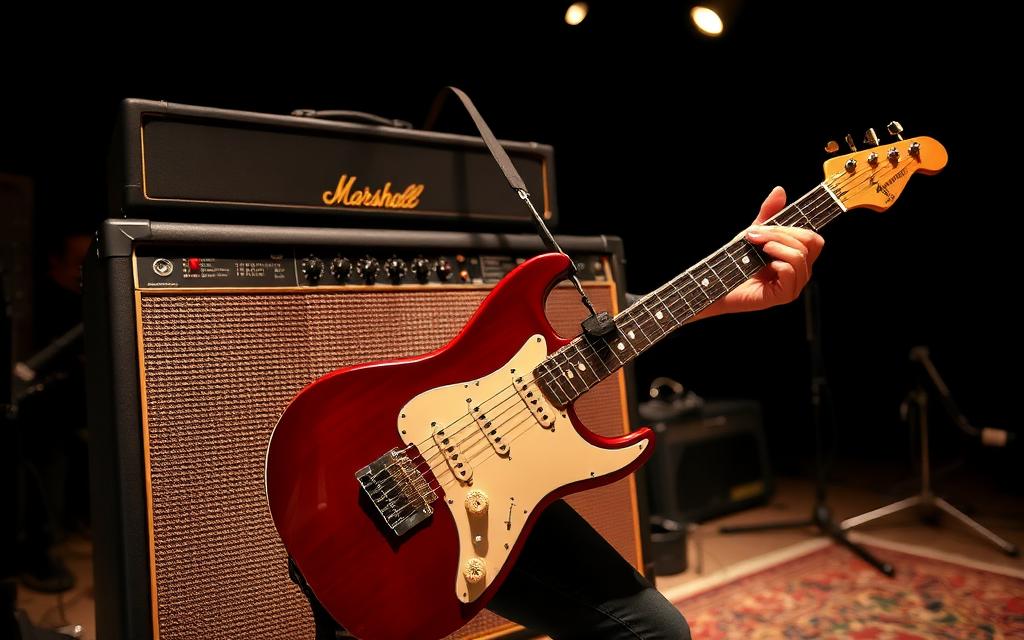
Electric Guitar Amp
65–80 dB
Safe exposure
8 hours
Per NIOSH 85 dBA / 8 h reference (3 dB exchange rate)
Personalized verdict
Is this dangerous for you?
Electric Guitar Amp
73 dB
Typical
Your room
— dB
Tap Compare
Difference
—
Waiting
Audio is processed locally in your browser — nothing is recorded or sent. Prefer the full meter? Open Snap dB
Compare Electric Guitar Amp to:
Quick Answer
A decibel (dB) is a logarithmic unit used to measure sound intensity: an increase of 10 dB means ten times more sound energy.
Practice volume: 65–80 dB. Rehearsal: 85–100 dB. Stage: 110–130 dB. Musicians have 4x higher hearing loss rates. Protection essential above practice levels.
📊 Similar in loudness to a vacuum cleaner at 10 feet (about 75 dB).
Prolonged exposure above 85 dB can damage hearing.
At a glance
| Typical range | 65–80 dB |
|---|---|
| Safety tier | Moderate |
| Safe exposure (NIOSH REL) | All-day OK |
| Audible at | ~20–30 ft |
Louder than normal conversation at 3 feet (60 dB), quieter than a food blender running (85 dB).
How these figures were determined: Values are based on published reference levels from NIOSH, OSHA, the WHO and the CDC, together with manufacturer specifications where available. Actual sound levels vary with distance, room acoustics, equipment condition and measurement method, and readings taken with a phone microphone are estimates rather than calibrated measurements.
Amp Levels by Setting
A 5–15W practice amp at bedroom volume: 65–80 dB — safe for hours. A 30–50W combo at rehearsal: 85–100 dB — hearing damage begins. Combined band in an enclosed room can exceed 110 dB.
A 100W half-stack on stage: 110–130 dB directly in front. Hearing damage in under 2 minutes.
- 5W practice: 65–80 dB
- 15W moderate: 80–90 dB
- 50W rehearsal: 90–100 dB
- 100W gig: 105–115 dB
- 100W full max: 115–130 dB
You're probably exposed to this more often than you realize…
Noise Level: Electric Guitar Amp
Classification
Moderate
Safe Exposure
No time limit
Why Musicians Lose Their Hearing
Professional musicians: 4x hearing loss rate. Guitarists stand directly in front of amps for hours. Damage is cumulative and irreversible.
Famous cases: Pete Townshend, Eric Clapton, Neil Young, Chris Martin — all from unprotected exposure. A guitarist rehearsing 3 hours at 95 dB three times weekly far exceeds safe limits.
Typical Sound Levels
Most noise-induced hearing loss happens gradually — without any pain…
City dwellers are exposed to an average of 10 dB more ambient noise than rural residents throughout the day.
Measure Your Environment
Use Snap Decibel Meter to estimate the sound level around you right now.
Open Noise MeterHearing Protection
Musician's earplugs reduce volume evenly (15–25 dB) preserving tone. Etymotic, Earasers from $15–$200. Custom-molded from audiologists ($150–300) are the professional standard.
In-ear monitors (IEMs) replace stage monitors, reducing exposure by 20–30 dB.
Safe Practice
Keep home practice at 75 dB or below. Modern modeling amps offer great tone at any volume. Attenuators allow cranked tube tone at lower output.
Band rehearsals: have the drummer set the volume floor. Drum shields reduce overall levels by 10–20 dB.
Comparisons
Acoustic guitar: 60–80 dB. Drums: 90–130 dB (loudest acoustic instrument). Piano: 60–100 dB. Trumpet: 80–110 dB. A cranked 100W amp exceeds all.
Most people underestimate this sound — don't be one of them.
What Makes Electric Guitar Amp Sound the Way It Does
Measurement of electric guitar amp at 65–80 dB is well within the capability of both professional instruments (Type 1 and Type 2 sound level meters) and calibrated smartphone apps. At this level, the signal-to-noise ratio is favorable, meaning background noise is unlikely to corrupt your measurement if you follow basic methodology.
The 65–80 dB range puts electric guitar amp at the boundary where noise transitions from "annoying" to "potentially harmful." NIOSH sets 85 dBA over 8 hours as its recommended exposure limit, and OSHA uses the same 85 dBA 8-hour average as the action level that triggers a hearing conservation program. Below this, the risk is primarily comfort and stress; above it, physical damage to hearing structures becomes measurable with sufficient exposure duration.
The inverse square law governs how electric guitar amp sound diminishes with distance. Every doubling of distance reduces the level by approximately 6 dB. At 80 dB measured at 1 meter, expect roughly 74 dB at 2 meters, 68 dB at 4 meters, and 60 dB at 10 meters.
Putting Electric Guitar Amp Noise in Perspective
At 65–80 dB, electric guitar amp produces roughly the same sound pressure level as a vacuum cleaner at 10 feet (75 dB). Both sit in the "clearly loud" range. If you've experienced one, you have a reliable reference for the other — though the frequency content and temporal pattern make each sound subjectively different.
On the quieter end, normal conversation at 3 feet registers about 60 dB — that's 13 dB below electric guitar amp, representing roughly 2× less perceived loudness. Moving louder, a food blender running reaches 85 dB — 12 dB above electric guitar amp, approximately 2× louder to your ears.
Human hearing perception compresses the enormous physical range of sound into a more manageable subjective scale. The difference between 73 dB and 83 dB sounds like "about twice as loud" to most listeners, even though the actual energy difference is 10-fold. This compression is why small decibel differences feel significant — a 3 dB reduction removes half the sound energy.
Minimizing Electric Guitar Amp Noise Impact
While electric guitar amp at 80 dB doesn't require hearing protection, managing this noise improves comfort, reduces stress, and preserves the quiet that supports concentration, sleep, and cardiovascular health. The strategies below focus on environmental modifications rather than personal protective equipment.
Simple environmental changes can reduce your effective exposure to electric guitar amp noise. Closing a standard interior door reduces transmitted sound by 15–20 dB. Adding a rug to a hard floor absorbs 2–4 dB of reflected energy. Hanging heavy curtains adds 5–8 dB of high-frequency absorption. These modest steps compound to create meaningful noise reduction.
- Add soft furnishings (rugs, curtains, upholstered furniture) to absorb reflected electric guitar amp sound
- Close doors and seal gaps between rooms to reduce transmitted noise by 15–25 dB
- Wear NRR 20+ hearing protection if electric guitar amp exposure exceeds 85 dB
- Monitor cumulative daily exposure — multiple moderate sources compound over time
- Increase distance from electric guitar amp when possible — every doubling cuts the level by 6 dB
How to Measure Electric Guitar Amp Sound Accurately
For reliable electric guitar amp measurements, standardize your approach: measure at 1 meter distance, at ear height, with the microphone pointed toward the source. Run the measurement for at least 30 seconds and average multiple readings. Background noise should be at least 10 dB below your target to avoid interference.
For sounds at 73 dB like electric guitar amp, most smartphone decibel meter apps provide reasonably accurate readings (typically within ±3–5 dB of professional equipment). For more precision, calibrate your app against a known reference sound or use a dedicated Type 2 sound level meter. The key to accuracy is consistent positioning and adequate sampling time.
The Wellness Impact of Electric Guitar Amp Sound
Chronic exposure to electric guitar amp at 80 dB falls below the hearing damage threshold but contributes to non-auditory health effects. The European Environment Agency links sustained noise above 55 dB to cardiovascular risk, and above 65 dB to measurable cortisol elevation and sleep disruption. These effects accumulate over years of daily exposure.
Measure Electric Guitar Amp Noise Yourself
Want to know how loud electric guitar amp is in your own environment? Use our free decibel meter to take a real-time reading, or check the complete decibel chart to see where 65–80 dB sits on the full scale. You can also compare sounds side by side or use the noise distance calculator to estimate levels at different distances.
🎯 Guess the Decibel Level
How loud do you think Electric Guitar Amp is? Drag the slider and find out!
Hearing Safety
Musicians: 4x hearing loss rate. Always wear earplugs at rehearsals and gigs.
Frequently Asked Questions
Full volume?
115–130 dB — approaching pain threshold.
Can it damage hearing?
Under 80 dB: no. Above 85 dB: yes.
Best earplugs?
High-fidelity musician's earplugs preserving tone.
Safe home level?
75 dB or below.
Explore More
Related Noise Guides
How Loud Is a Concert or Festival?
Learn about typical noise levels at concerts and music festivals, understand the hearing risks, and discover how to enjoy live music safely.
9 min readHearing SafetyIs 100 dB Dangerous? The 15-Minute Warning
100 dB gives you just 15 minutes of safe exposure. Nightclubs, power tools, and live music all exceed this level. Here's the full danger picture.
5 min readHearing SafetyIs 110 dB Dangerous? Extreme Noise & Instant Hearing Risk
110 dB is extremely dangerous — hearing damage can occur in less than 2 minutes. This is concert-level noise near speakers.
5 min readHow Does Electric Guitar Amp Compare?
Tap any sound to learn more about its noise level.
| Sound level | Sound | Vs. Electric Guitar Amp | Risk |
|---|---|---|---|
| 73 dB | Electric Guitar Amp (this page) | — | Moderate |
| 60 dB | 60 Decibels | −13 dB quieter | Safe |
| 60 dB | Noise Level Chart: Everyday Sounds Ranked by Decibels | −13 dB quieter | Safe |
| 70 dB | The Complete Guide to Noise Levels and Decibels | −3 dB quieter | Moderate |
| 78 dB | Traffic Noise | +5 dB louder | Moderate |
| 85 dB | What Noise Level Is Safe for Humans | +12 dB louder | Moderate |
| 85 dB | Dog Bark | +12 dB louder | Moderate |
Compare With Other Sounds
See how this noise level compares to other everyday sounds.

Test Your Environment
Use Snap Decibel Meter to measure sound levels around you — free, private, and instant.
Start Noise Measurement