Is 110 dB Dangerous? Extreme Noise & Instant Hearing Risk
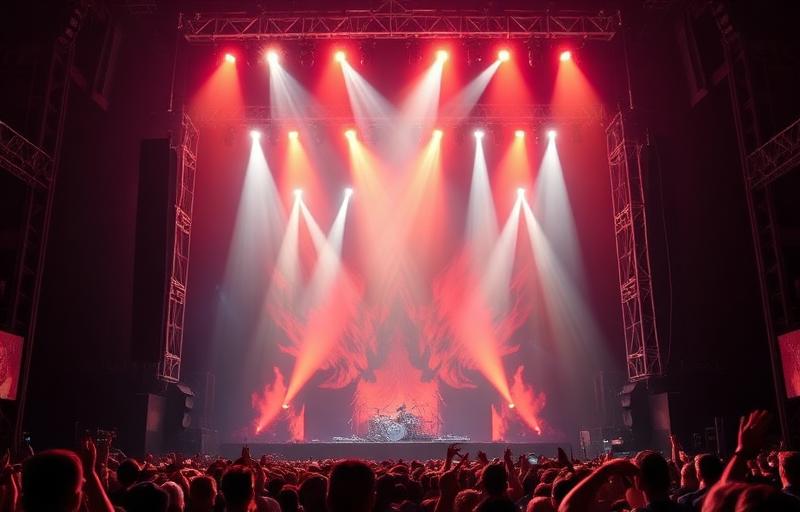
110 dB is extremely dangerous — hearing damage can occur in less than 2 minutes. This is concert-level noise near speakers.
Reviewed by our team against authoritative public-health sources. See our editorial standards.
Quick Answer
A decibel (dB) is a logarithmic unit used to measure sound intensity: an increase of 10 dB means ten times more sound energy.
Yes, 110 dB is extremely dangerous. At this level, permanent hearing damage can occur in less than 2 minutes of unprotected exposure. This is the sound level near concert speakers, car horns at close range, and chainsaw operation.
📊 Similar in loudness to a rock concert front row (about 110 dB).
Prolonged exposure above 85 dB can damage hearing.
At a glance
| Typical range | 110 dB |
|---|---|
| Safety tier | Dangerous |
| Safe exposure (NIOSH REL) | < 2 minutes |
Louder than a helicopter overhead at 100 feet (105 dB), quieter than a car horn at 3 feet (115 dB).
How these figures were determined: Values are based on published reference levels from NIOSH, OSHA, the WHO and the CDC, together with manufacturer specifications where available. Actual sound levels vary with distance, room acoustics, equipment condition and measurement method, and readings taken with a phone microphone are estimates rather than calibrated measurements.
Why 110 dB Is Extremely Dangerous
110 dB is 25 dB above the safety threshold, meaning it's perceived as roughly 6 times louder than the point where damage begins. The sound energy at 110 dB is over 300 times more intense than at 85 dB.
NIOSH recommends no more than 1 minute and 29 seconds of exposure at 110 dB without hearing protection. To put that in perspective — a typical song lasts 3–4 minutes, which is already 2–3 times the safe exposure limit at this level.
You're probably exposed to this more often than you realize…
Noise Level: 110 dB
Classification
Dangerous
Safe Exposure
Immediate risk
What Produces 110 dB?
These sources commonly reach 110 dB. Many people encounter these levels without realizing how quickly damage accumulates:
- Rock concert near the speakers
- Car horn at 1 meter
- Chainsaw at operating distance
- Circular saw cutting wood
- Snowmobile at full throttle
- Night club near the DJ booth
- Baby crying at peak volume (close range)
Typical Sound Levels
This is the point where hearing damage starts…
The human ear can distinguish over 400,000 different sounds and detect pressure changes as small as one billionth of atmospheric pressure.
Measure Your Environment
Use Snap Decibel Meter to estimate the sound level around you right now.
Open Noise MeterHow Quickly Does Damage Occur?
The timeline is alarming. Unlike lower noise levels where damage takes hours, 110 dB works on a minute-by-minute scale:
- 30 seconds: cochlear hair cells begin to stress
- 90 seconds: NIOSH safe exposure limit exceeded
- 5 minutes: significant temporary hearing loss likely
- Repeated exposure: permanent, irreversible damage
- The inner ear cannot repair damaged hair cells — they're gone forever
The Physics of 110 dB
At 110 dB, the sound pressure is about 6.3 pascals — substantial enough to move physical objects. At close range, you can feel the vibration in your chest and on your skin. The air itself is being compressed and rarefied with tremendous force.
This is why prolonged 110 dB exposure doesn't just damage hearing — it can cause headaches, nausea, and in extreme cases, temporary vestibular (balance) disruption. Your inner ear handles both hearing and balance, and intense sound affects both functions.
Essential Protection at 110 dB
Standard foam earplugs may not be sufficient at 110 dB. The goal is to reduce exposure to below 85 dB:
- Deep-insert foam earplugs: reduce 25–33 dB (bringing 110 to 77–85 dB)
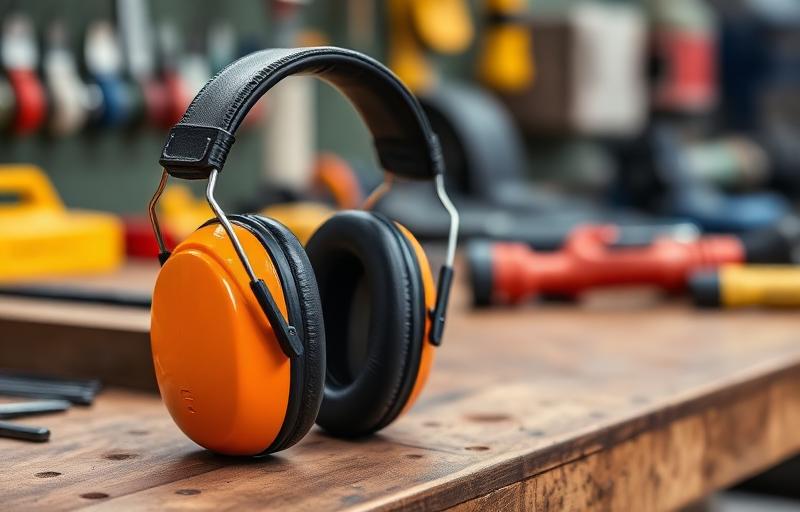
- Over-ear muffs: reduce 20–35 dB
- Double protection (plugs + muffs): reduce 30–40 dB
- Custom-molded earplugs: most reliable seal and reduction
- Distance: every doubling of distance reduces noise by ~6 dB
Concerts and 110 dB
Most rock and electronic concerts reach 110–120 dB near the speakers. Studies from the National Hearing Conservation Association found that 64% of concert-goers experience temporary hearing symptoms afterward, and regular concertgoers show measurable hearing loss within 5 years without protection.
- Stand farther from speaker stacks (center/back is 10–20 dB quieter)
- Wear musicians' earplugs (they preserve sound quality while reducing 15–25 dB)
- Take 15-minute breaks in quiet areas every 30 minutes
- Use Snap Decibel Meter to check levels at your seat before committing to a spot
Most people underestimate this sound — don't be one of them.
110 dB on the Decibel Scale
A reading of 110 dB tells you how much acoustic energy reaches the microphone, but not what produced it. The same level can come from a nearby quiet source or a distant loud one, so context matters as much as the number. Since decibels are logarithmic, adding 10 dB means ten times the sound energy and about twice the perceived loudness.
In practical terms, 110 dB is close to a rock concert front row, which sits at about 110 dB and is generally described as dangerously loud. That reference is a useful anchor: if you can picture how that sound feels in a room, you have a reasonable sense of what 110 dB means.
Levels in this region also depend heavily on distance. Sound spreads out as it travels, and in free-field conditions each doubling of distance from a point source removes roughly 6 dB. Indoors, reflections from hard walls, floors and windows work in the opposite direction and can add several decibels to the same source.
Published reference levels like these come from occupational and public-health sources — NIOSH, OSHA, the WHO and the CDC — measured with calibrated, A-weighted instruments. Readings you take with a phone are useful for comparing one environment with another, but they are relative estimates rather than calibrated measurements, so treat small differences with caution.
Putting 110 dB in Perspective
On the quieter side, a helicopter overhead at 100 feet registers about 105 dB — 5 dB below 110 dB. On the louder side, a car horn at 3 feet reaches roughly 115 dB, which is 5 dB above it. Because 10 dB is heard as about twice as loud, those gaps translate into clearly different listening experiences rather than minor variations.
Two sounds at the same measured level can still feel different. Frequency content, how steady the sound is, and how much you associate it with something unpleasant all shape perception. That is why 110 dB from a steady fan and 110 dB from an intermittent, high-pitched source rarely feel equally intrusive even though a meter reports the same number.
If you want to place 110 dB on the full scale, the decibel chart lists reference levels from near-silence up to immediate-damage territory, and the sound comparison tool lets you line up two sounds side by side.
Safe Exposure Duration at 110 dB
According to NIOSH guidelines, the maximum safe exposure time at 110 dB is < 2 minutes. Sustained exposure causes rapid hearing cell damage.
NIOSH Exposure Limits Reference
How to Reduce Exposure at 110 dB
Sustained exposure to 110 db at 110 dB requires a deliberate hearing protection strategy. The National Institute for Deafness recommends the "3-E" approach: Engineering controls (reduce the source noise), Environmental modifications (increase distance, add barriers), and Equipment (wear proper hearing protection). Apply these in order — prevent the noise first, protect against the remainder.
Simple environmental changes can reduce your effective exposure to 110 db noise. Closing a standard interior door reduces transmitted sound by 15–20 dB. Adding a rug to a hard floor absorbs 2–4 dB of reflected energy. Hanging heavy curtains adds 5–8 dB of high-frequency absorption. These modest steps compound to create meaningful noise reduction.
- Increase distance from 110 db when possible — every doubling cuts the level by 6 dB
- Measure 110 db noise with a smartphone app to establish your actual exposure level
- Add soft furnishings (rugs, curtains, upholstered furniture) to absorb reflected 110 db sound
- Close doors and seal gaps between rooms to reduce transmitted noise by 15–25 dB
- Wear NRR 20+ hearing protection if 110 db exposure exceeds 85 dB
Measuring Noise Near 110 dB: Methods and Limits
To check whether your environment reaches 110 dB, measure where you actually spend time rather than right at the source, keep the microphone clear of clothing and hands, and let the reading settle for at least 30 seconds so short bursts do not dominate. Note the average level as well as the loudest moments — they answer different questions.
Phone-based measurements have real limits. Microphones vary between models, browsers may apply automatic gain control or noise suppression, and there is no absolute calibration reference. Snap Decibel Meter is unweighted and ambient-referenced, so it is best used to compare environments and track changes rather than to certify an absolute figure. For compliance work, a Type 2 sound level meter is the appropriate instrument.
If you need levels at a different distance than you can safely measure, the noise distance calculator applies the inverse-square relationship for you, which is often more reliable than trying to measure close to a loud source.
Health Effects of Noise at 110 dB
Hearing risk depends on level and time together, not level alone. NIOSH's recommended exposure limit is 85 dBA for eight hours, with a 3 dB exchange rate: each 3 dB increase halves the time you can safely accumulate. At 110 dB, that arithmetic is what matters — brief exposure may be unremarkable while a full working day at the same level is not.
Early signs of overexposure include ringing or buzzing afterwards, sounds seeming distant for a while, and increasing difficulty following speech in noisy rooms. None of these require pain to be present, and all of them are reasons to reduce either the level or the time spent in it.
Note that NIOSH and OSHA thresholds are expressed in A-weighted decibels measured with calibrated instruments. They are reference guidance for interpreting a level, and are not directly validated against an unweighted phone estimate.
Warning Signs of Overexposure
- Ringing, buzzing, or hissing in your ears after exposure to noise around 110 dB
- Sounds seem muffled or distant after leaving the noisy environment
- Difficulty understanding speech in crowded or noisy settings
- Gradually increasing your TV or headphone volume over weeks
Check Whether Your Environment Reaches 110 dB
Want to know whether your own environment reaches 110 dB? Use our free decibel meter to take a real-time reading, or check the complete decibel chart to see where 110 dB sits on the full scale. You can also compare sounds side by side or use the noise distance calculator to estimate levels at different distances.
🎯 Guess the Decibel Level
How loud do you think 110 dB is? Drag the slider and find out!
Hearing Safety
110 dB causes hearing damage in under 2 minutes. Always wear hearing protection at concerts, around power tools, and in any 110 dB environment.
Frequently Asked Questions
How long can I be exposed to 110 dB safely?
Less than 90 seconds according to NIOSH. This is why concert-goers frequently experience temporary hearing loss.
Are regular earplugs enough for 110 dB?
Basic earplugs provide 15–30 dB reduction, which may bring 110 dB to borderline safe levels. Deep-insert or double protection is better.
Can one concert at 110 dB cause permanent damage?
Yes, especially near speakers for extended periods. Even a single event can cause permanent tinnitus.
Explore More
Related Noise Guides
What Does 110 dB Sound Like? The Edge of Pain
110 dB is the roar of a rock concert front row or a chainsaw at close range. It can damage hearing in under 2 minutes. Here's the reality.
5 min readEntertainment NoiseHow Loud Is a Concert? Decibel Levels by Venue & Genre
Concerts range from 95 to 120 dB depending on genre and position. Front row at a rock show hits 115+ dB. Here's the complete guide to concert noise.
6 min readHearing SafetyIs 100 dB Dangerous? The 15-Minute Warning
100 dB gives you just 15 minutes of safe exposure. Nightclubs, power tools, and live music all exceed this level. Here's the full danger picture.
5 min readHearing SafetyIs 120 dB Dangerous? The Pain Threshold Explained
120 dB is the threshold of pain. Even a few seconds can cause permanent hearing damage. Sirens, jet engines, and gunshots reach this territory.
5 min readHow Does 110 dB Compare?
Tap any sound to learn more about its noise level.
| Sound level | Sound | Vs. 110 dB | Risk |
|---|---|---|---|
| 110 dB | 110 dB (this page) | — | Danger |
| 97 dB | Table Saw | −13 dB quieter | Loud |
| 98 dB | How Loud Are Headphones at Max Volume | −12 dB quieter | Loud |
| 100 dB | Leaf Blower | −10 dB quieter | Loud |
| 110 dB | Concert or Festival | same level | Danger |
| 128 dB | Truck Horn | +18 dB louder | Danger |
| 140 dB | Airplane Takeoff | +30 dB louder | Danger |
Compare With Other Sounds
See how this noise level compares to other everyday sounds.

Test Your Environment
Use Snap Decibel Meter to measure sound levels around you — free, private, and instant.
Start Noise Measurement