How Loud Is a Piano? Decibel Levels from Soft to Forte
A piano produces 60–105 dB depending on how it's played — from gentle pianissimo to thundering fortissimo.
Reviewed by our team against authoritative public-health sources. See our editorial standards.
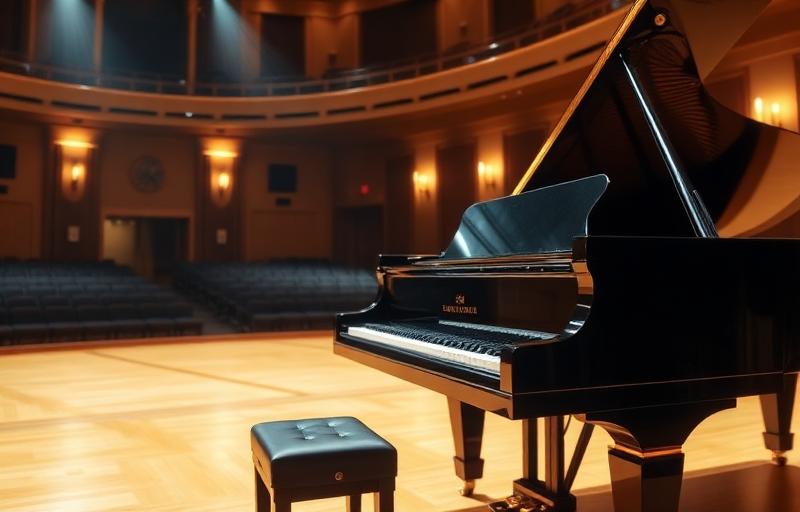
Piano
60 dB
Safe exposure
All-day OK
Per NIOSH 85 dBA / 8 h reference (3 dB exchange rate)
Personalized verdict
Is this dangerous for you?
Piano
60 dB
Typical
Your room
— dB
Tap Compare
Difference
—
Waiting
Audio is processed locally in your browser — nothing is recorded or sent. Prefer the full meter? Open Snap dB
Compare Piano to:
Quick Answer
A decibel (dB) is a logarithmic unit used to measure sound intensity: an increase of 10 dB means ten times more sound energy.
A piano ranges from about 60 dB (soft playing) to 105 dB (powerful fortissimo on a grand piano). Typical practice sessions average 70–85 dB, making piano one of the quieter instruments but still potentially loud enough to disturb neighbors.
📊 Similar in loudness to normal conversation at 3 feet (about 60 dB).
At a glance
| Typical range | 60 dB |
|---|---|
| Safety tier | Safe |
| Safe exposure (NIOSH REL) | All-day OK |
| Audible at | ~10–15 ft |
Louder than a coffee shop (55 dB), quieter than a busy restaurant (65 dB).
How these figures were determined: Values are based on published reference levels from NIOSH, OSHA, the WHO and the CDC, together with manufacturer specifications where available. Actual sound levels vary with distance, room acoustics, equipment condition and measurement method, and readings taken with a phone microphone are estimates rather than calibrated measurements.
Piano Volume by Playing Style
Piano dynamics create a wide range of volumes. The piano is unique among instruments in having such a broad dynamic range — hence its full name, 'pianoforte' (soft-loud):
- Pianissimo (pp): 60–65 dB
- Piano (p): 65–70 dB
- Mezzo-forte (mf): 75–80 dB
- Forte (f): 80–90 dB
- Fortissimo (ff): 90–100 dB
- Concert grand at full power: 100–105 dB
This might be louder than you think…
Noise Level: Piano
Classification
Safe
Safe Exposure
No time limit
Acoustic vs Digital Piano Noise
The type of piano dramatically affects noise output and your available control options:
- Digital piano with headphones: 0 dB to room
- Digital piano with speakers: 50–85 dB (controllable)
- Upright piano: 60–90 dB
- Baby grand: 65–95 dB
- Concert grand: 70–105 dB
Here's where it becomes dangerous…
The tiny hair cells in your inner ear that detect sound cannot regenerate once damaged — hearing loss is permanent.
Measure Your Environment
Use Snap Decibel Meter to estimate the sound level around you right now.
Open Noise MeterPiano Practice and Neighbors
Piano noise travels through walls and floors, making it a common source of apartment noise complaints. The lower registers are especially problematic because bass frequencies pass through building structures more easily than treble.
- Through a typical apartment wall: reduces by 30–40 dB
- A piano at 80 dB reaches neighbors at 40–50 dB
- Low frequencies (bass notes) travel farther through structure
- Practice schedules and quiet hours matter
- Carpet and rubber pads under legs help reduce vibration transfer
Hearing Safety for Pianists
Professional pianists who practice 4–6 hours daily at forte levels (85+ dB) may accumulate enough exposure to risk hearing damage. Classical pianists in orchestra pits face additional volume from surrounding instruments — brass and percussion sections can push pit levels to 95–110 dB.
Consider monitoring practice volume with Snap Decibel Meter and taking regular breaks during intense practice sessions. Many conservatory students are surprised to discover their practice room regularly exceeds 85 dB.
Soundproofing for Piano Rooms
If you play acoustic piano regularly and share walls with neighbors, these measures help:
- Position the piano against an interior wall, not a shared wall
- Add mass-loaded vinyl (MLV) behind drywall on shared walls
- Use a thick carpet under and around the piano
- Install acoustic panels to reduce reflections
- Consider a piano mute system for late-night practice
- A digital piano with headphones remains the quietest option for apartments
Now that you know the real level, test your own environment.
Decibel Profile: Piano in Detail
The noise produced by piano at 60 dB reflects specific physical processes — mechanical vibration, fluid turbulence, electrical oscillation, or impact forces — each with a characteristic frequency spectrum. Understanding the source mechanism helps predict how the sound will behave in different environments and which noise-reduction strategies will be most effective.
In the 60 dB range, piano sits in a transitional zone. It's clearly audible and may require you to raise your voice slightly in conversation. Sustained exposure won't damage your hearing, but environmental noise research links chronic levels above 65 dB to elevated stress hormones and disrupted cardiovascular rhythms.
The inverse square law governs how piano sound diminishes with distance. Every doubling of distance reduces the level by approximately 6 dB. At 60 dB measured at 1 meter, expect roughly 54 dB at 2 meters, 48 dB at 4 meters, and 40 dB at 10 meters.
Acoustic Treatment for Piano Practice Spaces
The room where you practice piano can add 5–12 dB to the effective noise level. Small, untreated rooms with parallel walls create standing waves and flutter echoes that make piano sound louder, harsher, and more fatiguing than the same instrument in a well-treated space. This extra reverberation also adds to your hearing dose.
Effective acoustic treatment for piano practice rooms involves three elements: absorption panels on walls (targeting mid and high frequencies), bass traps in corners (controlling low-frequency buildup), and diffusers on at least one surface (maintaining a natural, non-dead sound). A treated room can reduce effective exposure by 3–8 dB while actually improving the listening experience.
Soundproofing (keeping piano noise from reaching neighbors) is different from acoustic treatment (improving sound within the room). Soundproofing requires mass — double drywall, resilient channels, acoustic putty, and sealed doors. A properly soundproofed practice room can reduce transmitted sound by 40–55 dB, making piano at 60 dB nearly inaudible in adjacent rooms.
How Piano Compares to Other Sounds
Piano noise at 60 dB matches normal conversation at 3 feet (60 dB) on the decibel scale. While the measured levels are equivalent, your brain perceives these sounds very differently based on their spectral content, temporal pattern, and your learned associations with each source.
On the quieter end, light rainfall on a window registers about 40 dB — that's 20 dB below piano, representing roughly 4× less perceived loudness. Moving louder, a garbage disposal reaches 80 dB — 20 dB above piano, approximately 4× louder to your ears.
Human hearing perception compresses the enormous physical range of sound into a more manageable subjective scale. The difference between 60 dB and 70 dB sounds like "about twice as loud" to most listeners, even though the actual energy difference is 10-fold. This compression is why small decibel differences feel significant — a 3 dB reduction removes half the sound energy.
Protecting Your Hearing as a Piano Player
Professional musicians face a paradox: their livelihood depends on hearing acuity, yet their daily noise exposure systematically destroys it. Studies show that 30–50% of professional musicians have measurable hearing loss, with brass, percussion, and amplified instrument players at highest risk. Piano players specifically should monitor exposure given the 60 dB output level.
Musician-grade earplugs differ fundamentally from industrial hearing protection. Standard foam earplugs attenuate high frequencies disproportionately, making music sound muffled and unnatural. Musician earplugs use acoustic filters to reduce volume evenly across all frequencies — cutting 15–25 dB while preserving the tonal quality and spatial awareness essential for musical performance.
In-ear monitors (IEMs) serve dual purposes for piano players in ensemble or amplified settings: they deliver a controlled mix of the performance directly to your ears while physically blocking external sound. With IEMs, you can monitor your piano at safe levels (70–75 dB) while the ambient stage volume exceeds 100 dB. Custom-molded IEMs provide 25–35 dB of passive isolation.
How to Reduce Piano Sound
At 60 dB, piano is well within safe levels and poses no hearing risk. The following tips focus on comfort optimization — creating the most pleasant acoustic environment rather than preventing health damage.
Simple environmental changes can reduce your effective exposure to piano noise. Closing a standard interior door reduces transmitted sound by 15–20 dB. Adding a rug to a hard floor absorbs 2–4 dB of reflected energy. Hanging heavy curtains adds 5–8 dB of high-frequency absorption. These modest steps compound to create meaningful noise reduction.
- Increase distance from piano when possible — every doubling cuts the level by 6 dB
- Measure piano noise with a smartphone app to establish your actual exposure level
- Add soft furnishings (rugs, curtains, upholstered furniture) to absorb reflected piano sound
- Close doors and seal gaps between rooms to reduce transmitted noise by 15–25 dB
- Wear NRR 20+ hearing protection if piano exposure exceeds 85 dB
Getting Accurate Decibel Readings of Piano
For reliable piano measurements, standardize your approach: measure at 1 meter distance, at ear height, with the microphone pointed toward the source. Run the measurement for at least 30 seconds and average multiple readings. Background noise should be at least 10 dB below your target to avoid interference.
For sounds at 60 dB like piano, most smartphone decibel meter apps provide reasonably accurate readings (typically within ±3–5 dB of professional equipment). For more precision, calibrate your app against a known reference sound or use a dedicated Type 2 sound level meter. The key to accuracy is consistent positioning and adequate sampling time.
Living with Piano Noise: Health Considerations
At 60 dB, piano presents no risk to your hearing or physical health. The human auditory system handles sounds below 70 dB comfortably and indefinitely. In fact, moderate ambient sound in the 40–60 dB range has been shown to improve creative thinking and reduce the stress associated with complete silence, which some people find unsettling or anxiety-inducing.
Understanding piano noise at 60 dB builds the acoustic awareness that protects you in genuinely dangerous situations. People who understand the decibel scale recognize hazardous noise faster, seek protection sooner, and make better decisions about their sound environment — whether choosing a restaurant, buying a home, or operating power tools.
Measure Piano Noise Yourself
Want to know how loud piano is in your own environment? Use our free decibel meter to take a real-time reading, or check the complete decibel chart to see where 60 dB sits on the full scale. You can also compare sounds side by side or use the noise distance calculator to estimate levels at different distances.
🎯 Guess the Decibel Level
How loud do you think Piano is? Drag the slider and find out!
Frequently Asked Questions
Can playing piano damage hearing?
Unlikely for casual players. Professional pianists practicing at forte levels for hours daily may accumulate risky exposure over years.
How loud is a piano through walls?
Walls typically reduce sound by 30–40 dB, so a piano at 80 dB reaches neighbors at roughly 40–50 dB — still noticeable.
Is a digital piano quieter?
With headphones, it's silent to the room. With speakers, volume is fully controllable and typically quieter than acoustic.
Explore More
Related Noise Guides
How Loud Is an Electric Guitar Amp? (Decibels Explained)
Guitar amps: 65 dB practice to 130 dB stage volume.
6 min readDecibel QuestionsIs 80 dB Loud? When Noise Starts Getting Serious
80 dB is genuinely loud — think alarm clock or busy traffic. It's approaching the danger zone. Here's what you need to know.
5 min readHuman SoundsHow Loud Is Normal Conversation? The 60 dB Baseline
Normal conversation registers 55–65 dB — the most important reference point on the entire noise scale. Here's why it matters.
4 min readMusical InstrumentsHow Loud Is a Drum Kit? Acoustic vs Electronic Compared
An acoustic drum kit produces 90–130 dB — making it one of the loudest acoustic instruments and a serious hearing risk without protection.
5 min readHow Does Piano Compare?
Tap any sound to learn more about its noise level.
| Sound level | Sound | Vs. Piano | Risk |
|---|---|---|---|
| 60 dB | Piano (this page) | — | Safe |
| 48 dB | Dishwasher | −12 dB quieter | Safe |
| 48 dB | Coffee Grinder | −12 dB quieter | Safe |
| 55 dB | Washing Machine | −5 dB quieter | Safe |
| 70 dB | The Complete Guide to Noise Levels and Decibels | +10 dB louder | Moderate |
| 73 dB | Electric Guitar Amp | +13 dB louder | Moderate |
| 73 dB | Espresso Machine | +13 dB louder | Moderate |
Compare With Other Sounds
See how this noise level compares to other everyday sounds.


Test Your Environment
Use Snap Decibel Meter to measure sound levels around you — free, private, and instant.
Start Noise Measurement