How Loud Is a Table Saw? Decibel Levels Explained
Table saws generate 93–110 dB during cutting, making them one of the loudest tools in any workshop.
Reviewed by our team against authoritative public-health sources. See our editorial standards.
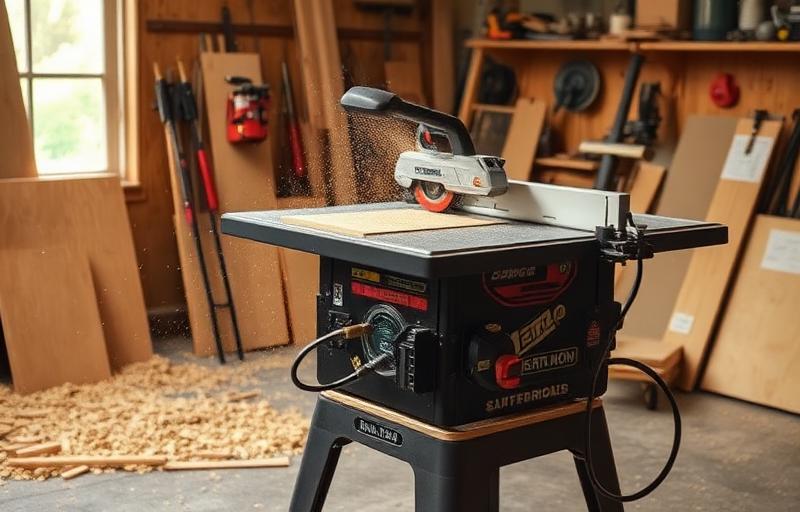
Table Saw
93–100 dB
Safe exposure
7 minutes
Per NIOSH 85 dBA / 8 h reference (3 dB exchange rate)
Above 85 dB can damage hearing with prolonged exposure. Use ear protection.
Personalized verdict
Is this dangerous for you?
Table Saw
97 dB
Typical
Your room
— dB
Tap Compare
Difference
—
Waiting
Audio is processed locally in your browser — nothing is recorded or sent. Prefer the full meter? Open Snap dB
Compare Table Saw to:
Quick Answer
A decibel (dB) is a logarithmic unit used to measure sound intensity: an increase of 10 dB means ten times more sound energy.
A table saw produces 93–100 dB at idle and 100–110 dB during cutting. This exceeds the NIOSH safe exposure limit of 15 minutes at 100 dB. Hearing protection is absolutely mandatory — even a single extended cut without protection can cause temporary hearing threshold shifts.
📊 Similar in loudness to a motorcycle at 25 feet (about 95 dB).
Prolonged exposure above 85 dB can damage hearing.
At a glance
| Typical range | 93–100 dB |
|---|---|
| Safety tier | Loud |
| Safe exposure (NIOSH REL) | 15 minutes |
| Audible at | ~50+ ft |
Louder than a gas-powered lawn mower (90 dB), quieter than a helicopter overhead at 100 feet (105 dB).
How these figures were determined: Values are based on published reference levels from NIOSH, OSHA, the WHO and the CDC, together with manufacturer specifications where available. Actual sound levels vary with distance, room acoustics, equipment condition and measurement method, and readings taken with a phone microphone are estimates rather than calibrated measurements.
Table Saw Noise Profile
Table saw noise comes from three sources: the motor (constant 80–85 dB hum), the spinning blade cutting air (85–95 dB whine), and the blade cutting material (100–110 dB depending on wood type and blade condition). The blade-air interaction produces a distinctive screaming tone at harmonics of the blade rotation frequency.
Cabinet saws are typically 3–5 dB quieter than contractor saws because the enclosed cabinet damps motor and blade noise. Benchtop saws are often the loudest due to their lightweight construction that vibrates and amplifies noise.
You're probably exposed to this more often than you realize…
Noise Level: Table Saw
Classification
Loud – Hearing Risk
Safe Exposure
30 min
How Blade Choice Affects Noise
Blade design significantly impacts noise. Thin-kerf blades produce less noise because they displace less material. Blades with anti-vibration slots or dampening coatings can reduce noise by 3–8 dB. More teeth generally means less noise per tooth engagement but the same overall noise. Dull blades are significantly louder (5–10 dB) than sharp blades because they create more friction and vibration.
- Thin-kerf blade: 2–4 dB quieter than standard
- Dampened blade (laser-cut slots): 3–8 dB quieter
- Sharp vs. dull blade: up to 10 dB difference
- Ripping vs. crosscutting: rip cuts are 3–5 dB louder
Typical Sound Levels
This is the point where hearing damage starts…
Sound travels about 4.3 times faster through water than through air — roughly 1,480 m/s vs 343 m/s.
Measure Your Environment
Use Snap Decibel Meter to estimate the sound level around you right now.
Open Noise MeterRequired Hearing Protection
At 100–110 dB, table saw use demands serious hearing protection. Over-ear muffs rated NRR 25–30 are recommended, reducing effective exposure to 70–85 dB. Foam earplugs (NRR 29–33) provide even more attenuation. For maximum protection during extended sessions, combine earplugs and earmuffs for a combined NRR of 35–40.
At 100 dB, the safe exposure limit is 15 minutes. A typical woodworking session involving multiple cuts over 2–4 hours would need at least NRR 20 protection to keep effective exposure below 85 dB for the duration.
Workshop Acoustics and Noise Control
Hard, reflective workshop surfaces (concrete floors, drywall, tool cabinets) amplify table saw noise by 3–8 dB compared to outdoor measurements. Adding sound-absorbing materials — acoustic panels, moving blankets on walls, rubber floor mats — can reduce reflected noise by 5–10 dB without affecting saw performance.
Your daily noise exposure might already exceed safe limits.
Decibel Profile: Table Saw in Detail
Tool manufacturers measure table saw noise according to ISO 11201 or EN 60745, using free-field conditions over a reflective surface. The declared emission value of 93–100 dB includes a measurement uncertainty (typically K = 3 dB), meaning the actual level could be up to 103 dB under adverse conditions.
At 93–100 dB, table saw is in the "hazardous" range where unprotected exposure causes measurable hearing damage. The outer hair cells in the cochlea, which amplify quiet sounds and sharpen frequency discrimination, are the first casualties. Their loss results in reduced speech clarity, particularly in noisy environments — the classic "I can hear you but can't understand you" complaint.
Workshop acoustics amplify table saw noise significantly. A typical garage (hard concrete floor, drywall walls, metal shelving) adds 5–8 dB of reverberation compared to outdoor measurements. Professional workshops mitigate this with rubber floor mats, acoustic ceiling tiles, and tool-specific enclosures.
Table saw Noise: Corded vs. Cordless vs. Pneumatic
The power source significantly affects table saw noise output. Pneumatic (air-powered) tools are typically the loudest due to exhaust air venting and compressor noise, adding 5–10 dB over electric equivalents. Corded electric tools produce moderate noise from their universal motors. Brushless cordless tools are often the quietest, with some models measuring 3–8 dB below corded equivalents.
Battery-powered table saw alternatives have improved dramatically since 2020. Modern lithium-ion tools deliver 90–95% of the performance of corded equivalents while producing significantly less noise. For DIY users and homeowners, a cordless table saw option often provides adequate performance with a meaningful noise reduction that improves comfort during extended projects.
How Table Saw Compares to Other Sounds
At 93–100 dB, table saw produces roughly the same sound pressure level as a motorcycle at 25 feet (95 dB). Both sit in the "significant noise" range. If you've experienced one, you have a reliable reference for the other — though the frequency content and temporal pattern make each sound subjectively different.
On the quieter end, heavy city traffic from the sidewalk registers about 88 dB — that's 9 dB below table saw, representing roughly 2× less perceived loudness. Moving louder, a rock concert front row reaches 110 dB — 13 dB above table saw, approximately 2× louder to your ears.
Tool noise is increasingly differentiated by power source. Battery-powered versions of table saw typically produce 3–8 dB less noise than corded models, which in turn are 5–10 dB quieter than pneumatic equivalents. This hierarchy means switching to battery power can reduce perceived loudness by 25–50%.
Safe Exposure Duration for Table Saw
According to NIOSH guidelines, the maximum safe exposure time at 100 dB is 15 minutes. Even brief exposure requires hearing protection.
NIOSH Exposure Limits Reference
OSHA Regulations for Table saw Noise Exposure
Under OSHA's Occupational Noise Exposure standard (29 CFR 1910.95), employers must implement a hearing conservation program when workers are exposed to noise levels like those from table saw (93–100 dB) over an 8-hour TWA. This program must include noise monitoring, audiometric testing, hearing protection, employee training, and recordkeeping.
The permissible exposure limit (PEL) follows a 5 dB exchange rate: 90 dB for 8 hours, 95 dB for 4 hours, 100 dB for 2 hours, and so on. NIOSH recommends a stricter 3 dB exchange rate, which would limit 100 dB exposure to 15 minutes. Most safety professionals follow the more protective NIOSH standard.
Failure to comply with OSHA noise standards can result in citations ranging from $16,131 for serious violations to $161,323 for willful violations (2024 penalty amounts). Beyond financial penalties, employers face workers' compensation claims for noise-induced hearing loss — claims that average $30,000–$50,000 per affected worker and are among the most common occupational injury claims.
How to Stay Safe Around Table Saw
At 100 dB, table saw exceeds the hearing damage threshold of 85 dB. Your approach to protection should match your exposure: brief, infrequent contact (minutes per week) poses minimal risk even unprotected, but regular exposure (daily or weekly for 30+ minutes) demands consistent use of NRR 20+ hearing protection to prevent cumulative damage.
Tool maintenance directly affects noise output. A dull blade on table saw forces the motor to work harder, generating 3–8 dB more noise and vibration. Sharp cutting surfaces, properly tensioned belts, lubricated bearings, and tight mechanical connections keep table saw operating at its rated noise level rather than deteriorating toward louder, less efficient performance.
- Use double protection (foam earplugs + earmuffs) for levels above 100 dB
- Keep cutting edges sharp — dull tools generate 3–8 dB more noise
- Use vibration-dampened gloves to reduce hand-arm vibration alongside hearing protection
- Take 10-minute quiet breaks every 30 minutes of continuous table saw use
- Consider cordless/battery alternatives — typically 3–8 dB quieter than corded versions
Getting Accurate Decibel Readings of Table Saw
Tool noise measurement should capture the full range of operating conditions. Table saw noise varies with material being worked, cutting speed, and tool condition. Measure during the loudest typical operation (not idle) at the operator's ear position — usually 30–50 cm from the tool. Record both the Leq (average) and Lpeak (maximum instantaneous) values.
Measuring loud sounds like table saw at 97 dB requires caution — the measurement process itself exposes you to potentially damaging noise. Wear hearing protection during measurement sessions, use a remote microphone or tripod placement when possible, and limit measurement duration to the minimum needed for representative data.
Long-Term Health Effects of Table Saw Noise
Occupational hearing loss from table saw exposure is the most common work-related injury in construction and manufacturing. The damage is insidious: outer hair cells in the cochlea die gradually, first affecting high-frequency hearing (4,000–6,000 Hz) before progressing to lower frequencies. By the time speech comprehension is noticeably affected, 30–50% of cochlear hair cells may already be destroyed.
Warning signs of overexposure to table saw noise include: ringing, buzzing, or hissing in the ears after exposure; speech sounding muffled or distant; difficulty following conversations in restaurants or social settings; and needing to gradually increase TV or headphone volume. If you experience any of these after exposure to table saw, reduce future exposure immediately and consult an audiologist.
Warning Signs of Overexposure
- Ringing, buzzing, or hissing in your ears after exposure to table saw
- Sounds seem muffled or distant after leaving the noisy environment
- Difficulty understanding speech in crowded or noisy settings
- Gradually increasing your TV or headphone volume over weeks
Measure Table Saw Noise Yourself
Want to know how loud table saw is in your own environment? Use our free decibel meter to take a real-time reading, or check the complete decibel chart to see where 93–100 dB sits on the full scale. You can also compare sounds side by side or use the noise distance calculator to estimate levels at different distances.
🎯 Guess the Decibel Level
How loud do you think Table Saw is? Drag the slider and find out!
Hearing Safety
Table saws produce 100–110 dB during cutting. Always wear NRR 25+ hearing protection — exposure without protection can cause immediate hearing damage.
Frequently Asked Questions
How loud is a table saw?
A table saw produces 93–100 dB at idle and 100–110 dB during active cutting.
What hearing protection do I need for a table saw?
Over-ear muffs with NRR 25+ are recommended. For extended sessions, combine earplugs and muffs.
How can I make my table saw quieter?
Use thin-kerf dampened blades, keep blades sharp, and add sound absorption to workshop walls.
Explore More
Related Noise Guides
How Loud Is a Chainsaw? (Decibel Levels & Hearing Risk)
Chainsaws produce 100–120 dB at the operator's ear. Here is what that means for your hearing and how to protect yourself.
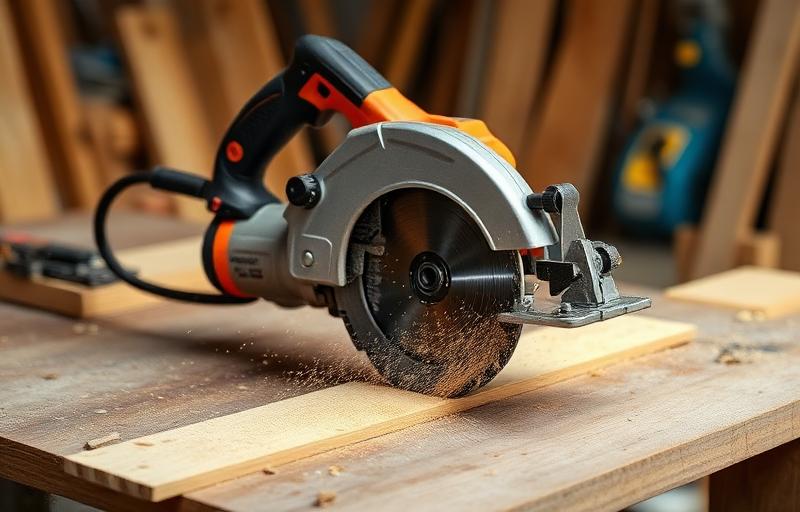
5 min readPower Tool NoiseHow Loud Is a Circular Saw? Power Tool Safety Guide
A circular saw produces 95–110 dB during cutting — one of the loudest common power tools and a serious hearing risk without protection.
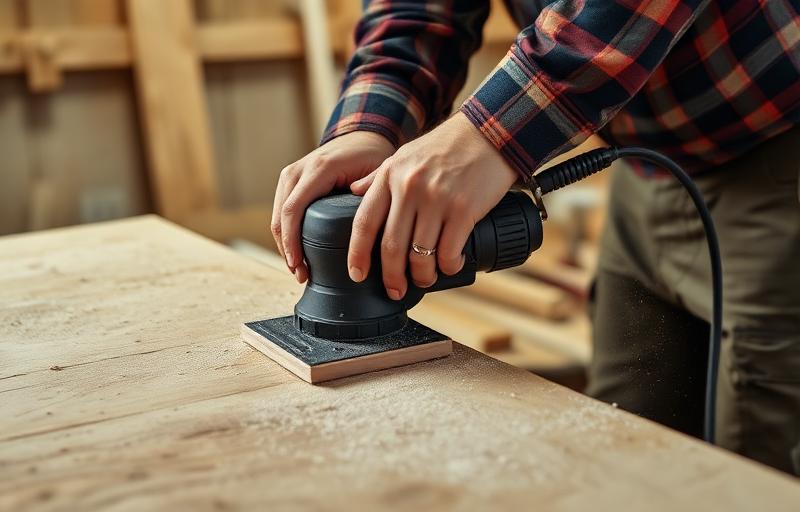
5 min readPower Tool NoiseHow Loud Is a Power Sander? Decibel Levels Explained
Power sanders produce 85–100 dB — hearing protection is recommended for any sanding session longer than 15 minutes.
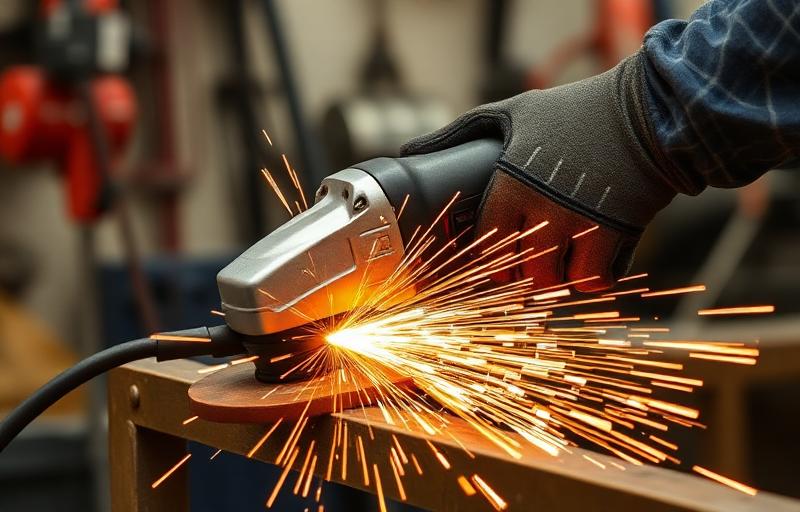
5 min readPower Tool NoiseHow Loud Is an Angle Grinder? Decibel Levels Explained
Angle grinders produce 95–115 dB during grinding and cutting — among the loudest handheld tools in any workshop.
5 min readHow Does Table Saw Compare?
Tap any sound to learn more about its noise level.
| Sound level | Sound | Vs. Table Saw | Risk |
|---|---|---|---|
| 97 dB | Table Saw (this page) | — | Loud |
| 85 dB | What Noise Level Is Safe for Humans | −12 dB quieter | Moderate |
| 85 dB | Dog Bark | −12 dB quieter | Moderate |
| 90 dB | Motorcycle | −7 dB quieter | Loud |
| 100 dB | Leaf Blower | +3 dB louder | Loud |
| 110 dB | Concert or Festival | +13 dB louder | Danger |
| 110 dB | What Does 110 dB Sound Like | +13 dB louder | Danger |
Compare With Other Sounds
See how this noise level compares to other everyday sounds.
Test Your Environment
Use Snap Decibel Meter to measure sound levels around you — free, private, and instant.
Start Noise Measurement