How Loud Is a Toddler Screaming? Decibel Levels Explained
A screaming toddler can produce 100–110 dB — as loud as a power drill or a passing motorcycle.
Reviewed by our team against authoritative public-health sources. See our editorial standards.
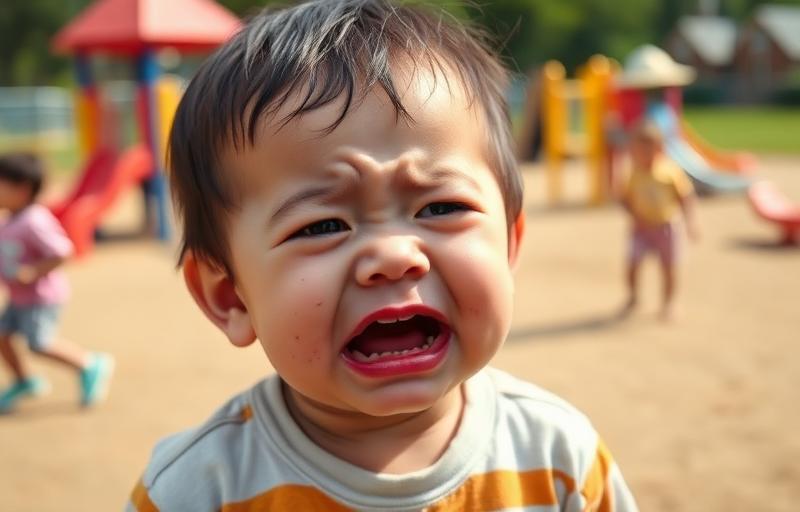
Toddler Screaming
100–110 dB
Safe exposure
< 2 minutes
Per NIOSH 85 dBA / 8 h reference (3 dB exchange rate)
Above 85 dB can damage hearing with prolonged exposure. Use ear protection.
Personalized verdict
Is this dangerous for you?
Toddler Screaming
105 dB
Typical
Your room
— dB
Tap Compare
Difference
—
Waiting
Audio is processed locally in your browser — nothing is recorded or sent. Prefer the full meter? Open Snap dB
Compare Toddler Screaming to:
Quick Answer
A decibel (dB) is a logarithmic unit used to measure sound intensity: an increase of 10 dB means ten times more sound energy.
A screaming toddler typically produces 100–110 decibels — comparable to a motorcycle, a power drill, or a nightclub. At these levels, the NIOSH safe exposure limit is just 15 minutes per day. Parents of colicky babies and tantrum-prone toddlers should be aware of cumulative hearing exposure.
📊 Similar in loudness to a helicopter overhead at 100 feet (about 105 dB).
Prolonged exposure above 85 dB can damage hearing.
At a glance
| Typical range | 100–110 dB |
|---|---|
| Safety tier | Dangerous |
| Safe exposure (NIOSH REL) | < 2 minutes |
| Audible at | ~50+ ft |
Louder than a motorcycle at 25 feet (95 dB), quieter than a car horn at 3 feet (115 dB).
How these figures were determined: Values are based on published reference levels from NIOSH, OSHA, the WHO and the CDC, together with manufacturer specifications where available. Actual sound levels vary with distance, room acoustics, equipment condition and measurement method, and readings taken with a phone microphone are estimates rather than calibrated measurements.
Toddler Scream Decibel Levels
Children between ages 1–4 can produce remarkably intense vocalizations. Studies measuring toddler screams have recorded peak levels of 100–110 dB at the parent's ear distance (approximately 30–50 cm). For comparison, OSHA limits workplace noise exposure at 100 dB to just 2 hours per day.
The reason toddler screams are so piercing relates to frequency. Children's vocal cords produce higher-pitched sounds (1,000–4,000 Hz) — the exact frequency range where human hearing is most sensitive. A 100 dB scream at 3,000 Hz is perceived as significantly louder than a 100 dB sound at 200 Hz.
Your ears can't tell you the real danger level here…
Noise Level: Toddler Screaming
Classification
Dangerous
Safe Exposure
~7 min
Why Are Toddler Screams So Intense?
Toddlers have smaller bodies but proportionally large lungs relative to their size, combined with short vocal tracts that amplify high frequencies. They also lack the social inhibition that moderates adult vocalization volume. When a toddler screams, they're using maximum respiratory effort without any restraint.
Developmental factors play a role too. Between 18 months and 3 years, children are learning to regulate emotions. Frustration screams, excitement shrieks, and pain cries all engage the full respiratory system, producing volumes that rival industrial equipment.
Typical Sound Levels
This is the point where hearing damage starts…
The world's quietest room at Microsoft measures -20.6 dB — so quiet you can hear your own blood flowing.
Measure Your Environment
Use Snap Decibel Meter to estimate the sound level around you right now.
Open Noise MeterHearing Risk for Parents and Caregivers
Parents of colicky infants and tantrum-prone toddlers face real cumulative hearing risk. A caregiver exposed to 100 dB screaming for 15+ minutes daily exceeds the NIOSH recommended exposure limit. Over months or years, this can contribute to noise-induced hearing loss, tinnitus, or hyperacusis.
Daycare workers face amplified risk because multiple children screaming simultaneously can push ambient levels to 95–105 dB. Studies of preschool environments have measured sustained noise levels of 75–85 dB during active play, with peaks exceeding 100 dB during group excitement or distress.
Protecting Your Hearing Around Screaming Children
Parents can use discreet, low-profile earplugs that reduce volume by 15–20 dB while maintaining speech clarity. This brings a 100 dB scream down to 80–85 dB — still audible and emotionally present, but below the damage threshold. Brands marketed as 'parenting earplugs' offer flat attenuation that preserves your ability to understand speech and detect danger signals.
- Use musician's earplugs rated NRR 12–20 for parenting
- Take 'quiet breaks' when possible to let ears recover
- In enclosed spaces (car, bathroom), be extra cautious — reflections amplify the effective level
- Teach toddlers 'indoor voice' concepts starting around age 2
- Monitor your own symptoms: ringing, muffled hearing, or ear pain after exposure
Toddler Screams vs. Other Loud Sounds
A screaming toddler at 100–110 dB is louder than a vacuum cleaner (75 dB), a blender (88 dB), and many motorcycles (95 dB). It approaches the volume of a chainsaw (110 dB) and a rock concert (110–115 dB). The key difference is proximity — parents experience these levels at 30–50 cm, much closer than most industrial noise sources.
Most people underestimate this sound — don't be one of them.
Decibel Profile: Toddler Screaming in Detail
Your subjective experience of toddler screaming at 100–110 dB depends on more than just the decibel number. Duration, frequency content, temporal pattern (steady vs. intermittent), predictability, controllability, and your attitude toward the source all influence the annoyance response. Two sounds at identical decibel levels can produce vastly different subjective reactions.
At 100–110 dB, toddler screaming is in the "hazardous" range where unprotected exposure causes measurable hearing damage. The outer hair cells in the cochlea, which amplify quiet sounds and sharpen frequency discrimination, are the first casualties. Their loss results in reduced speech clarity, particularly in noisy environments — the classic "I can hear you but can't understand you" complaint.
The inverse square law governs how toddler screaming sound diminishes with distance. Every doubling of distance reduces the level by approximately 6 dB. At 110 dB measured at 1 meter, expect roughly 104 dB at 2 meters, 98 dB at 4 meters, and 90 dB at 10 meters.
How Toddler screaming Noise Affects Children
Children are more vulnerable to noise exposure than adults for several reasons: their ear canals are shorter (amplifying some frequencies by 3–5 dB more than adult ears), their auditory systems are still developing, and they have less cognitive capacity to filter or ignore unwanted sound. Exposure to toddler screaming at 100–110 dB affects children's concentration, learning, and stress levels more than adults.
The WHO recommends that school environments maintain background noise below 35 dB for optimal learning. Toddler screaming noise at 100–110 dB in or near educational settings can impair reading acquisition, reduce memory consolidation, and increase behavioral problems. Children exposed to chronic noise above 65 dB show measurable deficits in reading comprehension compared to children in quieter environments.
How Toddler Screaming Compares to Other Sounds
The closest everyday comparison to toddler screaming at 100–110 dB is a helicopter overhead at 100 feet, which registers at 105 dB. Both sounds occupy the same energy band and present similar exposure considerations, though their frequency profiles and duration patterns create distinct listening experiences.
On the quieter end, a motorcycle at 25 feet registers about 95 dB — that's 10 dB below toddler screaming, representing roughly 2× less perceived loudness. Moving louder, a car horn at 3 feet reaches 115 dB — 10 dB above toddler screaming, approximately 2× louder to your ears.
Human hearing perception compresses the enormous physical range of sound into a more manageable subjective scale. The difference between 105 dB and 115 dB sounds like "about twice as loud" to most listeners, even though the actual energy difference is 10-fold. This compression is why small decibel differences feel significant — a 3 dB reduction removes half the sound energy.
Safe Exposure Duration for Toddler Screaming
According to NIOSH guidelines, the maximum safe exposure time at 110 dB is < 2 minutes. Sustained exposure causes rapid hearing cell damage.
NIOSH Exposure Limits Reference
The Physiology of Toddler screaming Sound Production
Human vocalization at 100–110 dB involves the coordinated action of the respiratory system (lungs provide airflow), the larynx (vocal folds create oscillations), and the vocal tract (mouth, throat, and nasal passages shape the sound). The intensity of toddler screaming reflects the subglottal pressure — higher pressure drives louder phonation, with each 10 cm H₂O increase adding approximately 8–10 dB.
The human voice is remarkably powerful relative to the energy invested. Converting respiratory effort to acoustic output, the vocal system operates at roughly 0.01% efficiency — meaning virtually all the energy goes into heating tissue rather than producing sound. Despite this inefficiency, the focused directivity of the mouth allows toddler screaming to achieve 100–110 dB at close range.
Emotional state directly modulates toddler screaming intensity. Stress hormones (cortisol, adrenaline) increase muscle tension throughout the vocal apparatus, raising both the pitch and volume of vocalizations. This is why toddler screaming during emotional distress can peak 10–15 dB above calm baseline levels — it's an involuntary physiological response, not a conscious choice.
How to Stay Safe Around Toddler Screaming
Because toddler screaming reaches 110 dB, hearing protection during exposure is not optional — it's a medical necessity. The type and level of protection depends on your exposure pattern: occasional home users can rely on disposable foam earplugs (NRR 29–33), while daily professional users should invest in custom-molded earplugs or electronic earmuffs.
Simple environmental changes can reduce your effective exposure to toddler screaming noise. Closing a standard interior door reduces transmitted sound by 15–20 dB. Adding a rug to a hard floor absorbs 2–4 dB of reflected energy. Hanging heavy curtains adds 5–8 dB of high-frequency absorption. These modest steps compound to create meaningful noise reduction.
- Wear NRR 20+ hearing protection if toddler screaming exposure exceeds 85 dB
- Monitor cumulative daily exposure — multiple moderate sources compound over time
- Increase distance from toddler screaming when possible — every doubling cuts the level by 6 dB
- Measure toddler screaming noise with a smartphone app to establish your actual exposure level
- Add soft furnishings (rugs, curtains, upholstered furniture) to absorb reflected toddler screaming sound
Getting Accurate Decibel Readings of Toddler Screaming
For reliable toddler screaming measurements, standardize your approach: measure at 1 meter distance, at ear height, with the microphone pointed toward the source. Run the measurement for at least 30 seconds and average multiple readings. Background noise should be at least 10 dB below your target to avoid interference.
Measuring loud sounds like toddler screaming at 105 dB requires caution — the measurement process itself exposes you to potentially damaging noise. Wear hearing protection during measurement sessions, use a remote microphone or tripod placement when possible, and limit measurement duration to the minimum needed for representative data.
Long-Term Health Effects of Toddler Screaming Noise
Regular unprotected exposure to toddler screaming at 110 dB poses a real risk of noise-induced hearing loss (NIHL). The hair cells in your cochlea convert sound vibrations into electrical signals for the brain. Excessive noise physically damages these delicate structures, and unlike birds and reptiles, humans cannot regenerate damaged hair cells — the loss is permanent.
Warning signs of overexposure to toddler screaming noise include: ringing, buzzing, or hissing in the ears after exposure; speech sounding muffled or distant; difficulty following conversations in restaurants or social settings; and needing to gradually increase TV or headphone volume. If you experience any of these after exposure to toddler screaming, reduce future exposure immediately and consult an audiologist.
Warning Signs of Overexposure
- Ringing, buzzing, or hissing in your ears after exposure to toddler screaming
- Sounds seem muffled or distant after leaving the noisy environment
- Difficulty understanding speech in crowded or noisy settings
- Gradually increasing your TV or headphone volume over weeks
Measure Toddler Screaming Noise Yourself
Want to know how loud toddler screaming is in your own environment? Use our free decibel meter to take a real-time reading, or check the complete decibel chart to see where 100–110 dB sits on the full scale. You can also compare sounds side by side or use the noise distance calculator to estimate levels at different distances.
🎯 Guess the Decibel Level
How loud do you think Toddler Screaming is? Drag the slider and find out!
Hearing Safety
Toddler screams exceed 100 dB and can cause hearing damage with repeated exposure. Parents should consider discreet hearing protection during extended tantrum episodes.
Frequently Asked Questions
How loud is a toddler scream in decibels?
A screaming toddler produces 100–110 dB, comparable to a motorcycle or nightclub.
Can a child's scream damage adult hearing?
Yes. Repeated exposure to 100+ dB screaming exceeds safe exposure limits and can contribute to hearing loss over time.
What earplugs work best for parents?
Musician's earplugs with NRR 12–20 reduce volume while preserving speech clarity — ideal for parenting.
Explore More
Related Noise Guides
How Loud Is a Baby Crying? Decibel Levels Parents Should Know
A baby's cry can reach 100–110 dB, rivaling a nightclub in intensity. Here's what parents need to know about noise exposure during those early months.
6 min readSocial NoiseHow Loud Is Crowd Noise? From Cafés to Stadiums
Crowd noise scales from a gentle café buzz at 65 dB to a deafening stadium roar at 130+ dB. The math of many voices is surprisingly powerful.
5 min readHuman SoundsHow Loud Is Normal Conversation? The 60 dB Baseline
Normal conversation registers 55–65 dB — the most important reference point on the entire noise scale. Here's why it matters.
4 min readSocial NoiseHow Loud Is a School Cafeteria? Decibel Levels Explained
School cafeterias reach 75–95 dB during peak hours — louder than city traffic and approaching construction site levels.
5 min readHow Does Toddler Screaming Compare?
Tap any sound to learn more about its noise level.
| Sound level | Sound | Vs. Toddler Screaming | Risk |
|---|---|---|---|
| 105 dB | Toddler Screaming (this page) | — | Danger |
| 93 dB | Power Drill | −12 dB quieter | Loud |
| 93 dB | Subway Train | −12 dB quieter | Loud |
| 100 dB | Leaf Blower | −5 dB quieter | Loud |
| 110 dB | Concert or Festival | +5 dB louder | Danger |
| 118 dB | Cockatoo | +13 dB louder | Danger |
| 120 dB | 120 Decibels | +15 dB louder | Danger |
Compare With Other Sounds
See how this noise level compares to other everyday sounds.

Test Your Environment
Use Snap Decibel Meter to measure sound levels around you — free, private, and instant.
Start Noise Measurement