How Loud Is 120 Decibels? (Real Examples + Comparison)
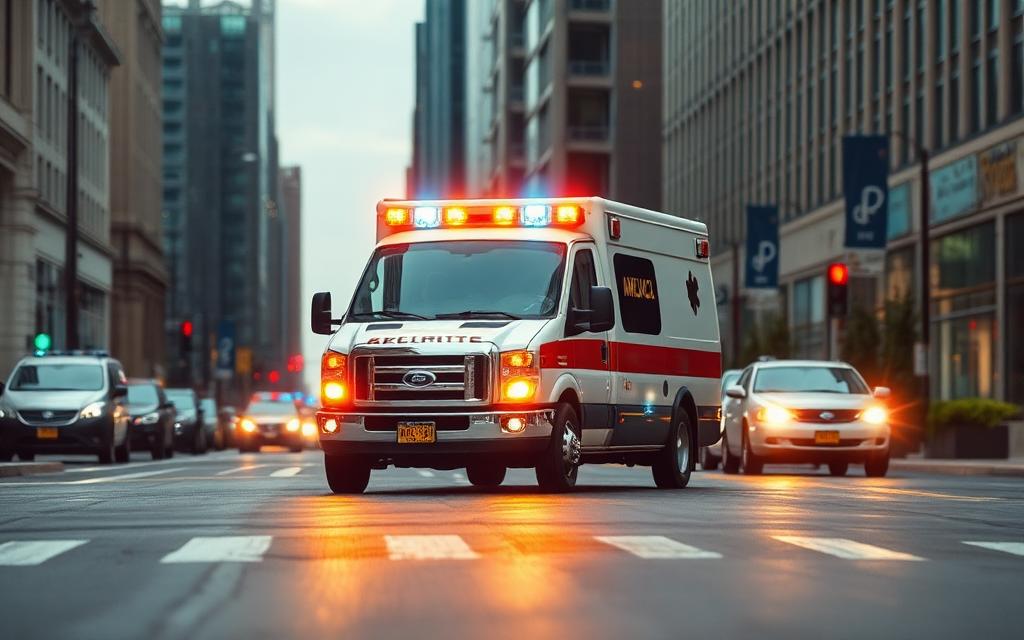
120 dB sounds like ambulance siren nearby. Learn what 120 dB really sounds like, whether it is safe, and how it compares to other everyday sounds.
Reviewed by our team against authoritative public-health sources. See our editorial standards.
120 dB
120 dB
Safe exposure
Instant risk
Per NIOSH 85 dBA / 8 h reference (3 dB exchange rate)
Above 85 dB can damage hearing with prolonged exposure. Use ear protection.
Personalized verdict
Is this dangerous for you?
120 dB
120 dB
Typical
Your room
— dB
Tap Compare
Difference
—
Waiting
Audio is processed locally in your browser — nothing is recorded or sent. Prefer the full meter? Open Snap dB
Compare 120 dB to:
Quick Answer
A decibel (dB) is a logarithmic unit used to measure sound intensity: an increase of 10 dB means ten times more sound energy.
120 dB is physically painful, overwhelming. Common examples include an ambulance siren at 3 meters,a nearby thunderclap,a jet engine at 100 meters. Safety level: 🔴 THRESHOLD OF PAIN — Immediate Danger. Maximum safe exposure: Seconds only — any exposure risks immediate damage.
📊 Similar in loudness to an ambulance siren at 10 feet (about 120 dB).
Prolonged exposure above 85 dB can damage hearing.
At a glance
| Typical range | 120 dB |
|---|---|
| Safety tier | Dangerous |
| Safe exposure (NIOSH REL) | Immediate risk |
Louder than a car horn at 3 feet (115 dB), quieter than a jet takeoff at 100 metres (130 dB).
How these figures were determined: Values are based on published reference levels from NIOSH, OSHA, the WHO and the CDC, together with manufacturer specifications where available. Actual sound levels vary with distance, room acoustics, equipment condition and measurement method, and readings taken with a phone microphone are estimates rather than calibrated measurements.
What Does 120 Decibels Sound Like?
One hundred and twenty decibels is known as the threshold of pain — and for good reason. This is the level at which sound physically hurts. An ambulance siren screaming past, a thunderclap directly overhead, or standing 100 meters from a jet engine — these experiences register around 120 dB and trigger an immediate, involuntary pain response.
At 120 dB, safe exposure time is measured in seconds, not minutes. Any unprotected exposure at this level risks immediate damage to your hearing, including temporary or permanent hearing loss and acute tinnitus.
This might be louder than you think…
Noise Level: 120 dB
Classification
Dangerous
Safe Exposure
Immediate risk
Real-World Examples of 120 dB
An ambulance flies past you on a narrow street, siren wailing at full blast. The sound is not just loud — it is painful. Your face contorts involuntarily, your hands move toward your ears, and for a brief moment, everything else in your sensory world disappears. That visceral, flinching experience is 120 dB.
A close lightning strike followed immediately by a thunderclap produces a similar effect — a sudden, explosive blast that makes your entire body react before your brain has time to process what happened.
At 120 dB, the acoustic pressure is 1 million times greater than the softest sound a human can detect. Your tympanic membrane (eardrum) is being pushed to its physical limits, and the tiny bones of your middle ear vibrate with enough force to potentially dislocate.
- An ambulance siren at 3 meters (≈ 120 dB)
- A nearby thunderclap (≈ 120 dB)
- A jet engine at 100 meters (≈ 120 dB)
- A vuvuzela blown in your ear (≈ 120 dB)
Typical Sound Levels
Here's where it becomes dangerous…
Over 1 billion young people worldwide risk hearing loss from unsafe listening levels on personal audio devices.
Measure Your Environment
Use Snap Decibel Meter to estimate the sound level around you right now.
Open Noise MeterIs 120 dB Safe? Hearing Risk Explained
There is no safe unprotected exposure time at 120 dB. Even seconds of exposure can cause acoustic trauma — immediate damage to the hair cells and structures of the inner ear. The damage may be temporary (days to weeks of recovery) or permanent.
120 dB is 10,000 times more intense than the 80 dB alarm clock that wakes you up. Your ear's protective mechanisms — the acoustic reflex that stiffens the middle ear bones — cannot engage fast enough for sudden sounds at this level, leaving your cochlea fully exposed to the incoming energy.
- Safety level: 🔴 THRESHOLD OF PAIN — Immediate Danger
- Maximum safe exposure: Seconds only — any exposure risks immediate damage
- Perception: physically painful, overwhelming
How 120 dB Compares to Other Sounds
To understand where 120 dB fits on the noise scale, it helps to compare it to familiar reference points. The table below shows common sounds ranked from quiet to loud, with 120 dB highlighted in context.
At 120 dB, you are firmly in the hearing risk zone. Each additional decibel at this level significantly reduces safe exposure time. Hearing protection is not just recommended — it is essential.
Why Understanding 120 dB Matters
Most people encounter 120 dB only briefly and unexpectedly: a passing emergency vehicle, a nearby lightning strike, a malfunctioning alarm system. In these moments, your instinctive response — covering your ears and moving away — is exactly right.
For workers in aviation, emergency services, or heavy industry, 120 dB is a workplace reality that requires professional-grade hearing protection: dual protection (earplugs plus earmuffs) rated for extreme noise.
Nearby Levels: 110 dB and 130 dB
Decibel readings rarely land on a round number, so this page also covers the levels immediately around 120 dB. The differences below are small in numbers but easy to hear in practice, because every 10 dB roughly doubles perceived loudness.
110 dB — painfully loud, causes immediate discomfort. Typical sources include front row at a rock concert, a car horn at 1 meter, a riveting machine. Safety: 🔴 extremely dangerous — immediate risk; maximum safe exposure is less than 2 minutes (niosh).
Press yourself against the barrier at a rock concert, right in front of the stage monitors. The sound is not just heard — it is absorbed. Your shirt vibrates. Your eyeballs feel like they are buzzing. Bass notes create visible ripples in any nearby liquid. Conversation is not just difficult; it is physically impossible.
130 dB — beyond painful, causes immediate physical harm. Typical sources include a military jet takeoff at close range, a gunshot, a jackhammer at the operator's ear. Safety: 🔴 extreme danger — immediate hearing destruction; maximum safe exposure is no safe exposure without professional hearing protection.
Stand on a military airfield as a fighter jet lights its afterburners and launches down the runway. Even from 50 meters away, the roar is so intense that it overwhelms all thought. You cannot hear your own scream. The sound travels through your skull, vibrating your sinuses and teeth. It is less an auditory experience and more like being inside a physical force.
- 110 dB ≈ rock concert front row (🔴 Extremely Dangerous — Immediate Risk)
- 130 dB ≈ military jet takeoff (🔴 EXTREME DANGER — Immediate Hearing Destruction)
The difference between 'fine' and 'damaging' is smaller than you think.
How Loud 120 dB Really Is
120 dB describes a sound pressure level, not a specific object — many different sources can register at this level depending on distance, enclosure and how the sound is produced. Because the decibel scale is logarithmic, every 10 dB step represents ten times more acoustic energy and roughly a doubling of perceived loudness, which is why the gap between 120 dB and 130 dB feels much larger than the numbers suggest.
In practical terms, 120 dB is close to an ambulance siren at 10 feet, which sits at about 120 dB and is generally described as instant pain. That reference is a useful anchor: if you can picture how that sound feels in a room, you have a reasonable sense of what 120 dB means.
Distance and room acoustics move this figure considerably. Doubling your distance from a point source removes about 6 dB in the open, while a small room with hard surfaces can add 3–6 dB of reverberant build-up. This is why the same source can read very differently in two rooms.
Published reference levels like these come from occupational and public-health sources — NIOSH, OSHA, the WHO and the CDC — measured with calibrated, A-weighted instruments. Readings you take with a phone are useful for comparing one environment with another, but they are relative estimates rather than calibrated measurements, so treat small differences with caution.
120 dB vs. Common Noise Levels
On the quieter side, a car horn at 3 feet registers about 115 dB — 5 dB below 120 dB. On the louder side, a jet takeoff at 100 metres reaches roughly 130 dB, which is 10 dB above it. Because 10 dB is heard as about twice as loud, those gaps translate into clearly different listening experiences rather than minor variations.
Comparisons are most useful when they respect measurement conditions. A level quoted "at 1 metre" is not the same figure as the same source heard across a room, and impulse sounds such as a slam, a gunshot or a thunderclap have peak pressures far above the average level a meter displays. Whenever a figure looks surprising, check the distance and the averaging method before drawing conclusions.
If you want to place 120 dB on the full scale, the decibel chart lists reference levels from near-silence up to immediate-damage territory, and the sound comparison tool lets you line up two sounds side by side.
Safe Exposure Duration at 120 dB
According to NIOSH guidelines, the maximum safe exposure time at 120 dB is Immediate risk. This level can cause instant pain and hearing damage.
NIOSH Exposure Limits Reference
How to Reduce Exposure at 120 dB
Sustained exposure to 120 db at 120 dB requires a deliberate hearing protection strategy. The National Institute for Deafness recommends the "3-E" approach: Engineering controls (reduce the source noise), Environmental modifications (increase distance, add barriers), and Equipment (wear proper hearing protection). Apply these in order — prevent the noise first, protect against the remainder.
The most effective noise reduction combines source treatment, path interruption, and receiver protection — the "source-path-receiver" model used by acoustic engineers. For 120 db at 120 dB, start at the source (can you reduce the noise output?), then address the path (can you add distance, barriers, or absorption?), and finally protect yourself (hearing protection, time limits).
- Close doors and seal gaps between rooms to reduce transmitted noise by 15–25 dB
- Wear NRR 20+ hearing protection if 120 db exposure exceeds 85 dB
- Monitor cumulative daily exposure — multiple moderate sources compound over time
- Increase distance from 120 db when possible — every doubling cuts the level by 6 dB
- Measure 120 db noise with a smartphone app to establish your actual exposure level
Measuring Noise Near 120 dB: Methods and Limits
Measuring around 120 dB is mostly about consistency. Use the same position, the same height and the same duration each time, and make sure background noise is well below the sound you care about. A single instantaneous number is far less informative than a 30–60 second average taken the same way twice.
Phone-based measurements have real limits. Microphones vary between models, browsers may apply automatic gain control or noise suppression, and there is no absolute calibration reference. Snap Decibel Meter is unweighted and ambient-referenced, so it is best used to compare environments and track changes rather than to certify an absolute figure. For compliance work, a Type 2 sound level meter is the appropriate instrument.
If you need levels at a different distance than you can safely measure, the noise distance calculator applies the inverse-square relationship for you, which is often more reliable than trying to measure close to a loud source.
Health Effects of Noise at 120 dB
Hearing risk depends on level and time together, not level alone. NIOSH's recommended exposure limit is 85 dBA for eight hours, with a 3 dB exchange rate: each 3 dB increase halves the time you can safely accumulate. At 120 dB, that arithmetic is what matters — brief exposure may be unremarkable while a full working day at the same level is not.
Damage at these levels is usually gradual and painless, which is why it goes unnoticed. Temporary muffling or ringing after exposure is a warning that the inner ear has been stressed; repeated episodes tend to leave permanent loss, because the hair cells involved do not regenerate in humans.
Note that NIOSH and OSHA thresholds are expressed in A-weighted decibels measured with calibrated instruments. They are reference guidance for interpreting a level, and are not directly validated against an unweighted phone estimate.
Warning Signs of Overexposure
- Ringing, buzzing, or hissing in your ears after exposure to noise around 120 dB
- Sounds seem muffled or distant after leaving the noisy environment
- Difficulty understanding speech in crowded or noisy settings
- Gradually increasing your TV or headphone volume over weeks
Check Whether Your Environment Reaches 120 dB
Want to know whether your own environment reaches 120 dB? Use our free decibel meter to take a real-time reading, or check the complete decibel chart to see where 120 dB sits on the full scale. You can also compare sounds side by side or use the noise distance calculator to estimate levels at different distances.
🎯 Guess the Decibel Level
How loud do you think 120 dB is? Drag the slider and find out!
Hearing Safety
120 dB exceeds the safe hearing threshold. Seconds only — any exposure risks immediate damage. Always wear hearing protection when exposed to 120 dB for any extended period.
Frequently Asked Questions
Is 120 dB the threshold of pain?
Yes. 120 dB is widely recognized as the level at which sound causes physical pain in most people.
Can 120 dB cause instant hearing loss?
Yes — even brief exposure to 120 dB can cause immediate temporary or permanent hearing damage.
How loud is a siren in dB?
Emergency vehicle sirens typically produce 110–130 dB at close range, with 120 dB being a common measurement at 3 meters.
What happens to your ears at 120 dB?
The hair cells in your cochlea are violently displaced, potentially breaking. Your eardrum flexes to its physical limit. You experience pain, pressure, and possible tinnitus.
Is 110 dB painful?
For most people, yes. 110 dB causes physical discomfort — pressure, stuffiness, or actual ear pain. Some individuals experience nausea or dizziness.
How loud is a rock concert?
Rock concerts typically measure 100–115 dB at the front row, with some exceeding 120 dB near speakers.
What is 130 dB equivalent to?
A military jet takeoff at close range, a gunshot, or a firework explosion nearby. It is beyond the threshold of pain.
Can 130 dB rupture your eardrum?
It is possible. Eardrum rupture typically occurs around 140–150 dB, but 130 dB can cause it in susceptible individuals, especially with impulsive sounds like gunshots.
Explore More
Related Noise Guides
How Loud Is Thunder? Decibel Levels of Thunderstorms
Thunder has no single decibel value — it is defined by your distance from the lightning channel. From 180 dB at the source to 55 dB ten miles out, here is the full distance curve.
10 min readNoise BasicsWhat Is a Dangerous Noise Level? (dB Explained Simply)
Any sound above 85 dB is considered dangerous with prolonged exposure. Learn what makes noise dangerous, with real-world examples and practical protection tips.
8 min readSafe Sound LevelsWhen Does Sound Become Dangerous?
The line between safe and dangerous sound is clearer than you think. Here are the exact thresholds, time limits, and warning signs.
9 min readDecibel LevelsHow Loud Is 100 Decibels? (Real Examples + Comparison)
100 dB sounds like nightclub or loud concert. Learn what 100 dB really sounds like, whether it is safe, and how it compares to other everyday sounds.
6 min readHow Does 120 dB Compare?
Tap any sound to learn more about its noise level.
| Sound level | Sound | Vs. 120 dB | Risk |
|---|---|---|---|
| 120 dB | 120 dB (this page) | — | Danger |
| 105 dB | Baby Cry | −15 dB quieter | Danger |
| 105 dB | Car Horn | −15 dB quieter | Danger |
| 110 dB | Concert or Festival | −10 dB quieter | Danger |
| 113 dB | Chainsaw | −7 dB quieter | Danger |
| 140 dB | Airplane Takeoff | +20 dB louder | Danger |
| 158 dB | Gunshot | +38 dB louder | Danger |
Sounds That Measure Around 120 dB
Each of these everyday sounds sits in the same range, so the 120 dB guidance on this page applies directly to them.
- How Loud Is a Police Siren? Decibel Levels Explainedabout 120 dB · Vehicle Noise
- How Loud Is a Siren? Emergency Vehicle Decibel Levelsabout 120 dB · Environmental Noise
- How Loud Is a Cockatoo? Decibel Levels Explainedabout 118 dB · Animal Noise
- How Loud Is a Jackhammer? (Decibel Levels + Safety Guide)about 115 dB · Workplace Noise
- How Loud Is a Stadium Crowd? (Decibels Explained)about 115 dB · Entertainment Noise
- How Loud Is a Chainsaw? (Decibel Levels & Hearing Risk)about 113 dB · Home Noise
Neighbouring Levels on the Decibel Scale
- 100 dB — very loud equivalents and headphones.
Test Your Environment
Use Snap Decibel Meter to measure sound levels around you — free, private, and instant.
Start Noise Measurement