How Loud Is a Siren? Emergency Vehicle Decibel Levels
Emergency sirens blast 110–130 dB at close range. Even from a block away, they hit 80–90 dB. Here's the full noise picture.
Reviewed by our team against authoritative public-health sources. See our editorial standards.
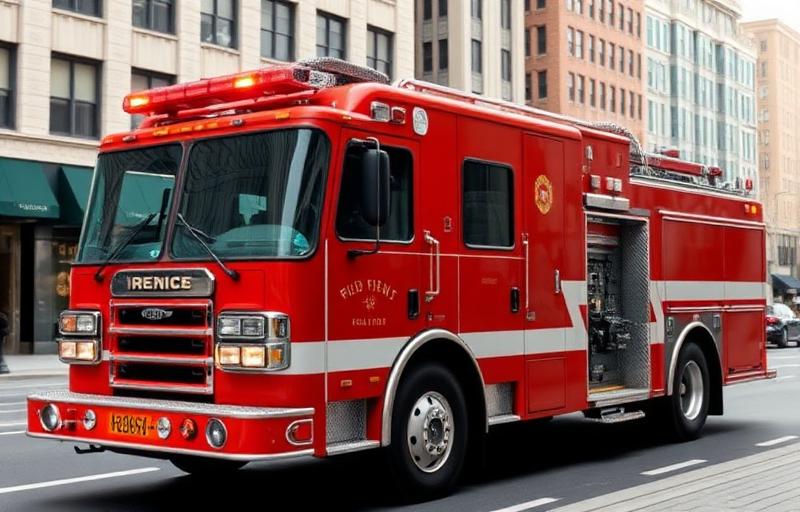
Siren
110–130 dB
Safe exposure
Instant risk
Per NIOSH 85 dBA / 8 h reference (3 dB exchange rate)
Above 85 dB can damage hearing with prolonged exposure. Use ear protection.
Personalized verdict
Is this dangerous for you?
Siren
120 dB
Typical
Your room
— dB
Tap Compare
Difference
—
Waiting
Audio is processed locally in your browser — nothing is recorded or sent. Prefer the full meter? Open Snap dB
Compare Siren to:
Quick Answer
A decibel (dB) is a logarithmic unit used to measure sound intensity: an increase of 10 dB means ten times more sound energy.
Emergency vehicle sirens produce 110–130 dB at the vehicle and 80–90 dB at typical street crossing distance (15–30 meters). A passing ambulance briefly exposes pedestrians to 95–110 dB. This is loud enough to cause temporary hearing effects.
📊 Similar in loudness to an ambulance siren at 10 feet (about 120 dB).
At a glance
| Typical range | 110–130 dB |
|---|---|
| Safety tier | Dangerous |
| Safe exposure (NIOSH REL) | Immediate risk |
| Audible at | ~50+ ft |
Louder than a helicopter overhead at 100 feet (105 dB), quieter than a gunshot at close range (140 dB).
How these figures were determined: Values are based on published reference levels from NIOSH, OSHA, the WHO and the CDC, together with manufacturer specifications where available. Actual sound levels vary with distance, room acoustics, equipment condition and measurement method, and readings taken with a phone microphone are estimates rather than calibrated measurements.
Siren Decibel Levels by Distance
Federal regulations require emergency vehicle sirens to produce a minimum of 100 dB at 3 meters, and most modern sirens operate at 110–130 dB at the vehicle's exterior. This extreme volume is necessary to penetrate closed car windows, traffic noise, and urban background.
For pedestrians on the sidewalk as an emergency vehicle passes 5–10 meters away, exposure briefly reaches 100–115 dB. The siren passes in seconds, but the peak intensity is comparable to standing near concert speakers.
At 30 meters (approximately one block), siren noise drops to 80–90 dB. At 100 meters, it falls to 65–75 dB — still clearly audible and designed to be.
- At the vehicle (3m): 110–130 dB
- Pedestrian at 10m: 100–115 dB
- One block away (30m): 80–90 dB
- Two blocks away (60m): 70–80 dB
- 100 meters: 65–75 dB
- Inside your car (windows up): 80–95 dB
This might be louder than you think…
Noise Level: Siren
Classification
Dangerous
Safe Exposure
Immediate risk
Can Sirens Damage Hearing?
Brief siren exposures (5–15 seconds of peak level) for pedestrians are unlikely to cause permanent damage for occasional encounters. However, the intensity can cause temporary threshold shift — the muffled hearing you may notice after a very close pass.
For emergency workers inside the vehicles, cumulative siren exposure is a significant occupational concern. Firefighters, paramedics, and police officers are exposed to their own sirens (inside the cab: 95–110 dB) for hours during shifts.
People living on emergency vehicle routes near hospitals and fire stations experience hundreds of siren events annually, contributing to chronic noise stress and sleep disruption.
Typical Sound Levels
Here's where it becomes dangerous…
Every doubling of distance from a sound source reduces the noise level by approximately 6 dB outdoors.
Measure Your Environment
Use Snap Decibel Meter to estimate the sound level around you right now.
Open Noise MeterHow to Reduce Siren Noise Impact
For pedestrians, the best protection is distance. Move away from the curb when you hear an approaching siren — an extra 5 meters can reduce exposure by 5–8 dB.
For emergency workers, hearing protection options include filtered earplugs that reduce siren noise while preserving radio communication, and electronic muffs that block impulse noise while amplifying speech.
For residents near stations and hospitals, window upgrades and white noise machines provide the most effective relief. Measure siren events with Snap Decibel Meter to document exposure levels for soundproofing planning.
Now that you know the real level, test your own environment.
Decibel Profile: Siren in Detail
Your subjective experience of siren at 110–130 dB depends on more than just the decibel number. Duration, frequency content, temporal pattern (steady vs. intermittent), predictability, controllability, and your attitude toward the source all influence the annoyance response. Two sounds at identical decibel levels can produce vastly different subjective reactions.
At 110–130 dB, siren is in the "hazardous" range where unprotected exposure causes measurable hearing damage. The outer hair cells in the cochlea, which amplify quiet sounds and sharpen frequency discrimination, are the first casualties. Their loss results in reduced speech clarity, particularly in noisy environments — the classic "I can hear you but can't understand you" complaint.
The inverse square law governs how siren sound diminishes with distance. Every doubling of distance reduces the level by approximately 6 dB. At 130 dB measured at 1 meter, expect roughly 124 dB at 2 meters, 118 dB at 4 meters, and 110 dB at 10 meters.
How Siren Compares to Other Sounds
Siren noise at 110–130 dB matches a car horn at 3 feet (115 dB) on the decibel scale. While the measured levels are equivalent, your brain perceives these sounds very differently based on their spectral content, temporal pattern, and your learned associations with each source.
Human hearing perception compresses the enormous physical range of sound into a more manageable subjective scale. The difference between 120 dB and 130 dB sounds like "about twice as loud" to most listeners, even though the actual energy difference is 10-fold. This compression is why small decibel differences feel significant — a 3 dB reduction removes half the sound energy.
Safe Exposure Duration for Siren
According to NIOSH guidelines, the maximum safe exposure time at 130 dB is Immediate risk. This level can cause instant pain and hearing damage.
NIOSH Exposure Limits Reference
How to Stay Safe Around Siren
Sustained exposure to siren at 130 dB requires a deliberate hearing protection strategy. The National Institute for Deafness recommends the "3-E" approach: Engineering controls (reduce the source noise), Environmental modifications (increase distance, add barriers), and Equipment (wear proper hearing protection). Apply these in order — prevent the noise first, protect against the remainder.
Simple environmental changes can reduce your effective exposure to siren noise. Closing a standard interior door reduces transmitted sound by 15–20 dB. Adding a rug to a hard floor absorbs 2–4 dB of reflected energy. Hanging heavy curtains adds 5–8 dB of high-frequency absorption. These modest steps compound to create meaningful noise reduction.
- Increase distance from siren when possible — every doubling cuts the level by 6 dB
- Measure siren noise with a smartphone app to establish your actual exposure level
- Add soft furnishings (rugs, curtains, upholstered furniture) to absorb reflected siren sound
- Close doors and seal gaps between rooms to reduce transmitted noise by 15–25 dB
- Wear NRR 20+ hearing protection if siren exposure exceeds 85 dB
Getting Accurate Decibel Readings of Siren
For reliable siren measurements, standardize your approach: measure at 1 meter distance, at ear height, with the microphone pointed toward the source. Run the measurement for at least 30 seconds and average multiple readings. Background noise should be at least 10 dB below your target to avoid interference.
Measuring loud sounds like siren at 120 dB requires caution — the measurement process itself exposes you to potentially damaging noise. Wear hearing protection during measurement sessions, use a remote microphone or tripod placement when possible, and limit measurement duration to the minimum needed for representative data.
Long-Term Health Effects of Siren Noise
Regular unprotected exposure to siren at 130 dB poses a real risk of noise-induced hearing loss (NIHL). The hair cells in your cochlea convert sound vibrations into electrical signals for the brain. Excessive noise physically damages these delicate structures, and unlike birds and reptiles, humans cannot regenerate damaged hair cells — the loss is permanent.
Warning signs of overexposure to siren noise include: ringing, buzzing, or hissing in the ears after exposure; speech sounding muffled or distant; difficulty following conversations in restaurants or social settings; and needing to gradually increase TV or headphone volume. If you experience any of these after exposure to siren, reduce future exposure immediately and consult an audiologist.
Warning Signs of Overexposure
- Ringing, buzzing, or hissing in your ears after exposure to siren
- Sounds seem muffled or distant after leaving the noisy environment
- Difficulty understanding speech in crowded or noisy settings
- Gradually increasing your TV or headphone volume over weeks
Measure Siren Noise Yourself
Want to know how loud siren is in your own environment? Use our free decibel meter to take a real-time reading, or check the complete decibel chart to see where 110–130 dB sits on the full scale. You can also compare sounds side by side or use the noise distance calculator to estimate levels at different distances.
🎯 Guess the Decibel Level
How loud do you think Siren is? Drag the slider and find out!
Frequently Asked Questions
How loud is an ambulance siren?
110–130 dB at the vehicle, 80–90 dB one block away, 65–75 dB at 100 meters.
Can a siren damage hearing?
Brief passing exposure is unlikely to cause permanent damage, but close-range or occupational exposure poses risks.
How loud is a siren inside a car?
80–95 dB with windows up as an emergency vehicle passes nearby.
Explore More
Related Noise Guides
How Loud Is Traffic Noise?
Explore typical traffic noise levels and understand how road noise affects your environment, health, and quality of life.
9 min readTraffic & City NoiseHow Loud Is a Car Horn? (Decibels + Distance Guide)
Car horns produce 100–110 dB at 1 meter — designed to be heard over traffic noise. Here is what that means at various distances.
5 min readHearing SafetyIs 120 dB Dangerous? The Pain Threshold Explained
120 dB is the threshold of pain. Even a few seconds can cause permanent hearing damage. Sirens, jet engines, and gunshots reach this territory.
5 min readTransportation NoiseHow Loud Is an Airplane Takeoff? Decibels by Distance
Jet takeoff produces 140+ dB at the runway — one of the loudest regular events on Earth. Here's how it scales with distance.
5 min readHow Does Siren Compare?
Tap any sound to learn more about its noise level.
| Sound level | Sound | Vs. Siren | Risk |
|---|---|---|---|
| 120 dB | Siren (this page) | — | Danger |
| 105 dB | Baby Cry | −15 dB quieter | Danger |
| 105 dB | Car Horn | −15 dB quieter | Danger |
| 110 dB | Concert or Festival | −10 dB quieter | Danger |
| 120 dB | 120 Decibels | same level | Danger |
| 140 dB | Airplane Takeoff | +20 dB louder | Danger |
| 158 dB | Gunshot | +38 dB louder | Danger |
Compare With Other Sounds
See how this noise level compares to other everyday sounds.
Test Your Environment
Use Snap Decibel Meter to measure sound levels around you — free, private, and instant.
Start Noise Measurement