How Loud Is a Door Slam? Impact Noise Explained
A door slam produces 80–110 dB of sudden impact noise — one of the most disruptive everyday sounds in homes and apartments.
Reviewed by our team against authoritative public-health sources. See our editorial standards.
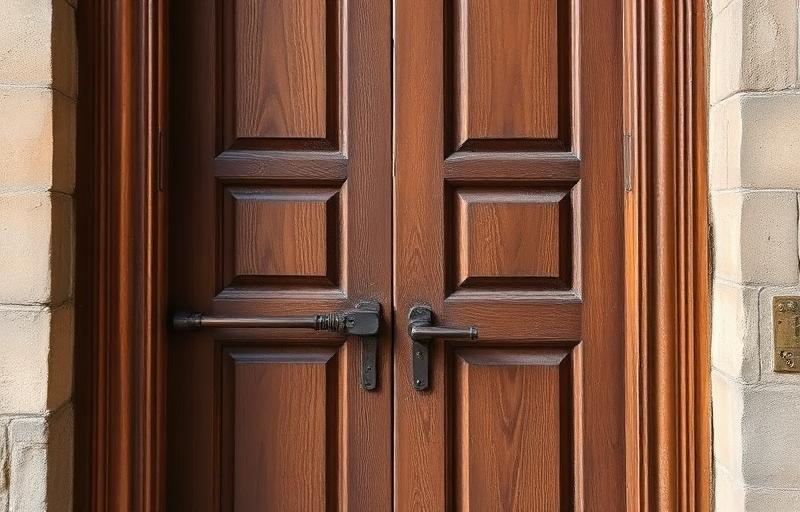
Door Slam
80–110 dB
Safe exposure
< 2 minutes
Per NIOSH 85 dBA / 8 h reference (3 dB exchange rate)
Above 85 dB can damage hearing with prolonged exposure. Use ear protection.
Personalized verdict
Is this dangerous for you?
Door Slam
95 dB
Typical
Your room
— dB
Tap Compare
Difference
—
Waiting
Audio is processed locally in your browser — nothing is recorded or sent. Prefer the full meter? Open Snap dB
Compare Door Slam to:
Quick Answer
A decibel (dB) is a logarithmic unit used to measure sound intensity: an increase of 10 dB means ten times more sound energy.
A door slam produces 80–110 dB depending on the door type and force. Heavy wooden doors produce more noise, and the impact travels through the building structure. Door slams are especially disruptive because of their sudden, impulsive nature.
📊 Similar in loudness to a motorcycle at 25 feet (about 95 dB).
At a glance
| Typical range | 80–110 dB |
|---|---|
| Safety tier | Dangerous |
| Safe exposure (NIOSH REL) | < 2 minutes |
| Audible at | ~50+ ft |
Louder than a vacuum cleaner at 10 feet (75 dB), quieter than a car horn at 3 feet (115 dB).
How these figures were determined: Values are based on published reference levels from NIOSH, OSHA, the WHO and the CDC, together with manufacturer specifications where available. Actual sound levels vary with distance, room acoustics, equipment condition and measurement method, and readings taken with a phone microphone are estimates rather than calibrated measurements.
Door Slam Noise Levels
The volume depends on door type and force:
- Light interior door, gently closed: 60–70 dB
- Interior door, normal slam: 80–90 dB
- Heavy wooden door, hard slam: 90–100 dB
- Metal fire door slam: 95–110 dB
- Screen door slapping shut: 70–80 dB
- Car door slam: 75–90 dB
Your ears can't tell you the real danger level here…
Noise Level: Door Slam
Classification
Loud – Hearing Risk
Safe Exposure
1 hour
Why Door Slams Are So Disruptive
Door slams are disproportionately annoying compared to steady noise at the same volume:
- Impulsive noise: sudden onset startles the nervous system
- Structure-borne: vibrations travel through walls and floors
- Unpredictable: you can't habituate to random slams
- Wide frequency range: both deep thuds and sharp cracks
- Affects neighbors in adjacent apartments significantly
This is the point where hearing damage starts…
The human ear can distinguish over 400,000 different sounds and detect pressure changes as small as one billionth of atmospheric pressure.
Measure Your Environment
Use Snap Decibel Meter to estimate the sound level around you right now.
Open Noise MeterDoor Slams in Apartments
Door slamming is one of the top noise complaints in apartments. The impact noise travels through the building structure (walls, floors, frame) in ways that airborne noise doesn't, making it audible several floors away.
A 90 dB door slam might reach a neighbor at 50–60 dB through structure — enough to wake someone from light sleep. Unlike continuous noise that you can habituate to, the randomness of door slams makes them impossible to tune out.
The Physics of Impact Noise
Door slams produce what acousticians call 'impulsive noise' — a very short burst of high-energy sound. The energy is concentrated in a few milliseconds, creating a sharp peak that your nervous system interprets as a potential threat.
This is why a door slam at 90 dB feels more disruptive than continuous traffic noise at 90 dB. Your startle reflex activates, cortisol spikes briefly, and your attention is involuntarily diverted. In shared living environments, this makes door slams one of the most stress-inducing everyday sounds.
How to Measure a Door Slam Accurately
To measure a door slam, place your phone or meter about 3 feet from the door on the same side as the impact. Keep it away from the wall or door frame so vibration does not shake the microphone directly.
Measure several closes separately: gentle close, normal accidental slam, and hard slam. Use the peak reading rather than the average, because a door slam is a short impulse that may disappear from the average within seconds.
- Measure at 3 feet from the latch side
- Record PEAK dB, not only average dB
- Repeat 3–5 times because slams vary greatly
- Measure inside the room and in the neighboring room if noise transfer is the concern
- Note whether the door is hollow-core, solid wood, metal, or fire-rated
How to Prevent Door Slams
Simple, inexpensive solutions can eliminate door slam noise entirely:
- Door closers: hydraulic devices that slow the closing ($15–40)
- Felt or rubber bumpers on the frame ($2–5)
- Finger-safe hinges with damping
- Draft excluders reduce the 'suction' effect that causes wind-slams
- Self-closing hinges with speed control
- Teach family members to close doors gently
Door Slam Noise for Renters and Neighbors
If you are documenting a recurring door slam problem, short peak readings are more useful than long averages. A neighbor may experience only 50–60 dB inside their apartment, but the sudden jump from a quiet room can still be disruptive enough to wake someone.
For landlords or building managers, the best fix is usually mechanical rather than behavioral: adjust the closer sweep speed, add rubber stops, or replace worn latch hardware. These changes reduce both airborne sound and the structure-borne thud that travels through floors and walls.
Most people underestimate this sound — don't be one of them.
Understanding Door Slam Noise Levels
Your subjective experience of door slam at 80–110 dB depends on more than just the decibel number. Duration, frequency content, temporal pattern (steady vs. intermittent), predictability, controllability, and your attitude toward the source all influence the annoyance response. Two sounds at identical decibel levels can produce vastly different subjective reactions.
Noise at 80–110 dB from door slam exceeds the maximum level that any regulatory body considers safe for unlimited exposure. At this intensity, sound energy is sufficient to physically damage the stereocilia (hair-like structures) on inner ear sensory cells. These structures do not regenerate in mammals — every exposure above safe limits contributes to permanent, cumulative hearing loss.
Room acoustics have a major impact on how loud door slam actually sounds. Hard, reflective surfaces (tile, glass, concrete) create reverberation that can increase the effective level by 5–10 dB. Soft materials like curtains, carpet, and upholstered furniture absorb sound waves and make the same source noticeably quieter.
Door Slam vs. Common Noise Sources
Door slam noise at 80–110 dB matches a motorcycle at 25 feet (95 dB) on the decibel scale. While the measured levels are equivalent, your brain perceives these sounds very differently based on their spectral content, temporal pattern, and your learned associations with each source.
On the quieter end, a garbage disposal registers about 80 dB — that's 15 dB below door slam, representing roughly 3× less perceived loudness. Moving louder, a car horn at 3 feet reaches 115 dB — 20 dB above door slam, approximately 4× louder to your ears.
The decibel scale is logarithmic — each 10 dB increase represents a tenfold jump in sound energy and roughly a doubling of perceived loudness. At 80–110 dB, door slam carries 3,162,277,660× more acoustic energy than the threshold of hearing (0 dB), placing it in a well-characterized region of the audible spectrum.
Safe Exposure Duration for Door Slam
According to NIOSH guidelines, the maximum safe exposure time at 110 dB is < 2 minutes. Sustained exposure causes rapid hearing cell damage.
NIOSH Exposure Limits Reference
Hearing Protection Strategies for Door Slam
Sustained exposure to door slam at 110 dB requires a deliberate hearing protection strategy. The National Institute for Deafness recommends the "3-E" approach: Engineering controls (reduce the source noise), Environmental modifications (increase distance, add barriers), and Equipment (wear proper hearing protection). Apply these in order — prevent the noise first, protect against the remainder.
The most effective noise reduction combines source treatment, path interruption, and receiver protection — the "source-path-receiver" model used by acoustic engineers. For door slam at 110 dB, start at the source (can you reduce the noise output?), then address the path (can you add distance, barriers, or absorption?), and finally protect yourself (hearing protection, time limits).
- Close doors and seal gaps between rooms to reduce transmitted noise by 15–25 dB
- Wear NRR 20+ hearing protection if door slam exposure exceeds 85 dB
- Monitor cumulative daily exposure — multiple moderate sources compound over time
- Increase distance from door slam when possible — every doubling cuts the level by 6 dB
- Measure door slam noise with a smartphone app to establish your actual exposure level
Test It Yourself: Measuring Door Slam Noise
To measure door slam noise as accurately as possible, use a dedicated Type 2 sound level meter or a calibrated smartphone app such as NIOSH SLM. Snap Decibel Meter gives you a fast relative estimate — useful for comparing environments, but uncalibrated and unweighted. Position the device at 1 meter from the source, at the height where you'd normally hear it. Take readings over 30–60 seconds and note both average (Leq) and peak (Lmax) values.
Measuring loud sounds like door slam at 95 dB requires caution — the measurement process itself exposes you to potentially damaging noise. Wear hearing protection during measurement sessions, use a remote microphone or tripod placement when possible, and limit measurement duration to the minimum needed for representative data.
How Door Slam Noise Affects Your Health
The progression of hearing damage from door slam exposure follows a predictable pattern: first, temporary threshold shift (sounds seem muffled after exposure), then persistent tinnitus (ringing or buzzing that doesn't resolve), then permanent threshold shift (measurable hearing loss on audiometric testing). Early-stage damage is often unnoticed because the brain compensates by "filling in" missing signals from context.
Warning signs of overexposure to door slam noise include: ringing, buzzing, or hissing in the ears after exposure; speech sounding muffled or distant; difficulty following conversations in restaurants or social settings; and needing to gradually increase TV or headphone volume. If you experience any of these after exposure to door slam, reduce future exposure immediately and consult an audiologist.
Warning Signs of Overexposure
- Ringing, buzzing, or hissing in your ears after exposure to door slam
- Sounds seem muffled or distant after leaving the noisy environment
- Difficulty understanding speech in crowded or noisy settings
- Gradually increasing your TV or headphone volume over weeks
Measure Door Slam Noise Yourself
Want to know how loud door slam is in your own environment? Use our free decibel meter to take a real-time reading, or check the complete decibel chart to see where 80–110 dB sits on the full scale. You can also compare sounds side by side or use the noise distance calculator to estimate levels at different distances.
🎯 Guess the Decibel Level
How loud do you think Door Slam is? Drag the slider and find out!
Frequently Asked Questions
Can a door slam damage hearing?
A single door slam won't damage hearing, but the impulse noise can startle and cause temporary discomfort, especially for sensitive individuals.
Why do apartment doors slam so loud?
Building pressure differences, spring-loaded closers, and hard surfaces amplify the impact. The sound also travels through the building structure.
How do I stop my front door from slamming?
Install a hydraulic door closer ($10–30) or add adhesive rubber bumpers to the door frame. Both dramatically reduce slam noise.
Should I measure average dB or peak dB for a door slam?
Use peak dB. A door slam is an impulse noise that lasts only a fraction of a second, so average dB can underestimate how loud and disruptive it really was.
Explore More
Related Noise Guides
Is 80 dB Loud? When Noise Starts Getting Serious
80 dB is genuinely loud — think alarm clock or busy traffic. It's approaching the danger zone. Here's what you need to know.
5 min readHuman SoundsHow Loud Is a Baby Crying? Decibel Levels Parents Should Know
A baby's cry can reach 100–110 dB, rivaling a nightclub in intensity. Here's what parents need to know about noise exposure during those early months.
6 min readHearing SafetyIs 100 dB Dangerous? The 15-Minute Warning
100 dB gives you just 15 minutes of safe exposure. Nightclubs, power tools, and live music all exceed this level. Here's the full danger picture.
5 min readHuman SoundsHow Loud Is Normal Conversation? The 60 dB Baseline
Normal conversation registers 55–65 dB — the most important reference point on the entire noise scale. Here's why it matters.
4 min readHow Does Door Slam Compare?
Tap any sound to learn more about its noise level.
| Sound level | Sound | Vs. Door Slam | Risk |
|---|---|---|---|
| 95 dB | Door Slam (this page) | — | Loud |
| 83 dB | Hair Dryer | −12 dB quieter | Moderate |
| 83 dB | Pressure Washer | −12 dB quieter | Moderate |
| 85 dB | What Noise Level Is Safe for Humans | −10 dB quieter | Moderate |
| 85 dB | Dog Bark | −10 dB quieter | Moderate |
| 110 dB | Concert or Festival | +15 dB louder | Danger |
| 110 dB | What Does 110 dB Sound Like | +15 dB louder | Danger |
Compare With Other Sounds
See how this noise level compares to other everyday sounds.


Test Your Environment
Use Snap Decibel Meter to measure sound levels around you — free, private, and instant.
Start Noise Measurement