How Loud Is a Bowling Alley? Decibel Levels Explained
Bowling alleys generate 75–95 dB from the combined noise of rolling balls, pin crashes, and background music.
Reviewed by our team against authoritative public-health sources. See our editorial standards.
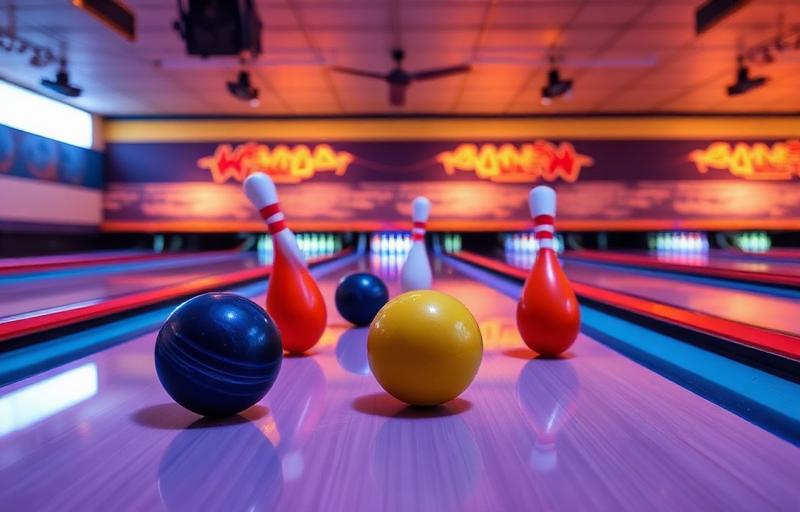
Bowling Alley
70–80 dB
Safe exposure
8 hours
Per NIOSH 85 dBA / 8 h reference (3 dB exchange rate)
Personalized verdict
Is this dangerous for you?
Bowling Alley
75 dB
Typical
Your room
— dB
Tap Compare
Difference
—
Waiting
Audio is processed locally in your browser — nothing is recorded or sent. Prefer the full meter? Open Snap dB
Compare Bowling Alley to:
Quick Answer
A decibel (dB) is a logarithmic unit used to measure sound intensity: an increase of 10 dB means ten times more sound energy.
A bowling alley typically measures 75–95 decibels. Individual pin strikes peak at 85–95 dB, ball returns add 80–90 dB, and background music contributes 70–80 dB. The combined ambient level in a busy bowling alley usually sits around 80–90 dB — loud enough to require raised voices for conversation.
📊 Similar in loudness to a vacuum cleaner at 10 feet (about 75 dB).
At a glance
| Typical range | 70–80 dB |
|---|---|
| Safety tier | Moderate |
| Safe exposure (NIOSH REL) | All-day OK |
| Audible at | ~20–30 ft |
Louder than a busy restaurant (65 dB), quieter than a food blender running (85 dB).
How these figures were determined: Values are based on published reference levels from NIOSH, OSHA, the WHO and the CDC, together with manufacturer specifications where available. Actual sound levels vary with distance, room acoustics, equipment condition and measurement method, and readings taken with a phone microphone are estimates rather than calibrated measurements.
What Makes Bowling Alleys So Loud?
Bowling alleys combine multiple noise sources in a hard, reflective environment. A bowling ball hitting pins produces an impulsive peak of 85–95 dB. Ball return machinery generates a constant 80–85 dB rumble. Background music, arcade games, and crowd chatter add another 70–80 dB layer. In a 30-lane center with multiple games in progress, these sources compound to create sustained levels of 80–90 dB.
The acoustic environment amplifies the problem. Polished lanes, hard floors, smooth walls, and high ceilings create a highly reverberant space with minimal sound absorption. Sound bounces repeatedly, raising the effective noise level by 5–10 dB compared to the same sounds in an acoustically treated room.
You're probably exposed to this more often than you realize…
Noise Level: Bowling Alley
Classification
Moderate
Safe Exposure
No time limit
Impact Noise from Pin Strikes
Pin strikes are impulsive sounds — brief spikes that can reach 90–95 dB at the bowler's position. While the average exposure stays lower, these peaks are important because impulsive noise is more damaging to hearing than continuous noise at the same level. A busy alley with 20 active lanes generates a pin strike roughly every 5–10 seconds, creating a near-constant barrage of impact peaks.
Typical Sound Levels
Most noise-induced hearing loss happens gradually — without any pain…
A 10 dB increase sounds roughly twice as loud to human ears, even though the actual sound energy increases tenfold.
Measure Your Environment
Use Snap Decibel Meter to estimate the sound level around you right now.
Open Noise MeterShould You Worry About Bowling Alley Noise?
For casual bowlers visiting once a week for 1–2 hours, bowling alley noise levels (80–90 dB) are unlikely to cause hearing damage — though they sit right at the threshold where caution begins. League bowlers who spend 4+ hours per week in this environment accumulate more significant exposure.
Bowling alley employees face the greatest risk, spending 6–8 hour shifts in 80–90 dB environments. OSHA's permissible exposure limit for 85 dB is 8 hours, meaning staff in louder centers may exceed recommended limits during a standard shift.
- Casual bowler (2 hours/week): minimal risk at 80–85 dB
- League bowler (4+ hours/week): moderate cumulative risk
- Alley staff (8+ hours/day): hearing protection recommended
- Children's parties: monitor closely — kids are more vulnerable
Finding Quieter Bowling Experiences
Some newer bowling centers incorporate acoustic treatments like sound-absorbing ceiling panels, carpeted spectator areas, and rubber-dampened ball returns that reduce ambient noise by 10–15 dB. Boutique bowling lounges with fewer lanes tend to be significantly quieter than large 40-lane centers. Visiting during off-peak hours (weekday mornings) dramatically reduces the crowd component.
Most people underestimate this sound — don't be one of them.
Decibel Profile: Bowling Alley in Detail
Modern venue acoustics often amplify bowling alley noise unnecessarily. Hard surfaces (glass, concrete, metal) reflect sound energy instead of absorbing it, adding 5–10 dB of reverberation. Venues designed with acoustic panels, fabric furnishings, and ceiling baffles can be 10–15 dB quieter at the same occupancy — improving conversation clarity while reducing hearing risk.
The 70–80 dB range puts bowling alley at the boundary where noise transitions from "annoying" to "potentially harmful." NIOSH sets 85 dBA over 8 hours as its recommended exposure limit, and OSHA uses the same 85 dBA 8-hour average as the action level that triggers a hearing conservation program. Below this, the risk is primarily comfort and stress; above it, physical damage to hearing structures becomes measurable with sufficient exposure duration.
Venue design drives bowling alley noise levels more than occupancy alone. A bar with exposed brick, concrete floors, and metal ceilings can be 8–12 dB louder than a carpeted venue with acoustic panels at the same crowd density. Some cities now require acoustic assessments before issuing entertainment licenses.
How Bowling Alley Compares to Other Sounds
Bowling alley noise at 70–80 dB matches a vacuum cleaner at 10 feet (75 dB) on the decibel scale. While the measured levels are equivalent, your brain perceives these sounds very differently based on their spectral content, temporal pattern, and your learned associations with each source.
On the quieter end, a coffee shop registers about 55 dB — that's 20 dB below bowling alley, representing roughly 4× less perceived loudness. Moving louder, a gas-powered lawn mower reaches 90 dB — 15 dB above bowling alley, approximately 3× louder to your ears.
Human hearing perception compresses the enormous physical range of sound into a more manageable subjective scale. The difference between 75 dB and 85 dB sounds like "about twice as loud" to most listeners, even though the actual energy difference is 10-fold. This compression is why small decibel differences feel significant — a 3 dB reduction removes half the sound energy.
How Venue Design Amplifies Bowling alley Noise
The acoustic environment of social venues is rarely designed with hearing safety in mind. Most bars, restaurants, and clubs prioritize aesthetics — exposed concrete, glass partitions, and metal fixtures — that reflect sound instead of absorbing it. The result is a reverberation time of 1.5–3.0 seconds, compared to the 0.5–0.8 seconds recommended for speech intelligibility.
Some venue owners deliberately maintain high noise levels because research shows it increases alcohol sales by 20–30%. When ambient noise makes conversation difficult, patrons drink faster (they can't talk anyway) and stay for shorter periods, increasing table turnover. This economic incentive works against noise reduction in the hospitality industry.
"Quiet hours" or "acoustic nights" are an emerging trend where venues reduce music volume by 10–15 dB during designated periods. These events attract demographics that value conversation — often older professionals and parents — and can actually increase per-person spending despite lower overall noise levels.
How to Reduce Bowling Alley Sound
While bowling alley at 80 dB doesn't require hearing protection, managing this noise improves comfort, reduces stress, and preserves the quiet that supports concentration, sleep, and cardiovascular health. The strategies below focus on environmental modifications rather than personal protective equipment.
Simple environmental changes can reduce your effective exposure to bowling alley noise. Closing a standard interior door reduces transmitted sound by 15–20 dB. Adding a rug to a hard floor absorbs 2–4 dB of reflected energy. Hanging heavy curtains adds 5–8 dB of high-frequency absorption. These modest steps compound to create meaningful noise reduction.
- If you experience post-exposure tinnitus, reduce future exposure duration and use protection
- Carry high-fidelity earplugs for bowling alley events — they reduce volume 15–20 dB without distortion
- Choose seating away from speakers and amplification equipment
- Take 10-minute quiet breaks every hour to allow temporary threshold shift to recover
- Keep personal audio devices below 60% maximum volume — most exceed 100 dB at full output
Getting Accurate Decibel Readings of Bowling Alley
For reliable bowling alley measurements, standardize your approach: measure at 1 meter distance, at ear height, with the microphone pointed toward the source. Run the measurement for at least 30 seconds and average multiple readings. Background noise should be at least 10 dB below your target to avoid interference.
For sounds at 75 dB like bowling alley, most smartphone decibel meter apps provide reasonably accurate readings (typically within ±3–5 dB of professional equipment). For more precision, calibrate your app against a known reference sound or use a dedicated Type 2 sound level meter. The key to accuracy is consistent positioning and adequate sampling time.
Living with Bowling Alley Noise: Health Considerations
Chronic exposure to bowling alley at 80 dB falls below the hearing damage threshold but contributes to non-auditory health effects. The European Environment Agency links sustained noise above 55 dB to cardiovascular risk, and above 65 dB to measurable cortisol elevation and sleep disruption. These effects accumulate over years of daily exposure.
Measure Bowling Alley Noise Yourself
Want to know how loud bowling alley is in your own environment? Use our free decibel meter to take a real-time reading, or check the complete decibel chart to see where 70–80 dB sits on the full scale. You can also compare sounds side by side or use the noise distance calculator to estimate levels at different distances.
🎯 Guess the Decibel Level
How loud do you think Bowling Alley is? Drag the slider and find out!
Frequently Asked Questions
How many decibels is a bowling alley?
A busy bowling alley typically measures 80–90 dB, with pin strike peaks reaching 90–95 dB.
Is bowling alley noise dangerous?
For casual visits, the risk is low. Regular league bowlers and staff should consider hearing protection in louder venues.
Why are bowling alleys so loud?
Hard reflective surfaces, impulsive pin strikes, ball return machinery, and background music all combine in a reverberant space.
Explore More
Related Noise Guides
How Loud Is Crowd Noise? From Cafés to Stadiums
Crowd noise scales from a gentle café buzz at 65 dB to a deafening stadium roar at 130+ dB. The math of many voices is surprisingly powerful.
5 min readSocial NoiseHow Loud Is a Restaurant? Decibel Levels & Dining Experience
Modern restaurants hit 75–90 dB during dinner rush — loud enough to strain conversations and cause vocal fatigue. Here's the acoustic reality of dining out.
5 min readEntertainment NoiseHow Loud Is Gym Music? The Workout Noise Problem
Gym music typically blasts at 85–95 dB — above the hearing damage threshold. Add clanking weights and your ears are under assault.
5 min readSocial NoiseHow Loud Is a Bar? Decibel Levels Explained
Bars and pubs produce 80–110 dB — a combination of music, conversation, and crowd noise that forces patrons to shout.
5 min readHow Does Bowling Alley Compare?
Tap any sound to learn more about its noise level.
| Sound level | Sound | Vs. Bowling Alley | Risk |
|---|---|---|---|
| 75 dB | Bowling Alley (this page) | — | Moderate |
| 63 dB | School Classroom | −12 dB quieter | Moderate |
| 64 dB | Clothes Dryer | −11 dB quieter | Moderate |
| 70 dB | The Complete Guide to Noise Levels and Decibels | −5 dB quieter | Moderate |
| 85 dB | What Noise Level Is Safe for Humans | +10 dB louder | Moderate |
| 88 dB | Gym Music | +13 dB louder | Loud |
| 90 dB | Motorcycle | +15 dB louder | Loud |
Compare With Other Sounds
See how this noise level compares to other everyday sounds.
Test Your Environment
Use Snap Decibel Meter to measure sound levels around you — free, private, and instant.
Start Noise Measurement