How Long Can You Be Exposed to Loud Noise Safely?
At 85 dB, you can be safely exposed for up to 8 hours. For every 3 dB increase, the safe time is cut in half. Learn the guidelines and how to manage your daily noise dose.
Reviewed by our team against authoritative public-health sources. See our editorial standards.

Quick Answer
A decibel (dB) is a logarithmic unit used to measure sound intensity: an increase of 10 dB means ten times more sound energy.
At 85 dB, you can be safely exposed for up to 8 hours. For every 3 dB increase, the safe time is cut in half. At 100 dB, you have about 15 minutes. At 110 dB, less than 2 minutes.
📊 Similar in loudness to a food blender running (about 85 dB).
Prolonged exposure above 85 dB can damage hearing.
At a glance
| Typical range | 85 dB |
|---|---|
| Safety tier | Moderate |
| Safe exposure (NIOSH REL) | 8 hours |
Louder than a garbage disposal (80 dB), quieter than heavy city traffic from the sidewalk (88 dB).
How these figures were determined: Values are based on published reference levels from NIOSH, OSHA, the WHO and the CDC, together with manufacturer specifications where available. Actual sound levels vary with distance, room acoustics, equipment condition and measurement method, and readings taken with a phone microphone are estimates rather than calibrated measurements.
The Basics of Safe Noise Exposure
Noise safety isn't just about how loud a sound is. It's about how long you're exposed to it.
A brief burst of 95 dB may not cause harm. But 8 hours of 90 dB almost certainly will.
Health organizations like NIOSH and the WHO have established clear guidelines based on decades of research. The core principle is simple: louder sounds require shorter exposure times.

This might be louder than you think…
Noise Level: How Long Can You Be Exposed to Loud Noise Safely
Classification
Moderate
Safe Exposure
8 hours
NIOSH Safe Exposure Time Guidelines
The National Institute for Occupational Safety and Health (NIOSH) uses a 3 dB exchange rate. OSHA uses a more lenient 5 dB exchange rate, but NIOSH guidelines are considered more protective and are recommended for personal safety.
- 85 dB — 8 hours
- 88 dB — 4 hours
- 91 dB — 2 hours
- 94 dB — 1 hour
- 97 dB — 30 minutes
- 100 dB — 15 minutes
- 103 dB — 7.5 minutes
- 106 dB — 3.75 minutes
- 109 dB — 112 seconds
- 112 dB — 56 seconds
- 115 dB — 28 seconds
Typical Sound Levels
Here's where it becomes dangerous…
Continuous exposure to 85+ dB for 8 hours causes the same damage as 100 dB for just 15 minutes.
Measure Your Environment
Use Snap Decibel Meter to estimate the sound level around you right now.
Open Noise MeterWHO Recommendations
The World Health Organization recommends that recreational noise should not exceed an average of 70 dB over 24 hours. For children, exposure should stay below 75 dB at all times.
The WHO specifically warns about personal audio devices, noting that over 1 billion young people are at risk of hearing loss from unsafe listening practices.
- Recreational noise: max 70 dB average over 24 hours
- Children: below 75 dB at all times
- Live events: max 100 dB averaged over 15 minutes
Real-World Scenarios
Here's how exposure limits apply to real situations:
Morning commute: Riding a subway can expose you to 80–95 dB. A 30-minute commute at 90 dB uses up a significant portion of your daily safe exposure budget.
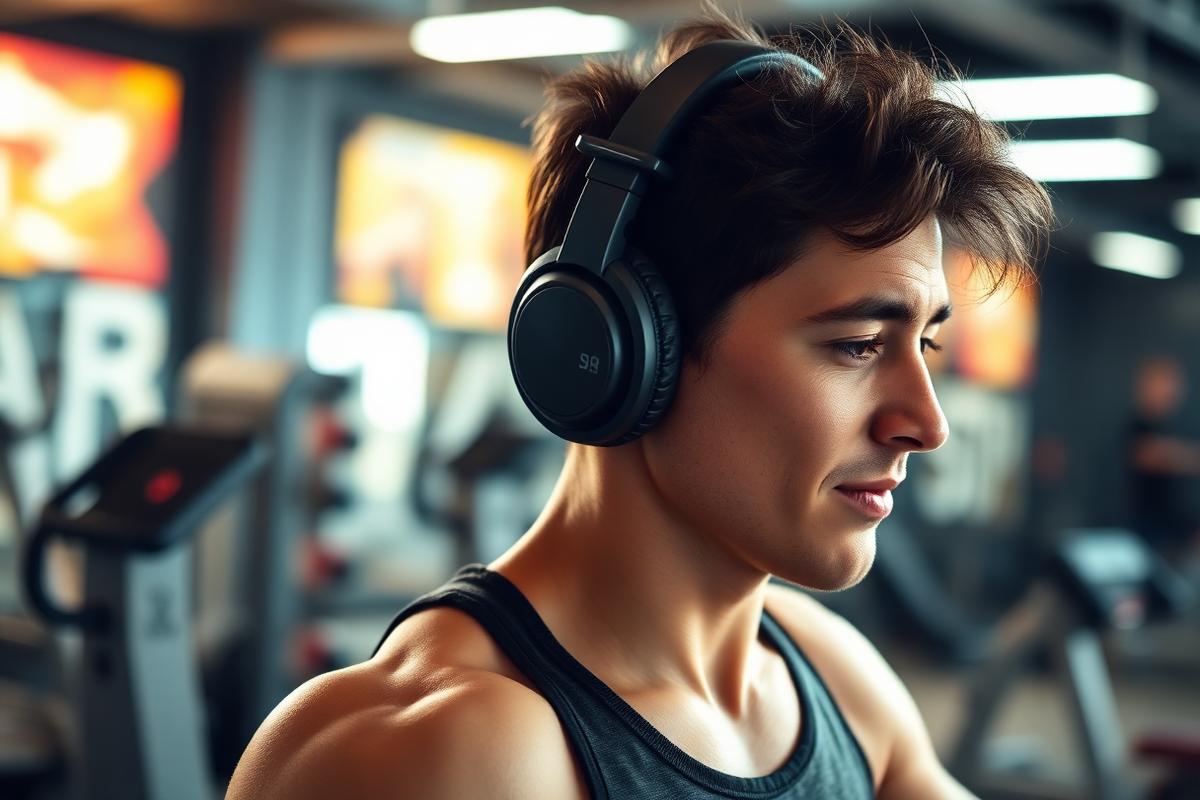
At the gym: Gym music often reaches 90–100 dB. A one-hour workout at 95 dB exceeds the NIOSH safe limit by itself.
Mowing the lawn: A gas mower produces 85–95 dB. Mowing for 2 hours without ear protection puts you right at the danger limit.
Attending a concert: Concerts routinely hit 100–115 dB. Without earplugs, even 15 minutes at 100 dB reaches your safe limit.
How to Calculate Your Daily Noise Dose
Your "noise dose" is the total amount of noise exposure you accumulate throughout a day. Think of it like a budget. You get 100% per day.
If your total exceeds 100%, you've been overexposed. For example, a 30-minute subway ride at 90 dB (25%) plus a 1-hour gym session at 94 dB (100%) equals 125% — that's 25% over the safe limit.
- 1 hour at 85 dB = 12.5% of your daily dose
- 1 hour at 88 dB = 25%
- 1 hour at 91 dB = 50%
- 1 hour at 94 dB = 100% (your entire budget)
Practical Tips for Managing Exposure
Simple steps can dramatically reduce your noise exposure:
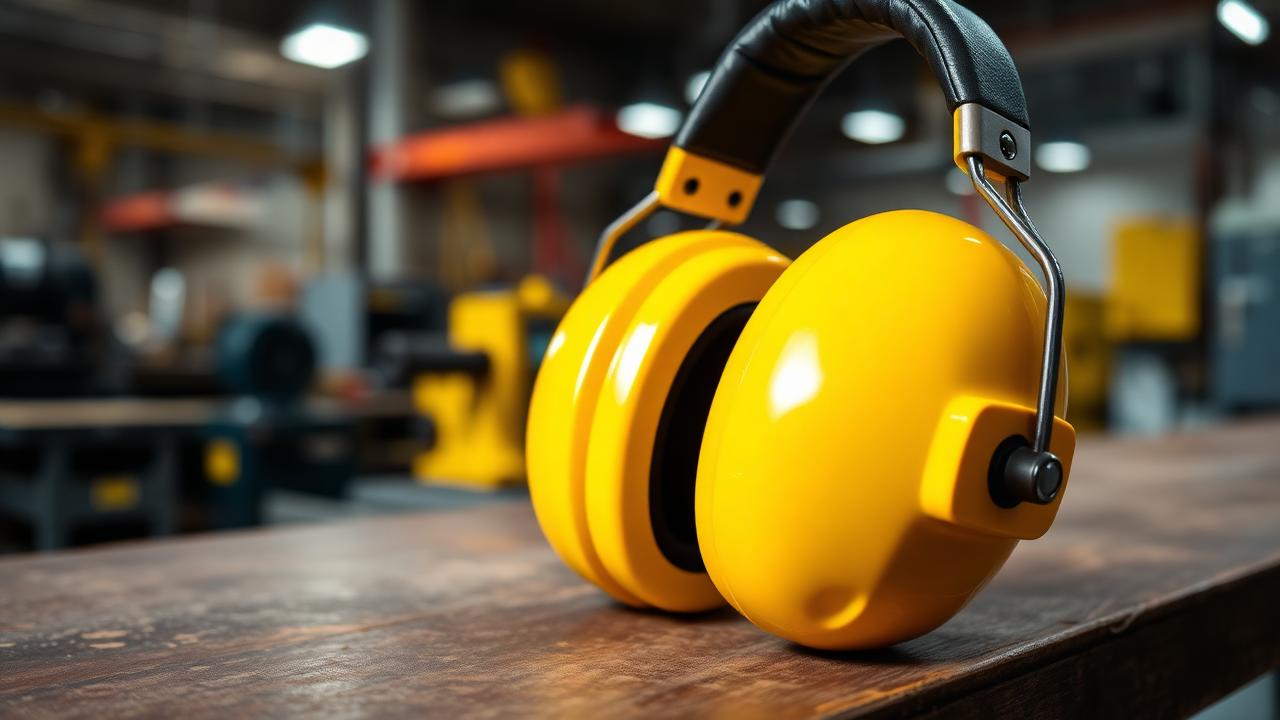
- Carry earplugs — disposable foam earplugs cost pennies and reduce noise by 20–30 dB.
- Use noise-canceling headphones for commuting to avoid cranking up volume.
- Take quiet breaks — step outside or into a quiet room for 10 minutes every hour in noisy environments.
- Choose quieter equipment — electric mowers are 20 dB quieter than gas models.
- Monitor your environment — measure noise levels regularly with Snap Decibel Meter.

Now that you know the real level, test your own environment.
Reading 85 dB in Context
A reading of 85 dB tells you how much acoustic energy reaches the microphone, but not what produced it. The same level can come from a nearby quiet source or a distant loud one, so context matters as much as the number. Since decibels are logarithmic, adding 10 dB means ten times the sound energy and about twice the perceived loudness.
In practical terms, 85 dB is close to a food blender running, which sits at about 85 dB and is generally described as hearing-risk threshold. That reference is a useful anchor: if you can picture how that sound feels in a room, you have a reasonable sense of what 85 dB means.
Levels in this region also depend heavily on distance. Sound spreads out as it travels, and in free-field conditions each doubling of distance from a point source removes roughly 6 dB. Indoors, reflections from hard walls, floors and windows work in the opposite direction and can add several decibels to the same source.
Published reference levels like these come from occupational and public-health sources — NIOSH, OSHA, the WHO and the CDC — measured with calibrated, A-weighted instruments. Readings you take with a phone are useful for comparing one environment with another, but they are relative estimates rather than calibrated measurements, so treat small differences with caution.
How 85 dB Compares to Everyday Sounds
On the quieter side, a garbage disposal registers about 80 dB — 5 dB below 85 dB. On the louder side, heavy city traffic from the sidewalk reaches roughly 88 dB, which is 3 dB above it. Because 10 dB is heard as about twice as loud, those gaps translate into clearly different listening experiences rather than minor variations.
Two sounds at the same measured level can still feel different. Frequency content, how steady the sound is, and how much you associate it with something unpleasant all shape perception. That is why 85 dB from a steady fan and 85 dB from an intermittent, high-pitched source rarely feel equally intrusive even though a meter reports the same number.
If you want to place 85 dB on the full scale, the decibel chart lists reference levels from near-silence up to immediate-damage territory, and the sound comparison tool lets you line up two sounds side by side.
Safe Exposure Duration at 85 dB
According to NIOSH guidelines, the maximum safe exposure time at 85 dB is 8 hours. This is the threshold where hearing protection becomes necessary for prolonged exposure.
NIOSH Exposure Limits Reference
How to Reduce Exposure at 85 dB
Sustained exposure to how long can you be exposed to loud noise safely at 85 dB requires a deliberate hearing protection strategy. The National Institute for Deafness recommends the "3-E" approach: Engineering controls (reduce the source noise), Environmental modifications (increase distance, add barriers), and Equipment (wear proper hearing protection). Apply these in order — prevent the noise first, protect against the remainder.
Simple environmental changes can reduce your effective exposure to how long can you be exposed to loud noise safely noise. Closing a standard interior door reduces transmitted sound by 15–20 dB. Adding a rug to a hard floor absorbs 2–4 dB of reflected energy. Hanging heavy curtains adds 5–8 dB of high-frequency absorption. These modest steps compound to create meaningful noise reduction.
- Increase distance from how long can you be exposed to loud noise safely when possible — every doubling cuts the level by 6 dB
- Measure how long can you be exposed to loud noise safely noise with a smartphone app to establish your actual exposure level
- Add soft furnishings (rugs, curtains, upholstered furniture) to absorb reflected how long can you be exposed to loud noise safely sound
- Close doors and seal gaps between rooms to reduce transmitted noise by 15–25 dB
- Wear NRR 20+ hearing protection if how long can you be exposed to loud noise safely exposure exceeds 85 dB
Measuring Noise Near 85 dB: Methods and Limits
To check whether your environment reaches 85 dB, measure where you actually spend time rather than right at the source, keep the microphone clear of clothing and hands, and let the reading settle for at least 30 seconds so short bursts do not dominate. Note the average level as well as the loudest moments — they answer different questions.
Phone-based measurements have real limits. Microphones vary between models, browsers may apply automatic gain control or noise suppression, and there is no absolute calibration reference. Snap Decibel Meter is unweighted and ambient-referenced, so it is best used to compare environments and track changes rather than to certify an absolute figure. For compliance work, a Type 2 sound level meter is the appropriate instrument.
If you need levels at a different distance than you can safely measure, the noise distance calculator applies the inverse-square relationship for you, which is often more reliable than trying to measure close to a loud source.
Health Effects of Noise at 85 dB
Hearing risk depends on level and time together, not level alone. NIOSH's recommended exposure limit is 85 dBA for eight hours, with a 3 dB exchange rate: each 3 dB increase halves the time you can safely accumulate. At 85 dB, that arithmetic is what matters — brief exposure may be unremarkable while a full working day at the same level is not.
Early signs of overexposure include ringing or buzzing afterwards, sounds seeming distant for a while, and increasing difficulty following speech in noisy rooms. None of these require pain to be present, and all of them are reasons to reduce either the level or the time spent in it.
Note that NIOSH and OSHA thresholds are expressed in A-weighted decibels measured with calibrated instruments. They are reference guidance for interpreting a level, and are not directly validated against an unweighted phone estimate.
Warning Signs of Overexposure
- Ringing, buzzing, or hissing in your ears after exposure to noise around 85 dB
- Sounds seem muffled or distant after leaving the noisy environment
- Difficulty understanding speech in crowded or noisy settings
- Gradually increasing your TV or headphone volume over weeks
Check Whether Your Environment Reaches 85 dB
Want to know whether your own environment reaches 85 dB? Use our free decibel meter to take a real-time reading, or check the complete decibel chart to see where 85 dB sits on the full scale. You can also compare sounds side by side or use the noise distance calculator to estimate levels at different distances.
🎯 Guess the Decibel Level
How loud do you think How Long Can You Be Exposed to Loud Noise Safely is? Drag the slider and find out!
Hearing Safety
Your daily noise exposure is cumulative. Multiple shorter exposures throughout the day add up. If your combined noise dose exceeds 100%, you risk permanent hearing damage over time.
Frequently Asked Questions
How long can I be exposed to 85 dB?
Up to 8 hours, according to NIOSH guidelines. This is the maximum recommended duration at the damage threshold.
Is 2 hours at 90 dB dangerous?
It's at the limit. NIOSH recommends no more than 2 hours at 91 dB. At 90 dB, 2 hours is close to the safe boundary but still carries risk with repeated exposure.
How do I know if my daily noise exposure is too high?
Calculate your noise dose by tracking the dB level and duration of each noisy activity. If the total exceeds 100%, you've been overexposed. Use the noise calculator for help.
Are short bursts of loud noise dangerous?
Individual short bursts below 120 dB are usually not harmful. But impulse noises above 140 dB (like gunshots or explosions) can cause instant, permanent damage.
Do earplugs really help?
Yes. Standard foam earplugs reduce noise by 20–30 dB, which can turn a dangerous 100 dB environment into a safe 70–80 dB one.
Explore More
Related Noise Guides
The Complete Guide to Noise Levels and Decibels
The definitive resource covering everything about noise levels, decibels, safe sound exposure, and how to measure environmental noise — from whispers to jet engines.
25 min readSafe Sound LevelsWhat Noise Level Is Safe for Humans?
Understand recommended noise exposure limits and how long you can safely be exposed to different sound levels without risking hearing damage.
8 min readNoise BasicsWhat Is a Dangerous Noise Level? (dB Explained Simply)
Any sound above 85 dB is considered dangerous with prolonged exposure. Learn what makes noise dangerous, with real-world examples and practical protection tips.
8 min readSafe Sound LevelsAt What Decibel Level Does Hearing Damage Start?
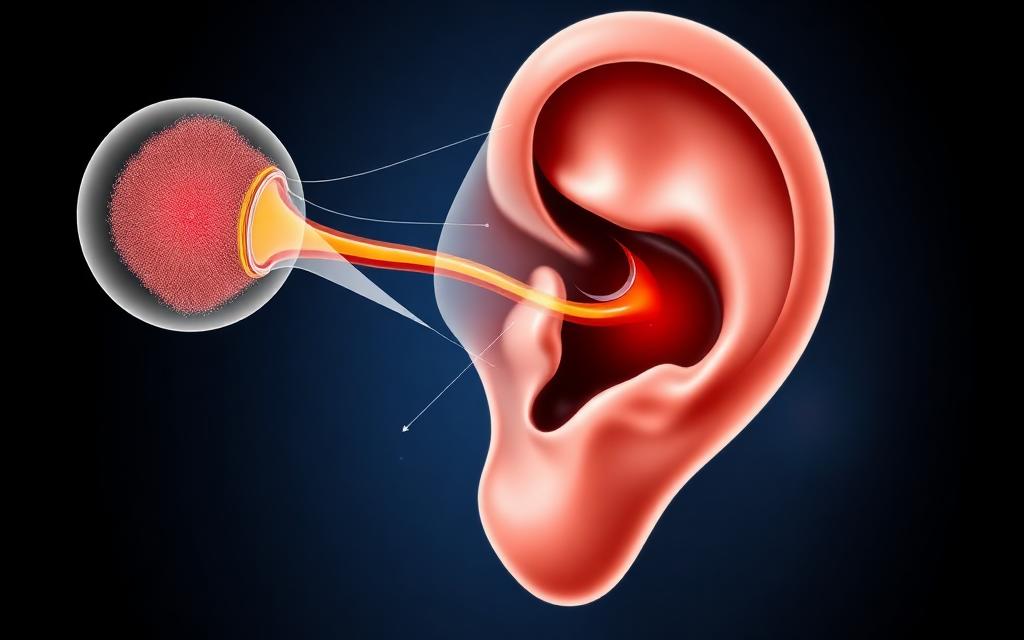
Your inner ear has 15,000 hair cells that don't regenerate. Learn how noise destroys them, the types of hearing loss, warning signs to watch for, and when to see an audiologist.
9 min readHow Does How Long Can You Be Exposed to Loud Noise Safely Compare?
Tap any sound to learn more about its noise level.
| Sound level | Sound | Vs. How Long Can You Be Exposed to Loud Noise Safely | Risk |
|---|---|---|---|
| 85 dB | How Long Can You Be Exposed to Loud Noise Safely (this page) | — | Moderate |
| 73 dB | Electric Guitar Amp | −12 dB quieter | Moderate |
| 73 dB | Espresso Machine | −12 dB quieter | Moderate |
| 78 dB | Traffic Noise | −7 dB quieter | Moderate |
| 85 dB | What Noise Level Is Safe for Humans | same level | Moderate |
| 97 dB | Table Saw | +12 dB louder | Loud |
| 98 dB | How Loud Are Headphones at Max Volume | +13 dB louder | Loud |
Compare With Other Sounds
See how this noise level compares to other everyday sounds.

Test Your Environment
Use Snap Decibel Meter to measure sound levels around you — free, private, and instant.
Start Noise Measurement