Is 75 dB Loud? When Noise Gets Uncomfortable
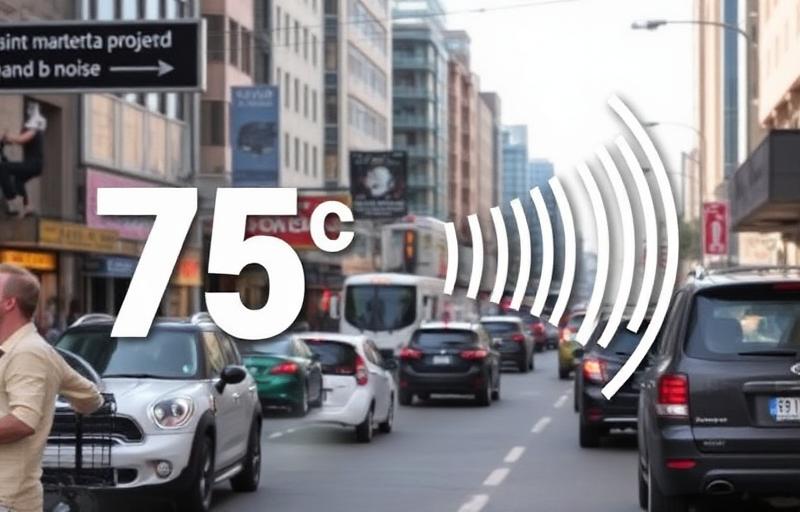
75 dB is noticeably loud — comparable to a vacuum cleaner, busy traffic, or a noisy restaurant. Safe for hearing, but can be annoying.
Reviewed by our team against authoritative public-health sources. See our editorial standards.
Quick Answer
A decibel (dB) is a logarithmic unit used to measure sound intensity: an increase of 10 dB means ten times more sound energy.
75 dB is moderately loud — about the volume of a vacuum cleaner, busy traffic, or a noisy restaurant. It's still safe for your hearing even with extended exposure, but it's loud enough to make conversation difficult and cause annoyance.
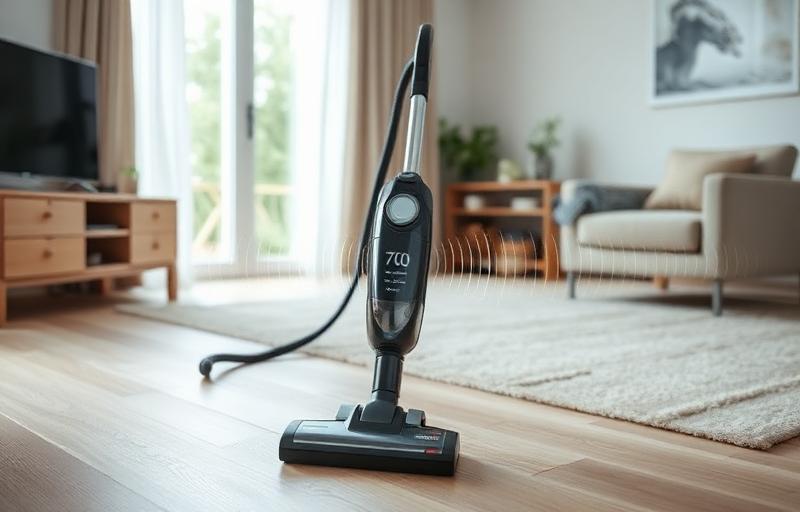
📊 Similar in loudness to a vacuum cleaner at 10 feet (about 75 dB).
At a glance
| Typical range | 75 dB |
|---|---|
| Safety tier | Moderate |
| Safe exposure (NIOSH REL) | All-day OK |
Louder than a running shower (70 dB), quieter than a garbage disposal (80 dB).
How these figures were determined: Values are based on published reference levels from NIOSH, OSHA, the WHO and the CDC, together with manufacturer specifications where available. Actual sound levels vary with distance, room acoustics, equipment condition and measurement method, and readings taken with a phone microphone are estimates rather than calibrated measurements.
How Loud Is 75 Decibels?
75 dB is in the upper range of 'moderate' noise. You need to raise your voice slightly to be heard over 75 dB background noise. It's distinctly noticeable and many people find it uncomfortable for long periods.
Compared to 60 dB (conversation level), 75 dB is perceived as roughly 3 times louder. In terms of sound energy, 75 dB carries about 30 times more intensity than 60 dB — a significant physical difference even though it doesn't sound 30 times louder.
You're probably exposed to this more often than you realize…
Noise Level: 75 dB
Classification
Moderate
Safe Exposure
No time limit
What Sounds Are 75 dB?
Common sounds at 75 dB include:
- Vacuum cleaner at close range
- Busy city traffic from sidewalk
- Noisy restaurant or bar
- Washing machine spin cycle
- Alarm clock ringing
- Toilet flushing
Typical Sound Levels
Most noise-induced hearing loss happens gradually — without any pain…
Noise pollution increases the risk of cardiovascular disease — chronic exposure to traffic noise above 65 dB raises heart attack risk by 20%.
Measure Your Environment
Use Snap Decibel Meter to estimate the sound level around you right now.
Open Noise MeterIs 75 dB Dangerous?
No. 75 dB is below the 85 dB threshold for hearing damage. You can be exposed to 75 dB for unlimited duration without hearing risk.
However, the WHO notes that prolonged exposure above 70 dB can cause increased cardiovascular stress and elevated cortisol levels, even without hearing damage. A 2018 study in the European Heart Journal found that every 10 dB increase in chronic noise exposure above 65 dB correlated with a 6% increase in cardiovascular events.
Non-Hearing Effects of 75 dB
Even though 75 dB won't damage your ears, it can affect you in other ways. Your body responds to noise as a stressor — the 'fight or flight' response activates subtly even at moderate levels, raising cortisol and adrenaline over time.
- Difficulty concentrating on complex tasks
- Need to raise voice for conversation
- Increased stress hormones over time
- Sleep disruption if sustained at night
- Fatigue from prolonged noise exposure
How Distance Affects 75 dB
Sound follows the inverse square law: every time you double your distance from a source, the level drops by about 6 dB. So if a vacuum cleaner measures 75 dB at 1 meter, it's about 69 dB at 2 meters and 63 dB at 4 meters.
This means that simply moving further from a noise source is one of the most effective ways to reduce your exposure. In an office, sitting 3 meters from a noisy printer instead of 1 meter can reduce perceived loudness by nearly half.
How to Reduce 75 dB Noise
Simple strategies to reduce 75 dB environments:
- Close windows facing busy streets (reduces 10–15 dB)
- Use noise-canceling headphones (reduces 20–30 dB)
- Add soft furnishings and rugs (absorbs reflected noise)
- Seal gaps around doors with weatherstripping
- Use Snap Decibel Meter to find the quietest spots in your space
Your daily noise exposure might already exceed safe limits.
How Loud 75 dB Really Is
75 dB describes a sound pressure level, not a specific object — many different sources can register at this level depending on distance, enclosure and how the sound is produced. Because the decibel scale is logarithmic, every 10 dB step represents ten times more acoustic energy and roughly a doubling of perceived loudness, which is why the gap between 75 dB and 85 dB feels much larger than the numbers suggest.
In practical terms, 75 dB is close to a vacuum cleaner at 10 feet, which sits at about 75 dB and is generally described as clearly loud. That reference is a useful anchor: if you can picture how that sound feels in a room, you have a reasonable sense of what 75 dB means.
Distance and room acoustics move this figure considerably. Doubling your distance from a point source removes about 6 dB in the open, while a small room with hard surfaces can add 3–6 dB of reverberant build-up. This is why the same source can read very differently in two rooms.
Published reference levels like these come from occupational and public-health sources — NIOSH, OSHA, the WHO and the CDC — measured with calibrated, A-weighted instruments. Readings you take with a phone are useful for comparing one environment with another, but they are relative estimates rather than calibrated measurements, so treat small differences with caution.
75 dB vs. Common Noise Levels
On the quieter side, a running shower registers about 70 dB — 5 dB below 75 dB. On the louder side, a garbage disposal reaches roughly 80 dB, which is 5 dB above it. Because 10 dB is heard as about twice as loud, those gaps translate into clearly different listening experiences rather than minor variations.
Comparisons are most useful when they respect measurement conditions. A level quoted "at 1 metre" is not the same figure as the same source heard across a room, and impulse sounds such as a slam, a gunshot or a thunderclap have peak pressures far above the average level a meter displays. Whenever a figure looks surprising, check the distance and the averaging method before drawing conclusions.
If you want to place 75 dB on the full scale, the decibel chart lists reference levels from near-silence up to immediate-damage territory, and the sound comparison tool lets you line up two sounds side by side.
Keeping Everyday Noise Near 75 dB Comfortable
While 75 db at 75 dB doesn't require hearing protection, managing this noise improves comfort, reduces stress, and preserves the quiet that supports concentration, sleep, and cardiovascular health. The strategies below focus on environmental modifications rather than personal protective equipment.
The most effective noise reduction combines source treatment, path interruption, and receiver protection — the "source-path-receiver" model used by acoustic engineers. For 75 db at 75 dB, start at the source (can you reduce the noise output?), then address the path (can you add distance, barriers, or absorption?), and finally protect yourself (hearing protection, time limits).
- Close doors and seal gaps between rooms to reduce transmitted noise by 15–25 dB
- Wear NRR 20+ hearing protection if 75 db exposure exceeds 85 dB
- Monitor cumulative daily exposure — multiple moderate sources compound over time
- Increase distance from 75 db when possible — every doubling cuts the level by 6 dB
- Measure 75 db noise with a smartphone app to establish your actual exposure level
Measuring Noise Near 75 dB: Methods and Limits
Measuring around 75 dB is mostly about consistency. Use the same position, the same height and the same duration each time, and make sure background noise is well below the sound you care about. A single instantaneous number is far less informative than a 30–60 second average taken the same way twice.
Phone-based measurements have real limits. Microphones vary between models, browsers may apply automatic gain control or noise suppression, and there is no absolute calibration reference. Snap Decibel Meter is unweighted and ambient-referenced, so it is best used to compare environments and track changes rather than to certify an absolute figure. For compliance work, a Type 2 sound level meter is the appropriate instrument.
If you need levels at a different distance than you can safely measure, the noise distance calculator applies the inverse-square relationship for you, which is often more reliable than trying to measure close to a loud source.
How Noise Around 75 dB Affects Well-Being
Levels around 75 dB are not associated with hearing damage at any realistic duration, but they still affect people. The WHO links sustained night-time noise well below hearing-risk levels to disturbed sleep, and continuous background noise in this region is a common cause of reduced concentration in offices and classrooms.
Comfort in this range is largely about contrast and predictability. A steady 45 dB hum is easier to ignore than intermittent noise at the same level, so reducing peaks and sudden onsets often improves how a room feels more than shaving a couple of decibels off the average.
Check Whether Your Environment Reaches 75 dB
Want to know whether your own environment reaches 75 dB? Use our free decibel meter to take a real-time reading, or check the complete decibel chart to see where 75 dB sits on the full scale. You can also compare sounds side by side or use the noise distance calculator to estimate levels at different distances.
🎯 Guess the Decibel Level
How loud do you think 75 dB is? Drag the slider and find out!
Frequently Asked Questions
Can 75 dB cause hearing damage?
No. 75 dB is below the 85 dB threshold. You can be exposed indefinitely without hearing risk.
Should I wear ear protection at 75 dB?
Not necessary for hearing safety, but noise-canceling headphones can improve comfort and concentration.
Is 75 dB loud enough to disturb neighbors?
Yes. 75 dB from your apartment can be heard through walls and may cause noise complaints.
Explore More
Related Noise Guides
How Loud Is Traffic Noise?
Explore typical traffic noise levels and understand how road noise affects your environment, health, and quality of life.
9 min readHome NoiseHow Loud Is a Vacuum Cleaner? Decibel Levels Explained
Vacuum cleaners are one of the loudest common household appliances, typically producing 70–80 dB. Here's what that means for your hearing.
7 min readDecibel QuestionsIs 70 dB Loud? Understanding This Common Noise Level
70 dB is the sound of a running shower or a busy café. Not dangerous, but noticeably present. Here's the full picture.
5 min readDecibel QuestionsIs 80 dB Loud? When Noise Starts Getting Serious
80 dB is genuinely loud — think alarm clock or busy traffic. It's approaching the danger zone. Here's what you need to know.
5 min readHow Does 75 dB Compare?
Tap any sound to learn more about its noise level.
| Sound level | Sound | Vs. 75 dB | Risk |
|---|---|---|---|
| 75 dB | 75 dB (this page) | — | Moderate |
| 63 dB | School Classroom | −12 dB quieter | Moderate |
| 64 dB | Clothes Dryer | −11 dB quieter | Moderate |
| 70 dB | The Complete Guide to Noise Levels and Decibels | −5 dB quieter | Moderate |
| 85 dB | What Noise Level Is Safe for Humans | +10 dB louder | Moderate |
| 88 dB | Gym Music | +13 dB louder | Loud |
| 90 dB | Motorcycle | +15 dB louder | Loud |
Compare With Other Sounds
See how this noise level compares to other everyday sounds.


Test Your Environment
Use Snap Decibel Meter to measure sound levels around you — free, private, and instant.
Start Noise Measurement