How Loud Is a Weed Whacker? Decibel Levels Explained
Weed whackers produce 85–100 dB, with gas-powered models significantly louder than battery-electric alternatives.
Reviewed by our team against authoritative public-health sources. See our editorial standards.
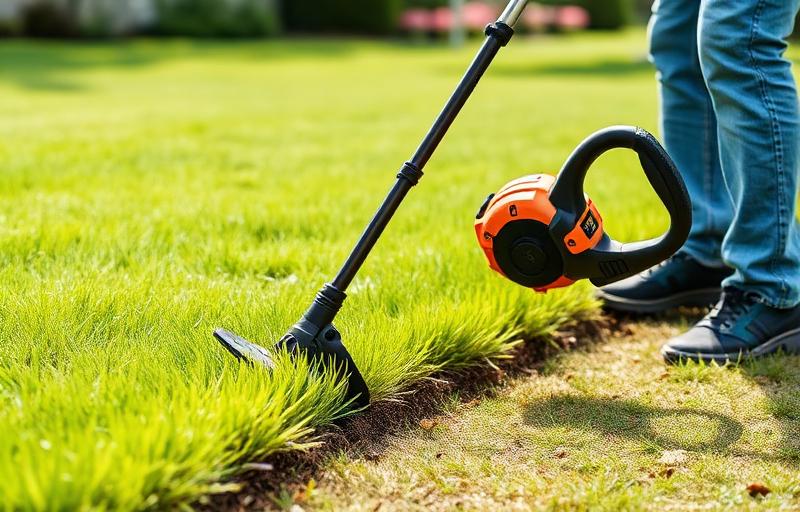
Weed Whacker
85–100 dB
Safe exposure
7 minutes
Per NIOSH 85 dBA / 8 h reference (3 dB exchange rate)
Above 85 dB can damage hearing with prolonged exposure. Use ear protection.
Personalized verdict
Is this dangerous for you?
Weed Whacker
93 dB
Typical
Your room
— dB
Tap Compare
Difference
—
Waiting
Audio is processed locally in your browser — nothing is recorded or sent. Prefer the full meter? Open Snap dB
Compare Weed Whacker to:
Quick Answer
A decibel (dB) is a logarithmic unit used to measure sound intensity: an increase of 10 dB means ten times more sound energy.
A weed whacker (string trimmer) produces 85–100 decibels. Battery-electric models are quietest at 75–85 dB. Corded electric trimmers produce 80–88 dB. Gas-powered two-stroke trimmers are loudest at 95–100 dB. At these levels, hearing protection is recommended for any session longer than 15–30 minutes.
📊 Similar in loudness to a motorcycle at 25 feet (about 95 dB).
Prolonged exposure above 85 dB can damage hearing.
At a glance
| Typical range | 85–100 dB |
|---|---|
| Safety tier | Loud |
| Safe exposure (NIOSH REL) | 15 minutes |
| Audible at | ~50+ ft |
Louder than a garbage disposal (80 dB), quieter than a helicopter overhead at 100 feet (105 dB).
How these figures were determined: Values are based on published reference levels from NIOSH, OSHA, the WHO and the CDC, together with manufacturer specifications where available. Actual sound levels vary with distance, room acoustics, equipment condition and measurement method, and readings taken with a phone microphone are estimates rather than calibrated measurements.
Noise by Power Source
Power source is the biggest determinant of trimmer noise. Battery-electric trimmers use brushless motors that produce a smooth 75–85 dB whine. Gas-powered two-stroke engines produce 95–100 dB of characteristic high-pitched screaming, amplified by the unmuffled exhaust. Four-stroke gas trimmers are slightly quieter at 90–95 dB with a deeper exhaust tone.
- Battery-electric: 75–85 dB (quietest)
- Corded electric: 80–88 dB
- 4-stroke gas: 90–95 dB
- 2-stroke gas: 95–100 dB
Most people are surprised by how loud this actually is…
Noise Level: Weed Whacker
Classification
Loud – Hearing Risk
Safe Exposure
2 hours
Safe Exposure Times
At 85 dB (battery trimmer), NIOSH allows 8 hours. At 90 dB (quiet gas), the limit is 2 hours. At 95 dB (typical gas trimmer), you have 50 minutes. At 100 dB (loud gas trimmer at full throttle), safe exposure drops to just 15 minutes. Most yard trimming sessions last 20–60 minutes, meaning gas-powered trimmer use frequently exceeds safe limits without hearing protection.
Typical Sound Levels
Beyond this level, your hearing cells don't recover…
The Lombard effect makes people unconsciously raise their voice by 3-6 dB for every 10 dB of background noise.
Measure Your Environment
Use Snap Decibel Meter to estimate the sound level around you right now.
Open Noise MeterNeighbor Noise Impact
Weed whackers are among the most complained-about sources of neighborhood noise. A gas trimmer at 95 dB is still 65–70 dB at 30 meters — clearly audible through closed windows. Many municipalities have daytime noise ordinances that effectively restrict gas-powered yard equipment to weekday business hours or weekend mornings.
The shift to battery-electric trimmers helps significantly. A battery trimmer at 80 dB produces roughly 50–55 dB at 30 meters — barely noticeable indoors and well below typical noise ordinance thresholds.
The difference between 'fine' and 'damaging' is smaller than you think.
Decibel Profile: Weed Whacker in Detail
Weather conditions significantly affect how far weed whacker noise travels. Temperature inversions (warm air over cool ground) create a "sound duct" that can carry weed whacker noise 2–3 times farther than normal. Wind direction matters too — downwind listeners may hear weed whacker at levels 10 dB higher than upwind listeners at the same distance.
At 85–100 dB, weed whacker is in the "hazardous" range where unprotected exposure causes measurable hearing damage. The outer hair cells in the cochlea, which amplify quiet sounds and sharpen frequency discrimination, are the first casualties. Their loss results in reduced speech clarity, particularly in noisy environments — the classic "I can hear you but can't understand you" complaint.
Outdoor weed whacker noise is modulated by terrain. Hills and berms act as natural sound barriers, reducing levels by 5–15 dB depending on height and proximity. Flat, open terrain provides no barriers, allowing weed whacker sound to travel unimpeded according to the inverse square law.
Electric vs. Gas-Powered Weed whacker: Noise Comparison
The shift from gas-powered to electric weed whacker alternatives is one of the most significant noise-reduction trends in outdoor equipment. Electric models typically produce 10–20 dB less noise than their gas equivalents — a reduction that means the electric version sounds 50–75% quieter to human ears.
Gas engines produce noise through combustion events, exhaust pulses, and mechanical vibration. Electric motors generate only electromagnetic hum and bearing noise, with no combustion events or exhaust. The dominant noise source in electric weed whacker is usually the blade, bit, or working element rather than the power source itself.
Battery capacity has been the main barrier to electric weed whacker adoption. Modern 56V and 80V lithium-ion platforms deliver 45–90 minutes of runtime — sufficient for most residential tasks. For professional users requiring all-day operation, swappable battery packs or hybrid gas-electric designs offer a compromise between noise reduction and endurance.
How Weed Whacker Compares to Other Sounds
The closest everyday comparison to weed whacker at 85–100 dB is a motorcycle at 25 feet, which registers at 95 dB. Both sounds occupy the same energy band and present similar exposure considerations, though their frequency profiles and duration patterns create distinct listening experiences.
On the quieter end, a food blender running registers about 85 dB — that's 8 dB below weed whacker, representing roughly 2× less perceived loudness. Moving louder, a nightclub dance floor reaches 100 dB — 7 dB above weed whacker, approximately 2× louder to your ears.
Human hearing perception compresses the enormous physical range of sound into a more manageable subjective scale. The difference between 93 dB and 103 dB sounds like "about twice as loud" to most listeners, even though the actual energy difference is 10-fold. This compression is why small decibel differences feel significant — a 3 dB reduction removes half the sound energy.
Safe Exposure Duration for Weed Whacker
According to NIOSH guidelines, the maximum safe exposure time at 100 dB is 15 minutes. Even brief exposure requires hearing protection.
NIOSH Exposure Limits Reference
Noise Ordinances and Weed whacker Usage
Most municipalities regulate weed whacker noise through local ordinances that set maximum decibel limits at property boundaries — typically 55–65 dB during daytime (7 AM–10 PM) and 45–55 dB at night. With weed whacker producing 85–100 dB at the source, you'll typically comply at the property line if your neighbor is 15+ meters away, though terrain and wind can affect propagation.
Some jurisdictions use time-based restrictions instead of decibel limits: power equipment may only be operated during specific hours (e.g., 8 AM–6 PM weekdays, 9 AM–5 PM weekends). Others use "nuisance" standards where any noise that "unreasonably disturbs the peace" can trigger enforcement, regardless of measured decibel level.
Enforcement of noise ordinances varies widely. In some areas, code enforcement officers respond with calibrated sound level meters; in others, the standard is simply whether a "reasonable person" would find the noise disturbing. Documentation helps — if you're concerned about weed whacker noise from a neighbor, keep a log of dates, times, and durations before filing a complaint.
How to Stay Safe Around Weed Whacker
Because weed whacker reaches 100 dB, hearing protection during exposure is not optional — it's a medical necessity. The type and level of protection depends on your exposure pattern: occasional home users can rely on disposable foam earplugs (NRR 29–33), while daily professional users should invest in custom-molded earplugs or electronic earmuffs.
For powered outdoor equipment like weed whacker, consider the electric alternative. Modern battery-powered versions match or exceed the performance of gas models for most residential tasks while producing 10–20 dB less noise. The higher upfront cost is offset by zero fuel expenses, lower maintenance, and dramatically improved neighbor relations.
- Wear NRR 25+ over-ear hearing protection for all gas-powered equipment use
- Inform neighbors before extended weed whacker use and respect local noise ordinance hours
- Position equipment as far from property boundaries and windows as feasible
- Operate weed whacker during midday hours when ambient noise provides natural masking
- Consider electric alternatives — 10–20 dB quieter than gas-powered equivalents
Getting Accurate Decibel Readings of Weed Whacker
For reliable weed whacker measurements, standardize your approach: measure at 1 meter distance, at ear height, with the microphone pointed toward the source. Run the measurement for at least 30 seconds and average multiple readings. Background noise should be at least 10 dB below your target to avoid interference.
Measuring loud sounds like weed whacker at 93 dB requires caution — the measurement process itself exposes you to potentially damaging noise. Wear hearing protection during measurement sessions, use a remote microphone or tripod placement when possible, and limit measurement duration to the minimum needed for representative data.
Long-Term Health Effects of Weed Whacker Noise
Regular unprotected exposure to weed whacker at 100 dB poses a real risk of noise-induced hearing loss (NIHL). The hair cells in your cochlea convert sound vibrations into electrical signals for the brain. Excessive noise physically damages these delicate structures, and unlike birds and reptiles, humans cannot regenerate damaged hair cells — the loss is permanent.
Warning signs of overexposure to weed whacker noise include: ringing, buzzing, or hissing in the ears after exposure; speech sounding muffled or distant; difficulty following conversations in restaurants or social settings; and needing to gradually increase TV or headphone volume. If you experience any of these after exposure to weed whacker, reduce future exposure immediately and consult an audiologist.
Warning Signs of Overexposure
- Ringing, buzzing, or hissing in your ears after exposure to weed whacker
- Sounds seem muffled or distant after leaving the noisy environment
- Difficulty understanding speech in crowded or noisy settings
- Gradually increasing your TV or headphone volume over weeks
Measure Weed Whacker Noise Yourself
Want to know how loud weed whacker is in your own environment? Use our free decibel meter to take a real-time reading, or check the complete decibel chart to see where 85–100 dB sits on the full scale. You can also compare sounds side by side or use the noise distance calculator to estimate levels at different distances.
🎯 Guess the Decibel Level
How loud do you think Weed Whacker is? Drag the slider and find out!
Hearing Safety
Gas weed whackers exceed 95 dB. Always wear hearing protection — safe exposure is under 1 hour without protection.
Frequently Asked Questions
How loud is a weed whacker?
85–100 dB depending on type. Gas models are 95–100 dB, battery-electric are 75–85 dB.
Are battery trimmers quieter than gas?
Yes, significantly — 10–20 dB quieter, which sounds roughly half to one-quarter as loud.
Do I need hearing protection with a trimmer?
Yes for gas models (always). For battery trimmers above 85 dB, protection is recommended for sessions over 30 minutes.
Explore More
Related Noise Guides
How Loud Is a Leaf Blower? Decibel Levels and Hearing Risks
Leaf blower noise depends entirely on who is listening. At the operator's ear a gas blower runs 95–105 dBA; a neighbour 15 metres away hears 65–75 dBA. Here are the numbers, distance by distance.
10 min readEnvironmental NoiseHow Loud Is a Lawn Mower? Decibel Levels by Mower Type
Lawn mowers produce anywhere from 55 dB (manual reel) to 100 dB (commercial zero-turn). We break down the exact decibel range for every mower type — and what it means for your hearing.
9 min readHome NoiseHow Loud Is a Chainsaw? (Decibel Levels & Hearing Risk)
Chainsaws produce 100–120 dB at the operator's ear. Here is what that means for your hearing and how to protect yourself.
5 min readHome NoiseHow Loud Is a Snow Blower? (Decibels Explained)
Snow blowers produce 85–100 dB. Learn how they compare.
6 min readHow Does Weed Whacker Compare?
Tap any sound to learn more about its noise level.
| Sound level | Sound | Vs. Weed Whacker | Risk |
|---|---|---|---|
| 93 dB | Weed Whacker (this page) | — | Loud |
| 80 dB | Construction Noise | −13 dB quieter | Moderate |
| 82 dB | Woodpecker | −11 dB quieter | Moderate |
| 85 dB | What Noise Level Is Safe for Humans | −8 dB quieter | Moderate |
| 85 dB | Dog Bark | −8 dB quieter | Moderate |
| 105 dB | Baby Cry | +12 dB louder | Danger |
| 105 dB | Car Horn | +12 dB louder | Danger |
Compare With Other Sounds
See how this noise level compares to other everyday sounds.
Test Your Environment
Use Snap Decibel Meter to measure sound levels around you — free, private, and instant.
Start Noise Measurement