High-Frequency Hearing Test: The Mosquito Tone (Play It Now)
An interactive high-frequency hearing test you can run right now — including the 17.4 kHz "mosquito tone" most adults over 25 can't hear. Learn what your hearing age says about presbycusis.
Reviewed by our team against authoritative public-health sources. See our editorial standards.
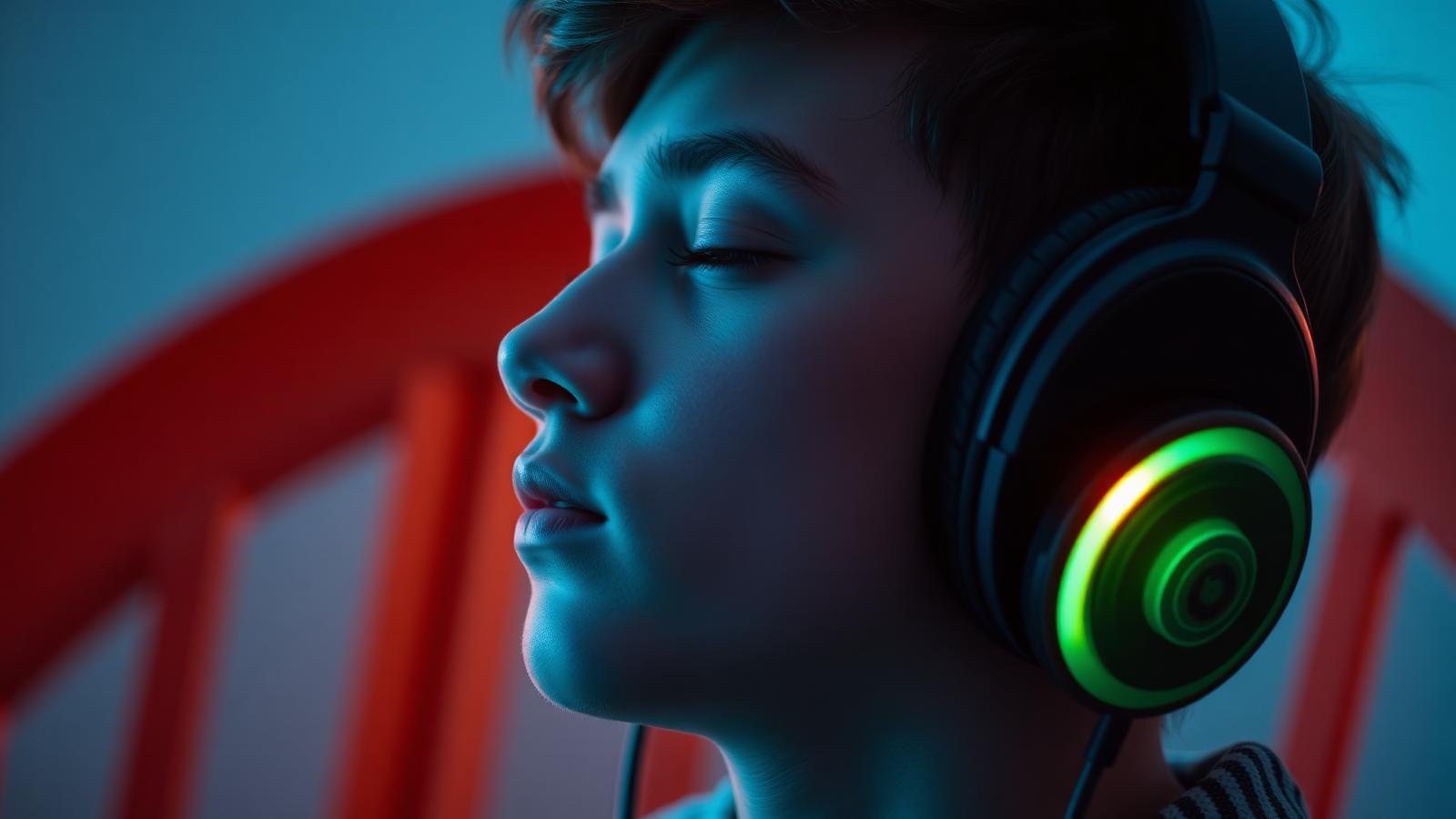
Quick Answer
The "mosquito tone" is a 17.4 kHz sine wave that most people over 24 stop hearing because of presbycusis — age-related loss of high-frequency hearing. Your upper hearing limit typically drops by 1–2 kHz per decade: ~20 kHz as a child, ~17 kHz at 20, ~15 kHz at 40, ~12 kHz at 60. Use the interactive player above to find yours.
Prolonged exposure above 85 dB can damage hearing.
Interactive Hearing Test — Tap a Frequency
Put on headphones and start at the lowest frequency. Tap upward until the tone disappears — the last one you hear is a rough indicator of your high-frequency hearing range. Tones are generated in your browser with the Web Audio API; nothing is downloaded or recorded.
Not medical advice. Headphone quality, room noise, and speaker frequency response all affect what you hear — a proper audiogram from an audiologist is the only way to diagnose hearing loss.
What Is the Mosquito Tone?
The mosquito tone is a very high-pitched sine wave — usually 17.4 kHz — that sits at the edge of human hearing. Teenagers and children hear it clearly. Most adults over 25 don't hear it at all, no matter how loud it's played. It got its name from the Mosquito, a commercial device deployed outside shops in the mid-2000s to disperse loitering teenagers by playing exactly this frequency at high volume.
Physically, there's nothing exotic about 17.4 kHz. It's just a pure tone in the upper region of the 20 Hz–20 kHz range that healthy young ears can pick up. What makes it interesting is that virtually everyone loses sensitivity to this region as they age — the loss is so consistent that a mosquito-tone test doubles as a rough hearing-age indicator.
The reason ties back to how your ear detects sound. The cochlea has a spiral row of tiny hair cells, and the ones tuned to the highest frequencies sit at its base, where they take the most physical stress over a lifetime. They wear out first and, unlike most cells in the body, they don't regenerate.
Most people are surprised by how loud this actually is…
How This Hearing Test Works
The interactive player at the top of this page uses the browser's Web Audio API to generate each tone in real time from a mathematical sine wave. There are no downloads and no audio files — the oscillator runs entirely on your device. That matters because pre-recorded MP3s add compression artifacts that can leak lower-frequency energy into the file, letting people "hear" a tone they shouldn't. A live oscillator is a cleaner test.
Start at 8 kHz and work upward, tapping each tone for a second or two. The last frequency where you clearly hear a steady tone (not a click, not a hum from your device) is your practical upper limit. Keep the volume low; if you have to crank the volume to hear it, you're not really hearing it — you're hearing distortion, room resonance, or a harmonic from your speakers.
- Wear good over-ear or in-ear headphones — laptop and phone speakers roll off sharply above ~12 kHz
- Sit in a quiet room; background noise above ~40 dB masks quiet high-frequency tones
- Start volume at 10–20% and only raise it slightly if needed
- Compare each tone to the one below it — if 15 kHz clearly plays and 16 kHz sounds identical to silence, that's your edge
- Retest after a short break; fatigue affects sensitivity
Typical Sound Levels
Beyond this level, your hearing cells don't recover…
A 10 dB increase sounds roughly twice as loud to human ears, even though the actual sound energy increases tenfold.
Measure Your Environment
Use Snap Decibel Meter to estimate the sound level around you right now.
Open Noise MeterWhat Your Result Says About Your Hearing Age
Age-related loss of high-frequency hearing is called presbycusis. It starts in your late teens and progresses roughly linearly — your upper limit drops by about 1–2 kHz per decade of life. The chart below is a rough population average, not a medical diagnosis. Individual results vary widely depending on genetics, noise exposure history, ear infections, and medications.
Two people the same age can differ by 3–4 kHz. A 22-year-old sound engineer who's stood next to speaker stacks for a decade may already be at the hearing profile of a 40-year-old office worker. That's the more useful takeaway from this test — not "how old are your ears" but "how well have you protected them."
Why Only Young People Hear the Mosquito Tone
The hair cells in the cochlea aren't distributed evenly. High-frequency cells live at the base of the spiral and are physically closer to the outside world — they take the mechanical brunt of every loud noise you're ever exposed to. Low-frequency cells sit deeper in the cochlea and are naturally shielded.
On top of that, high-frequency cells receive fewer neural connections. When some die (and they do, throughout life), there's less redundancy to mask the loss. This is why hearing loss almost always starts at the top of the range and works down over decades — you don't notice it until it reaches speech frequencies (roughly 2–4 kHz), by which point a lot of damage has already accumulated.
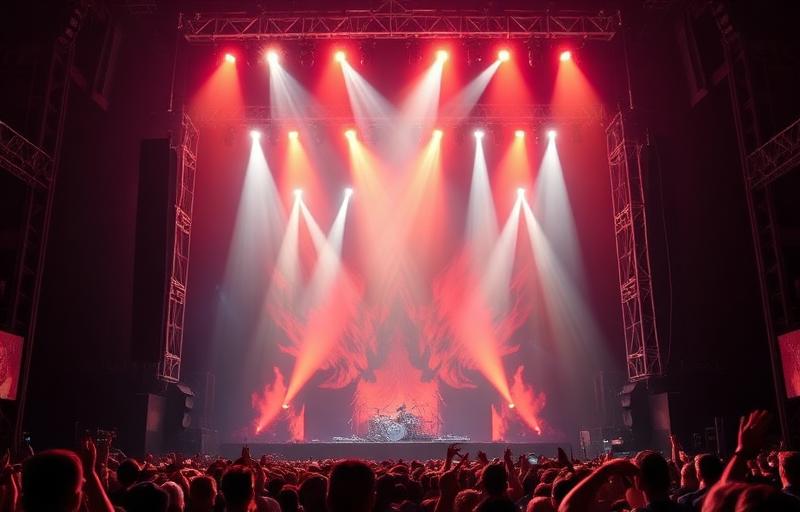
Chronic noise exposure accelerates the process dramatically. A single unprotected concert at 110 dB can measurably shift your hearing threshold overnight; enough of them, and the shift becomes permanent. This is why hearing conservation is a young person's game — the damage compounds silently for years.
Limitations of This Test
This is a screener, not an audiogram. A proper pure-tone audiometry test in an audiologist's booth measures your threshold at each frequency in dB HL (hearing level) under calibrated conditions with medical-grade transducers. What you're doing here is playing tones through consumer headphones in an uncalibrated room — the absolute results are approximate.
The three biggest sources of error, in order: your playback device (most consumer speakers and even many headphones roll off steeply above 15 kHz), background noise in your environment, and the volume you play the tones at. Different devices will give you different "cutoffs" even though your actual hearing hasn't changed. Use the test to compare yourself over time on the same setup, or to compare with someone else using the same headphones.
- Not a substitute for a clinical hearing evaluation
- Doesn't measure hearing at speech frequencies (500 Hz – 4 kHz) where real-world impairment is most disabling
- Speaker/headphone frequency response varies wildly at the top of the range
- Tinnitus can mask or mimic these tones
- If you're worried about hearing loss, see an audiologist — not a webpage
How to Slow High-Frequency Hearing Loss
You can't grow hair cells back, but you can dramatically slow the loss by limiting cumulative noise exposure. NIOSH's safe-exposure guideline is 85 dB for 8 hours, halving the safe time for every 3 dB above that. Concerts, power tools, motorcycles, subway platforms, and personal audio at high volume are the everyday culprits that push people past safe daily doses without them realizing it.
Two practical rules cover most situations. First, if you have to raise your voice to be heard at arm's length, you're probably above 85 dB and need to leave, protect, or lower the volume. Second, for music: the 60/60 rule — no more than 60% of max volume for no more than 60 minutes at a stretch. Cheap foam earplugs give you 20–30 dB of attenuation at concerts and don't muffle music as much as most people fear.
Now that you know the real level, test your own environment.
Hearing Safety
Do not turn playback volume up trying to hear a tone that isn't audible — that just means it's above your hearing range. High-volume high-frequency tones can damage hearing and speakers.
Frequently Asked Questions
What is the mosquito tone?
A 17.4 kHz sine wave near the top of human hearing. Most people under 24 hear it clearly; most over 25 don't hear it at all. It's used in the interactive test above to gauge high-frequency hearing.
Why can't adults hear high frequencies?
Age-related high-frequency hearing loss is called presbycusis. The tiny hair cells in the cochlea that detect high pitches sit at the base of the spiral, take the most mechanical stress, and can't regenerate. Your upper hearing limit drops roughly 1–2 kHz per decade.
Is this test accurate?
It's a screener, not a diagnosis. Consumer headphones, room noise, and playback volume all affect results. Use it to compare over time on the same setup, or to gauge relative changes — a real audiogram needs a calibrated booth and an audiologist.
What frequency can I hear at my age?
Rough averages: 20 kHz as a child, ~17 kHz at 20, ~15 kHz at 40, ~12 kHz at 60. Individual variation is huge — a well-protected 40-year-old can outperform a noise-exposed 25-year-old by several kHz.
Can I damage my hearing playing these tones?
Only if you play them very loudly. Sustained high-frequency sine waves above ~85 dB can damage hearing just like any loud sound. Keep playback volume at 10–20% — the tones are meant to test sensitivity, not overpower it.
Why do my headphones make a difference?
Most consumer headphones and nearly all laptop/phone speakers roll off steeply above 15 kHz — the driver simply can't reproduce the tone at a useful level. Good over-ear or in-ear monitors with a flat high-frequency response give the most honest test.
Can this test detect hearing loss?
It can hint at high-frequency loss but can't confirm it. Hearing loss that affects daily life usually shows up first at speech frequencies (500 Hz – 4 kHz), which this test doesn't cover. If speech sounds muffled or you struggle in noisy rooms, book an audiogram.
Explore More
Related Noise Guides
The Complete Guide to Noise Levels and Decibels
The definitive resource covering everything about noise levels, decibels, safe sound exposure, and how to measure environmental noise — from whispers to jet engines.
25 min readSafe Sound LevelsWhat Noise Level Is Safe for Humans?
Understand recommended noise exposure limits and how long you can safely be exposed to different sound levels without risking hearing damage.
8 min readSafe Sound LevelsAt What Decibel Level Does Hearing Damage Start?
Your inner ear has 15,000 hair cells that don't regenerate. Learn how noise destroys them, the types of hearing loss, warning signs to watch for, and when to see an audiologist.
9 min readSafe Sound LevelsHow Long Can You Be Exposed to Loud Noise Safely?
At 85 dB, you can be safely exposed for up to 8 hours. For every 3 dB increase, the safe time is cut in half. Learn the guidelines and how to manage your daily noise dose.
9 min readCompare With Other Sounds
See how this noise level compares to other everyday sounds.
Test Your Environment
Use Snap Decibel Meter to measure sound levels around you — free, private, and instant.
Start Noise Measurement