Decibel Levels
How Loud Is 80 Decibels? The EU lower action value, not an instant danger boundary
Snap Decibel Meter editorial team · Updated 2026-10-25
The EU lower action value, not an instant danger boundary
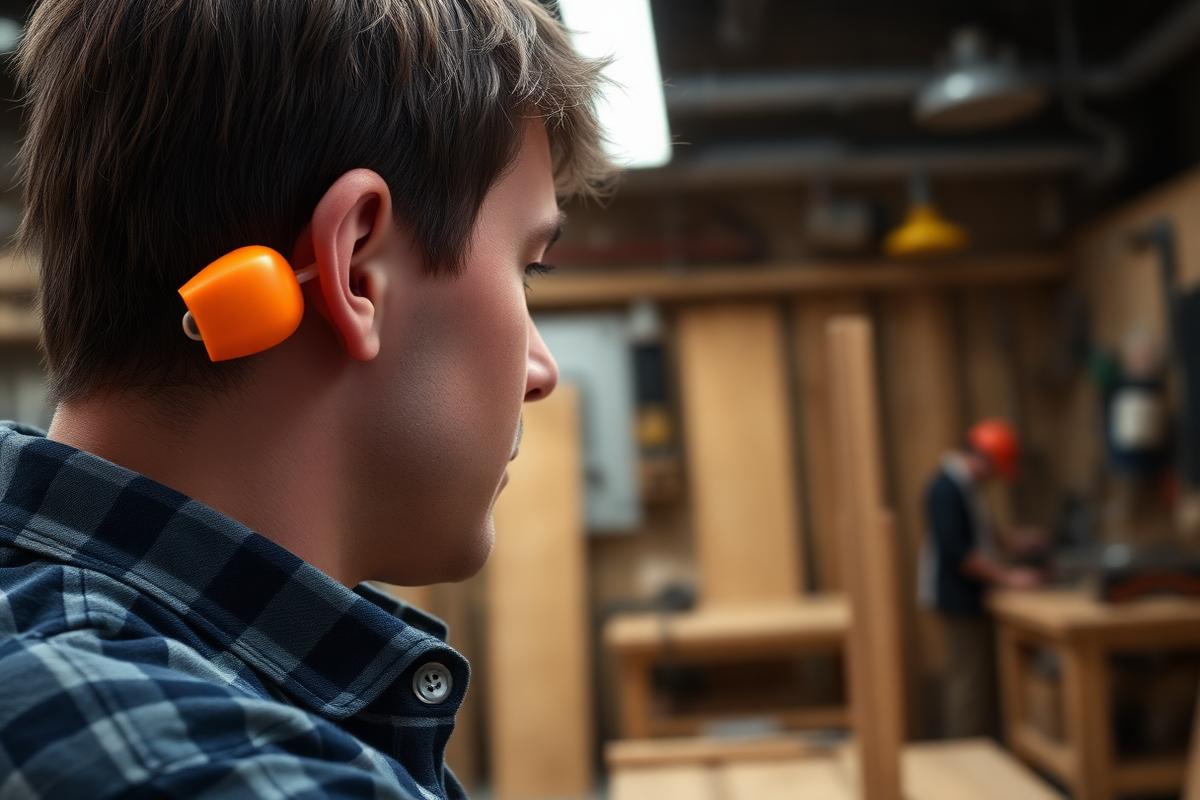
Quick answer
80 dB(A) has a specific role in EU workplace law: the lower action value for daily noise exposure normalized to eight hours. It is not the same as an instantaneous 80 dB sound, and it is not a universal boundary between safe and harmful noise.
80 dB compared with another level
Intensity ratio
10^(difference / 10)
Pressure amplitude ratio
10^(difference / 20)
These are mathematical ratios, not perceived loudness or safe exposure time. Compare the same quantity, reference, weighting and time basis; the pressure-to-intensity relationship also assumes matching acoustic impedance. A sound-power label, a peak and an eight-hour exposure are not interchangeable.
The distance calculator models an ideal point source. It does not predict indoor reflections or establish a safe distance.
What action means at 80 dB(A)
Directive 2003/10/EC defines a lower daily exposure action value of 80 dB(A), separately from its peak-pressure action value of 112 Pa. Above the lower exposure action values, workers must have individual hearing protectors available; the directive also addresses information and training. Availability is not the same legal requirement as mandatory use at the upper action value.
The directive's daily quantity is LEX,8h. It is a normalized exposure result, not a slow meter display at one instant. National implementing rules and a competent workplace assessment govern an actual employer's obligations.
A documented nearby level is not an exact 80 dB example
DLG reported 83 dB(A) at the operator's ear for a Stihl MS 291 chainsaw at idle, under DIN EN ISO 22868. It also reported 102 and 106 dB(A) under different operating conditions. That observation demonstrates the importance of operating state; it does not establish that chainsaws are 80 dB.
Do not round the idle observation down and then attach the EU daily criterion to it. A model-specific operator measurement and a full-day exposure assessment remain different records.
How 80 dB compares with neighbouring levels
When two levels share the same quantity, weighting and reference, the difference can be converted mathematically; displayed ratios are rounded. Relating pressure to intensity also requires matching acoustic impedance. 80 dB versus 70 dB: 10 times the intensity and 3.1623 times the sound-pressure amplitude; 80 dB versus 90 dB: 0.1 of the intensity and 0.31623 of the sound-pressure amplitude; 80 dB versus 85 dB: 0.31623 of the intensity and 0.56234 of the sound-pressure amplitude.
These are physical ratios, not perceived loudness ratios. Perceived loudness also depends on frequency content, duration and the listener.
Is 80 dB loud? Feeling loud is not the EU action-value test
The EU lower action value uses 80 dB(A) LEX,8h, not a listener's subjective impression and not a single meter maximum. A brief observation around 80 can justify investigating conditions, but cannot establish whether daily exposure exceeds the action value.
Conversely, a listener becoming accustomed to noise does not invalidate measured exposure. If this is a workplace question, obtain the relevant daily assessment. If this is a comfort question, identify the activity, source and times affected instead of borrowing the occupational number as a domestic rule.
What does 80 dB sound like? One documented nearby example: 83 dB(A), not 80
DLG's Stihl MS 291 test gives an 83 dB(A) idle result at the operator's ear. The named model, operating state and DIN EN ISO 22868 position make the observation interpretable. It is three decibels above 80, and remains a nearby example rather than an exact one.
The same report's loaded and unloaded full-throttle results are higher. A still image of a chainsaw does not tell you which state was measured. Nor should the idle result be rounded to 80 and treated as a whole-day EU exposure value.
Method and limitations
Source figures retain their published metric and conditions. Mathematical examples are hypothetical comparisons, not measured sound-source levels or individual exposure advice.
Snap Decibel Meter processes audio locally. Its digital signal estimate is not a validated sound-pressure or workplace exposure measurement. Use suitable calibrated instrumentation and a defined procedure for decisions requiring absolute levels.
Evidence behind the levels on this page
Every sound level quoted above comes from one of the publications below. For each one we record what was actually measured, the microphone position or distance where that is stated, the metric used, and what the figure can and cannot tell you. Where a source did not state a condition, we say so rather than filling the gap.
Directive 2003/10/EC, Articles 2–6
European Parliament and Council · 2003 · EU occupational directive
- What was measured
- Daily exposure action values and separate peak pressure values
- Reported level
- Lower action value: 80 dB(A) LEX,8h and 112 Pa peak; upper: 85 dB(A) and 140 Pa; limit: 87 dB(A) and 200 Pa
- Distance / position
- At the worker
- Frequency weighting
- A for daily exposure; C for peak pressure
- Conditions
- Daily exposure normalized to eight hours; peak pressure is a separate quantity. Hearing-protector attenuation counts for limit values, not action values.
- Supports on this page
- 80 dB(A) as a lower action value, and why a peak number cannot be substituted for daily exposure
- Limitations
- Occupational framework; national implementation and specific assessment matter
Test report 6192 — Stihl MS 291 chainsaw
DLG · Commissioned model-specific test
- What was measured
- Sound pressure at the operator's ear
- Reported level
- 83 dB(A) idle; 106 dB(A) full throttle without load; 102 dB(A) full load
- Distance / position
- Operator position prescribed by DIN EN ISO 22868
- Frequency weighting
- A
- Conditions
- One model, three operating conditions; values are not a daily exposure assessment
- Supports on this page
- Documented observations near 80 and 105 dB; operating condition changes the result
- Limitations
- Not universal chainsaw levels, not a bystander distance measurement, not exactly 80 or 105 dB
Criteria for a Recommended Standard: Occupational Noise Exposure (98-126)
NIOSH / CDC · 1998 · Occupational health recommendation
- What was measured
- Recommended occupational exposure criterion
- Reported level
- 85 dBA, eight-hour time-weighted average; 3 dB exchange rate
- Distance / position
- Personal exposure at the worker
- Frequency weighting
- A
- Conditions
- Occupational assessment across the exposure period
- Supports on this page
- Distinguishing a daily exposure recommendation from a momentary reading or a medical threshold
- Limitations
- Not a guarantee of individual safety, not an instantaneous threshold, not a household noise rule
University Physics Volume 1, 17.3 Sound Intensity
OpenStax · Physics textbook
- What was measured
- Definition of an intensity level and sound-pressure relationship
- Reported level
- β = 10 log10(I/I₀); I₀ = 10⁻¹² W/m²
- Distance / position
- Not a source measurement
- Frequency weighting
- Unweighted mathematical definition
- Conditions
- Pressure and intensity relationships require matching propagation conditions and acoustic impedance
- Supports on this page
- Intensity ratio 10^(ΔL/10), pressure-amplitude ratio 10^(ΔL/20); neither is a perceived loudness ratio
- Limitations
- Not a licence to compare sound power, SEL, peaks, weighted levels and time averages as interchangeable quantities